
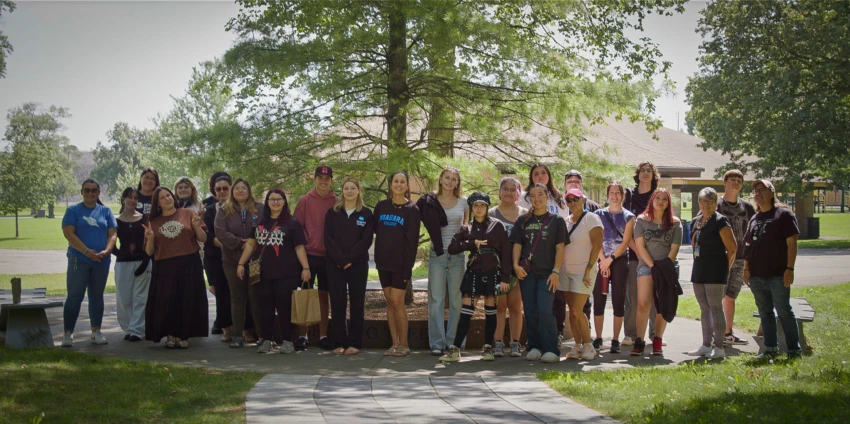
For the third year in a row, Niagara College’s Indigenous Education department welcomed incoming Indigenous learners to campus through its Pathways: Stepping into Transition program, a two-day experience designed to help new students feel confident, connected and prepared as they begin their NC journey.
This year’s program took place Aug. 19-20 and welcomed 18 incoming Indigenous students for activities focused on building relationships, exploring the College and connecting with the people, services and supports available to them.
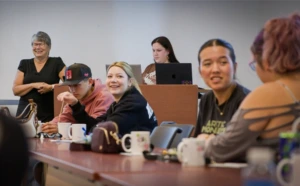
Participants were able to connect with other Indigenous students during Pathways.
“Pathways is about helping students feel comfortable and confident as they start their journey at NC,” said Jeanine Bruinsma, Indigenous Student Success Leader. “It was fantastic to see students making friendships, building connections and getting excited about starting at the College. They also had the opportunity to see everything NC has to offer beyond the Indigenous Education spaces.”
Students stayed overnight in residence at the Daniel J. Patterson Campus in Niagara-on-the-Lake and took part in a full schedule of activities, including guided tours of the Welland and Niagara-on-the-Lake campuses, visits to the Indigenous Education Centres, a tour and cultural teachings at Landscape of Nations, a group trip to Clifton Hill and introductions to key support services at NC.
For Tayden Verboom, an incoming Sport Management student from Napanee, Ont., the program helped ease some of his nerves about moving away from home.
One activity asked students to share what they were nervous about, what they were excited about and what they were most looking forward to as they began college. For Verboom, hearing other students share their experiences helped him realize he wasn’t alone in feeling nervous about starting somewhere new.
“I realized that everyone was going through almost the same emotions and having many of the same feelings about going to school,” said Verboom. “I’m one of the students who came from the furthest away, and I realized that I’m not alone.”
The opportunity to meet other students and become familiar with campus also helped Verboom feel more prepared for his first day of classes.
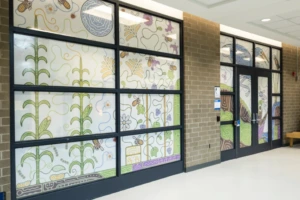
Students took part in guided tours at both campuses including the Indigenous Education Centres.
“The thing that helped me the most about the Pathways program was being able to meet people, build connections and learn the campus,” he said. “When I got here for my first day of classes, I already knew where I was going and had already made friends. That made me feel much more confident and comfortable being so far away from home.”
While the program helps students get comfortable with campus and meet their peers, it also gives them a chance to build relationships with the Indigenous Education team before classes begin.
This was Jessica Winger’s first year participating in Pathways. As an Indigenous Student Success Leader, she said one of the most important parts of the program is helping students know who they can turn to when they have questions or need support.
“We shared a lot of information with students over those two days, but the most important thing was making sure they knew who we are and that they can reach out to us,” said Winger. “We want them to know that they have people here who can help them.”
Those connections are already making a difference, with some students reaching out to Indigenous Education before the semester began with questions about program-related costs. The team was able to provide support, connect students with available funding or help them find community organizations that could assist.
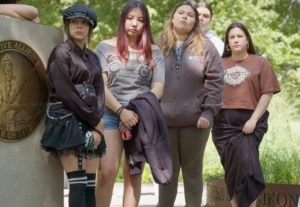
Students visited Landscape of Nations during Pathways programming.
For Sandra Mandamin, Indigenous Education and Transition Coordinator, these early connections are an important part of helping students navigate the transition to college.
“Pathways really helps students make that transition from being an incoming student to becoming a NC student,” said Sandra Mandamin, Indigenous Education and Transition Coordinator. “It helps them see that there is a community here for them and that there are people and supports they can turn to throughout their time at NC.”
Mandamin said Indigenous Education also plays an important role in helping students navigate the broader supports available at the College and in the community.
“We’re a bridge,” she said. “We may not provide every service a student needs, but we can connect them with the people and resources that can help. A big part of what we do is making those connections and building those relationships.”
As the program continues to evolve, the Indigenous Education team is also fine-tuning the experience based on student needs. This year, students had the opportunity to connect with academic advisors, including advisors specific to their programs.
“From year one to year three, I think we’re fine-tuning a lot of things,” said Bruinsma. “But what I really love is seeing how students change over those two days. They come in a little unsure, and then you see them get comfortable, make friends and start to feel like they belong here.”
The Pathways: Stepping into Transition program was made possible through support from the Embark Student Foundation, which provided funding to enhance Indigenous student success pathways at NC.
Pathways is one of the ways NC is advancing its work toward Truth and Reconciliation, alongside the College’s recently launched Indigenous Education Strategy, Paddling Together. The strategy outlines NC’s shared vision and roadmap for advancing Indigenous education and strengthening relationships across the College community, while increasing access, inclusion and support for First Nations, Inuit and Métis Peoples.
