
This article is in recognition of Disability Awareness Week Oct. 5 – 9
For Niagara College student Celia Taylor, understanding how she learns has changed more than her experience in the classroom, it has changed what she believes is possible.
A lifelong learner and alumna of NC’s Law Clerk and Business programs, Taylor returned to school in her 60s to pursue Human Resources Management. While she was excited to continue her education, she was also hesitant, having found school challenging in the past.
At 63, with support from NC’s Student Accessibility Services team, Taylor was diagnosed with attention-deficit/hyperactivity disorder (ADHD), a neurodevelopmental condition that can affect attention, organization and executive functioning.
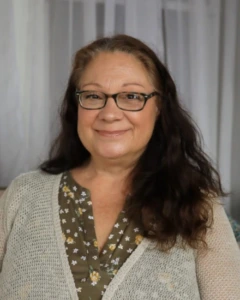
NC student Celia Taylor.
“Before my diagnosis, I struggled to focus, and I often felt like those challenges meant I wasn’t capable,” said Taylor. “Having the support of everyone at Niagara College, from helping me receive my diagnosis to learning how to navigate the world with severe ADHD, has been life-changing.”
Taylor says having the right supports in place – including note-taking, test accommodations and guidance from a learning strategist – has helped improve her marks, but the impact has gone beyond academics. Learning about her disability and how to work with it has helped her approach barriers faced differently and given her the confidence to pursue opportunities beyond the classroom, including running for city council in Niagara Falls.
“Niagara College has given me the tools to succeed and I’m so grateful. It’s changed my life,” she said.
Taylor’s experience reflects the importance of creating learning environments where students can access the support they need to participate fully in their education.
At NC, Accessibility Consultants work with students with disabilities to identify accommodations that provide equitable access to education. Supports are tailored to each student’s individual needs and may include guidance with documentation and assessments, alternative format textbooks, in-class academic accommodation and more.
Students may connect with Accessibility Services at different points in their journey. Some may have an established diagnosis and know what accommodations they need, while others, like Taylor, may be seeking answers or learning more about themselves for the first time.
Kate Wiley, an Educational Developer with NC’s Centre for Academic Excellence, specializes in accessibility and inclusion. She works to build awareness of disability through a social model, which recognizes that barriers in environments, systems and attitudes can create challenges for people with disabilities.
“We often talk about students overcoming barriers, instead of being willing to ask why the barriers existed in the first place,” said Wiley. “For me, accessibility is not about making sure that a student can get through the door or access a course. Instead, it is about changing the questions we typically used to ask about how we can help a student fit into the box of how things have always been done and instead asking how we can change the environment to help students have real opportunities for success. When we can design learning environments, policies, and practices with diverse ways of being and thinking in mind, we give students genuine opportunities to participate and to thrive in environments that previously excluded them.”
Creating an accessible learning environment also means recognizing that there is no single experience of disability. Students have different needs, may access support at different points in their education and may choose whether or not to disclose a disability.
Accessing support has helped Taylor move beyond seeing the challenges she experienced throughout her life as personal shortcomings. It has also helped her see new possibilities for herself.
Now an advocate for accessibility and inclusion, she hopes sharing her experience will encourage others to learn more about disability and consider how they can create more inclusive environments.
During Disability Awareness Week, the NC community is encouraged to learn more about disabilities, accessibility and the lived experiences of people with disabilities, and consider how we can create more inclusive spaces for everyone.
Taylor recognizes that not every student wants to talk openly about their disability, and no one should feel obligated to disclose it. But she wants students to know that support is available if they choose to access it.
Her advice is simple: ask for help when you need it, explore the resources available and don’t let a disability define what you believe you can accomplish.
“Tap into everything Niagara College is offering you as a student with a disability,” she said. “You will become more focused, stronger and more empowered, and realize that you are capable of doing anything. Don’t be ashamed of your disability, it’s your superpower.”
