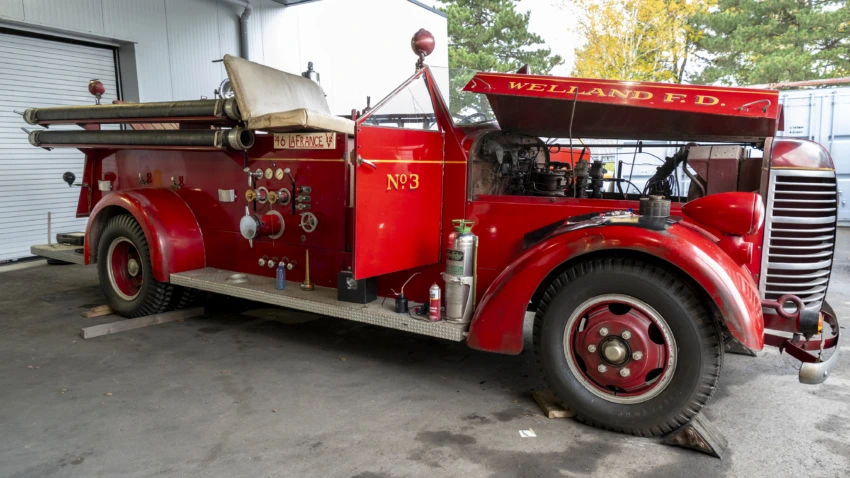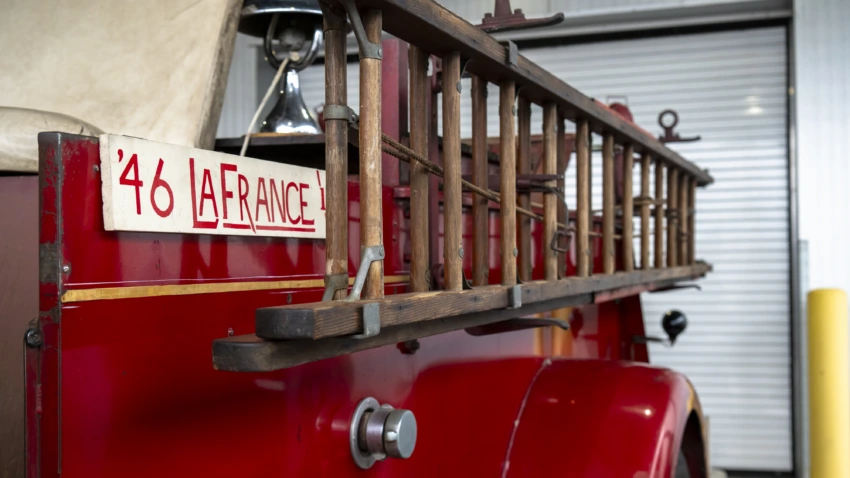
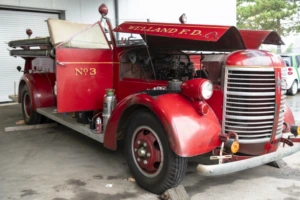
Motive Power students are getting their hands dirty on a piece of local history: a 1946 La France fire truck.
Through a community collaboration project, Motive Power Professor Jamie Atkins was approached by the Welland Fire department with a unique challenge. They wanted to get their vintage engine back up and running for community events and parades.
“This project represents the essence of a community college fostering community engagement and a response to local needs, through partnerships with local businesses or addressing issues specific to the region,” said Nadja Johnson Bresson, Associate Dean, School of Trades. “This project with the Motive Power students is an example of Niagara College commitment, strengthening social mobility and economic development within our community, making education an attainable goal for many, and a place we all belong.”
“We want to bring this fire truck back to life,” said Atkins. “Students are pumped to work on this. We couldn’t even hold them back the day it got here – they were all over it.”
Now that the fire truck has arrived at the Welland Campus, Atkins said he hopes the hands-on project will involve as many students as possible from all levels of the five-semester Motive Power Technician – Automotive (Co-op) program, as different mechanical needs arise. Phase one, currently underway, is focused on getting the engine to start and restoring the vintage electrical systems and sirens. They hope to have the truck running under its own power in time for the College Fall Open House on November 7.
The second phase will focus on brakes, suspension, and overall road safety to ensure it’s street-legal for parades.
For students trained on modern computer-reliant passenger vehicles, the 1946 La France is a rare opportunity to venture into heavy-duty mechanics and redundant safety systems like the dual-spark ignition system which was designed to prevent the truck from stalling on the way to an emergency.
“I’ve been in this trade for over 35 years, and I’ve never seen an engine quite like this in my life,” said Robert Zuk, Technologist in the Motive Power program. “It’s all mechanical. There are no electronics – it’s big levers and valves. It’s still the same preventative maintenance of nuts and bolts, but these students will never have this opportunity again – unless they work in a museum.”
“This is a piece of history right here,” Zuk added.
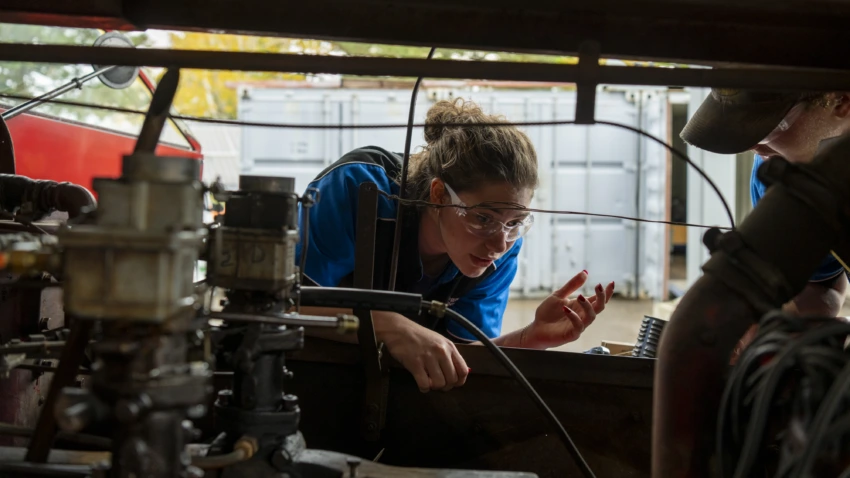
For the students, the project is building resumes, honing skills and teaching adaptability.
“It’s a bit of anything and everything,” said student Riley Jerry, who chose NC’s Motive Power Technician program for its paid co-op opportunities. “You learn about how to deal when something is super rusted on things you haven’t seen before. I think it makes you a better, well-rounded technician – you now have experience with a much more complicated older system, and that can definitely make you more knowledgeable for the field.”
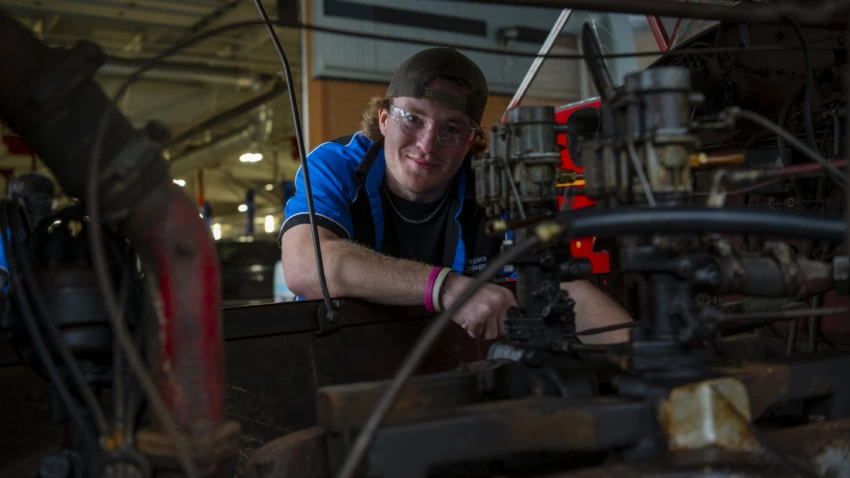
Student Jet Lewis contemplated the vehicle’s past as he threaded the engine’s spark plugs.
“This is a very, very unique experience. It’s pretty cool to get to work on it, and just to think about how many fires this has been to, and how long ago the fires it went to were,” he said. “Just learning how these old machines worked prior to electronics makes less familiar machinery less foreign to me.”
“This is my first time working on a carbureted motor, so I learned how to set a choke,” said student Justin Charles. “It’s good to have in case I ever want to purchase a vehicle made before the eighties.”
Beyond technical skills, working on the vintage fire truck is teaching students how to operate under real-world shop conditions with confidence.
“We teach them to not let the pressure get to them. “Because if the pressure gets to you, you’re more likely to make mistakes,” said Atkins.
“We have their backs. There are many professors involved in this, so we use our knowledge and make sure that what the students have done has come out properly and it’s going to be safe when it leaves.”
Once completed, the restored 1946 La France will serve as a rolling testament to the skills of NC’s School of Trades students.
“It helps out the community,” said Atkins. “Once we get it going, everyone can see what our students are capable of, and the fire department can show off a piece of their heritage.”