
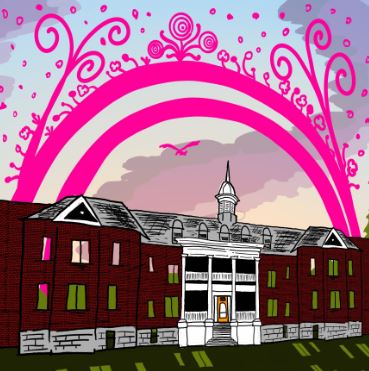
On Saturday, Sept. 12, four Niagara College employees will once again walk 17-km in support of the Mohawk Village Memorial Park, a new memorial park being constructed to honour the students who attended the former Mohawk Institute Residential School, also known as the Mush Hole.
The annual walk raises funds to support the creation of the park, which is envisioned as a place of remembrance where the dignity and lives of the thousands of survivors of the Mohawk Institute can be recognized and honoured. The walk itself is rooted in the stories of children like Mohawk Institute Survivor John Elliott, who repeatedly ran away from the school and travelled long distances in dangerous conditions in an effort to return home to their families and communities. Read more about his story here.
The Niagara College team, made up of Indigenous and settler employees, has set a fundraising goal of $1,000.
“We are a group of Niagara College employees (Indigenous and settler) who have had the honour of working with and learning from survivors,” said the group. “We learned so much from the generosity with which they shared their time and truths to help us create an opportunity for Niagara College faculty and students to learn more about residential schools.”
The group continues to draw on the teachings and truths shared by survivors to help build awareness and understanding across the College community.
“We continue to use their words and truth to inspire colleagues and students at the College to commit to and work toward building a future where Indigenous voices and narratives are centred. The Mohawk Village Memorial Park is one avenue toward that future.”
Support the team
NC employees can support the Niagara College team by making a donation through the team’s fundraising page.
Employees interested in joining the team for the 17-km walk can contact Samah Sabra, Director, Equity, Diversity, and Inclusion by emailing [email protected]
In operation from 1828 to 1970, the Mohawk Institute Residential School was the longest operating residential school in Canada and between 90 and 200 children taken from Six Nations and other First Nations were forced to attend the school each year.
