
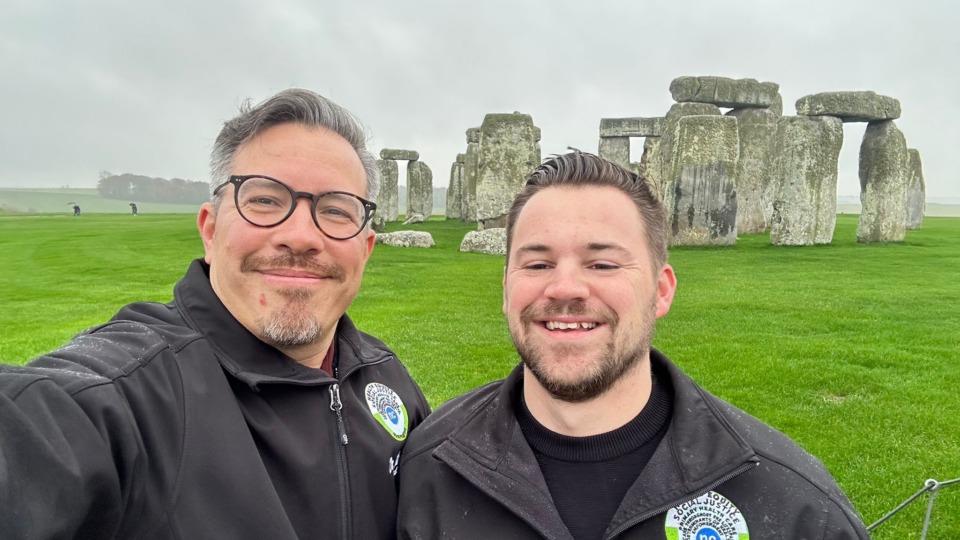
This past November, Dr. Holldrid Odreman and student Christian Baltus from the Bachelor of Science in Nursing (BScN) degree program travelled to the UK to shine a spotlight on the innovative nursing research happening at Niagara College.
They participated in the Association for Simulated Practice in Healthcare‘s 2025 conference in Bournemouth, England. The annual event draws professionals, simulationists, researchers, educators and students from around the world, fostering collaboration on the advancement of simulation-based practices in healthcare and education.
“Representing the Myhal School of Nursing at an international scientific conference was an excellent opportunity to showcase the innovative work we are doing for our students at Niagara College. It highlights the strength of our programs and the dedication of our research team,” said Dr. Odreman, Professor and Program Coordinator for the BScN program and nursing research stream lead at NC’s Centre for Research in Education.
Featured research
At the conference, Dr. Odreman and Baltus presented two recent studies: Self-Confidence and Modulation of Performance Anxiety Through Simulation-Based Learning and Hand Dexterity and Proficiency: Simulation-Based Training of Nursing Students.
“Attendees showed strong interest in our research and its implications for nursing education and the preparation of students for professional practice,” said Dr. Odreman.
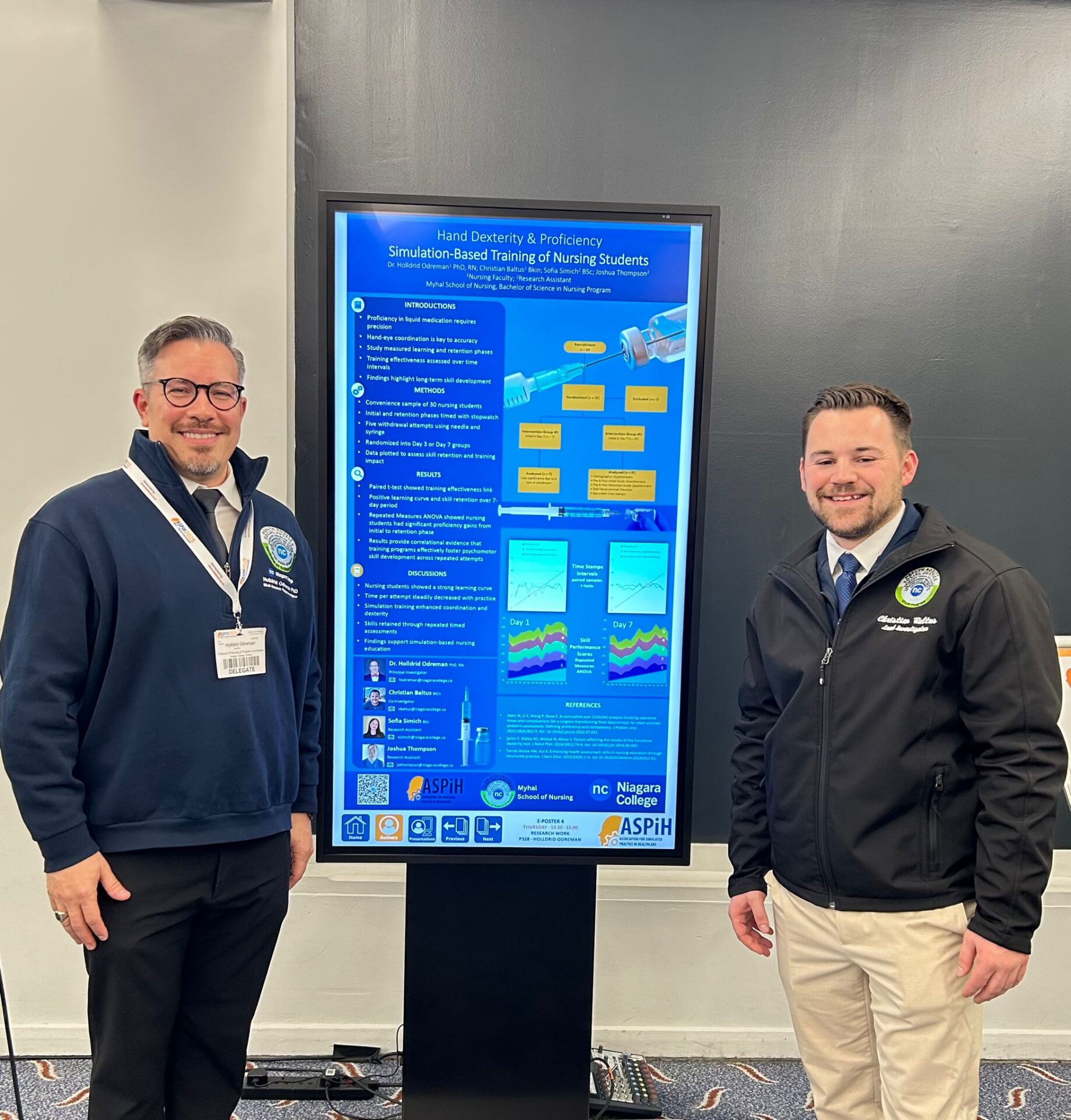
Dr. Holldrid Odreman (left) and Christian Baltus at the ASPiH conference on Nov. 13
The pilot study, Hand Dexterity and Proficiency: Simulation-Based Training of Nursing Students, was conducted in winter 2025 and revealed valuable insights into the learning curve and skill retention of nursing students performing liquid medication withdrawal using a needle and syringe. The final data indicated a consistent decrease in time per attempt, demonstrating the effectiveness of simulation-based training.
“Targeted training, as implemented in this study, supports improved skill retention and proficiency in medication administration, enhancing students’ hand-eye coordination and dexterity,” said Dr. Odreman. “These findings can inform simulation training techniques for other essential nursing skills also.”
The funded research study, Self-Confidence and Modulation of Performance Anxiety Through Simulation-Based Learning, looks at how different training methods affect nursing students’ confidence and anxiety when performing the high-pressure skill of inserting a urinary foley catheter, which is known to cause the most performance anxiety in students.
This study is still in progress, with final results expected by the end of winter 2026. It was funded through NC’s Research Opportunity Fund and the Dream Big Fund, enabling the program to purchase equipment for the study and to offer paid roles for student research assistants.
Global perspectives
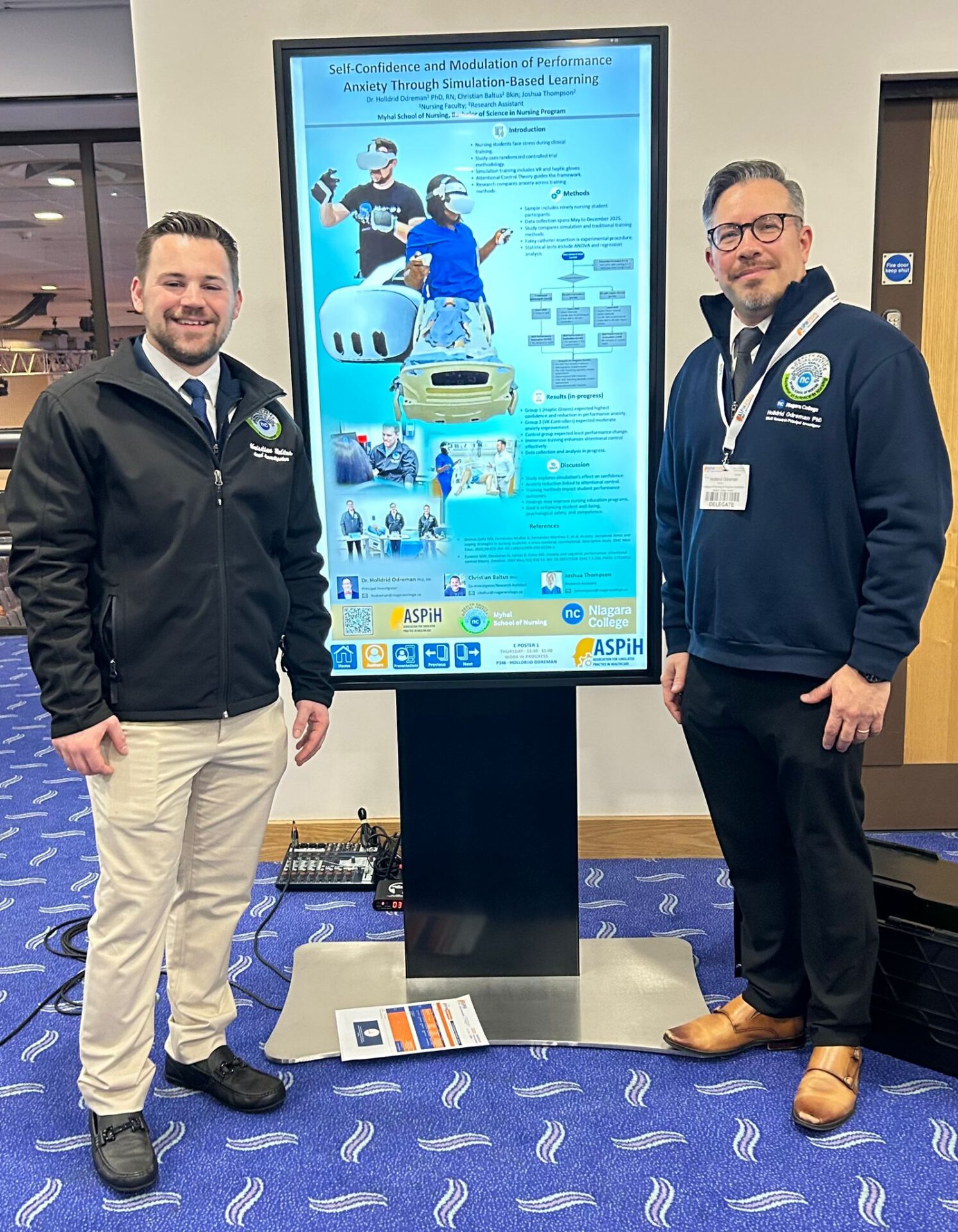
Dr. Odreman and Baltus with their second digital poster presentation
Baltus, a second-year BScN student and an alumnus from NC’s Pre-Health Sciences Pathway to Advanced Diplomas and Degrees program (2018), has been on the nursing research team since 2024 and was invited by Dr. Odreman to attend the Association for Simulated Practice in Healthcare conference. It was the first time Dr. Odreman was able to bring a student to an international event.
“One of the most significant takeaways from the experience was gaining a broader, global perspective on healthcare and understanding how the challenges we face compare to those in the United Kingdom,” said Baltus. “Seeing these similarities and differences reinforced the importance of collaboration and shared learning across healthcare systems.”
The conference gave Baltus new perspectives on how simulation-based learning can contribute to best practices in nursing education at NC.
“Throughout the conference, I found myself consistently asking how ideas, initiatives, and innovations could benefit Niagara College and its students,” he said.
“While healthcare challenges are often discussed from a broad, system-level perspective, I believe meaningful change begins by focusing on a smaller, targeted area. For me, that focus starts at the educational level, and specifically within the BScN program at Niagara College.”
The student research experience
Dr. Odreman, who has created research opportunities for NC nursing students long before the launch of the BScN program in 2024, uses a three-legged model in his program of research that focuses on simulation, curriculum and leadership.
“Participating in research helps students build critical thinking, collaboration, and leadership skills, which are essential qualities for future nurses,” he said. “It also allows students to contribute meaningfully to advancements in nursing education and patient care, making their learning more impactful and relevant.”
Being one of the first class representatives for his program, a role in which he contributes to curriculum feedback and advocates for his peers, Baltus sees the short- and long-term benefits of involving students in research.
“The work we are doing through research helps set the standard for the program and contributes to shaping its future direction,” he said. “It is about creating unique opportunities within the program and helping to establish pathways that future students can benefit from for years to come.”
Dr. Odreman and his research team look forward to participating in another conference this summer. They have been accepted for an oral presentation at the 37th International Nursing Research Congress, happening in Toronto from July 16-18, on a previous study titled Virtual Reality Simulation Prebrief: Promoting Psychological Safety and Clinical Reasoning.
Collaborative spirit
Dr. Odreman is grateful for the collaboration among the dedicated individuals who have shown a commitment to academic research at NC.
For the latest research study Self-Confidence and Modulation of Performance Anxiety Through Simulation-Based Learning, he would like to thank the following colleagues for their support:
- Julianna Pennings, the simulation lab technician for the Health Sciences division at the Welland Campus, who played a key role supporting the team with access to virtual reality equipment and simulation rooms for data collection.
- Employees from the ITS department, who were helpful during the planning phase and when troubleshooting issues with network connectivity between the virtual reality software and the headsets.
- Nursing faculty including professors Mark Grabner and Julie Blain, who provided time in their classes to promote this study.
“Finally, the encouragement and support from Courtney Evers, Associate Dean of the Myhal School of Nursing, and Dr. Sinéad McElhone, Dean of Health Sciences, have been vital in bringing this important research to life,” said Dr. Odreman.
