

On October 8, employees gathered to learn from the lived experiences of NC students with disabilities.
Daniel, Krysa, Jack, and Dave – representing a wide range of NC programs, including Broadcasting, Child and Youth Studies, International Business, and Human Resources, and disabilities – shared their perspectives as panelists during Disability Awareness Week.
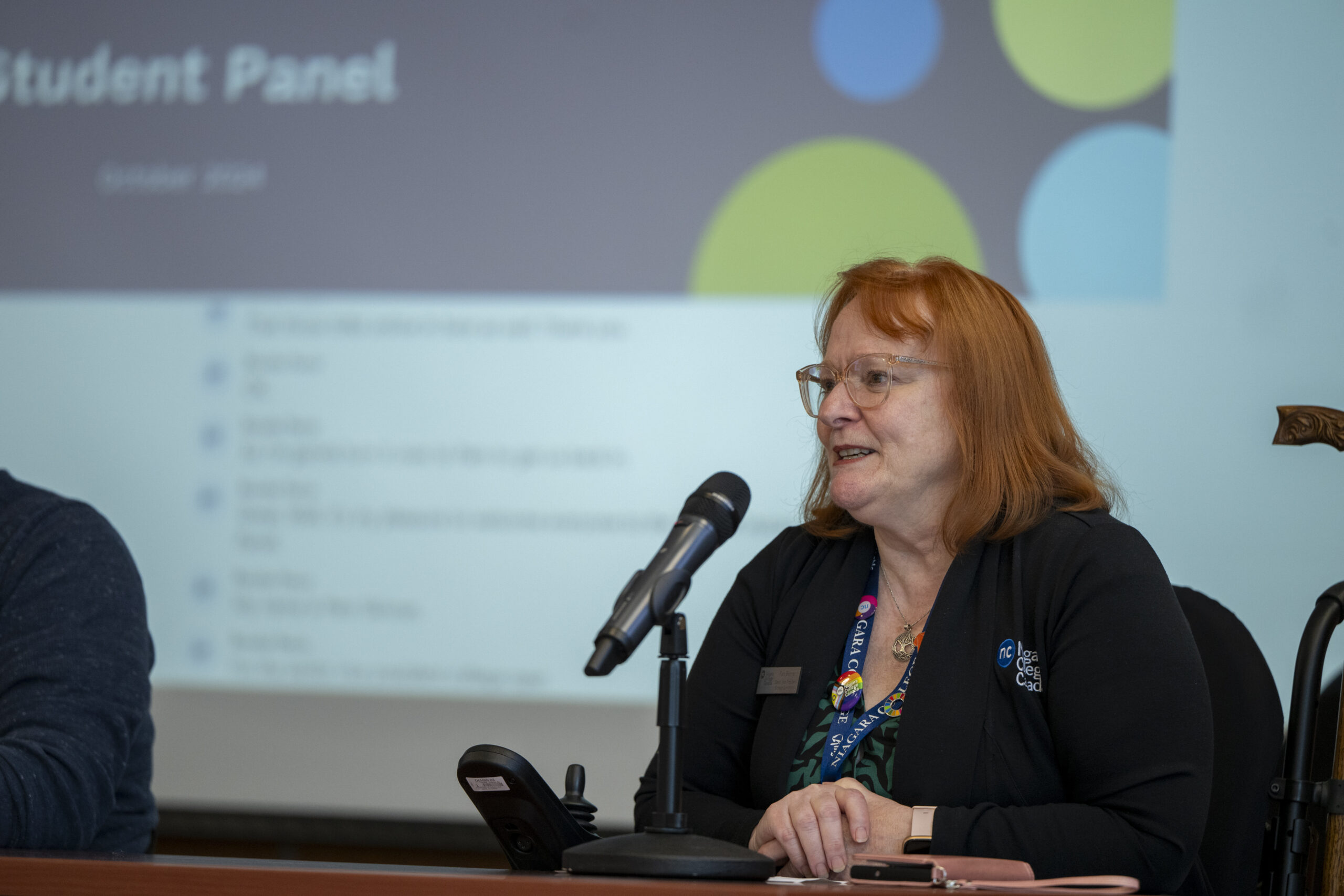
In her opening remarks, Pam Skinner, Senior Vice-President, College Operations, underscored the importance of listening to and learning from the experiences of students with disabilities, which include those with mental health and learning disabilities. Vice-President Skinner linked these discussions to the College’s broader commitments to the EDI Blueprint and making NC more accessible.
The students offered a window into their life at college. The conversation was vulnerable and honest, giving educators a valuable chance to learn and be curious.
“The panel underscored to faculty and staff the importance of understanding the stigmatization that students have dealt with along their educational and life journey,” explained Kate Wiley, Educational Developer and panel moderator.”

Their stories centered around overcoming struggles, but with support and gratitude, while facing some stigma and creating awareness along the way. One student commented on the importance of giving students with disabilities a voice and also validating their experiences. Another commented that while we have a long way to go with education, we are making significant strides.
Many students expressed gratitude for the support they received and continue to receive from various areas of the College. During the question-and-answer period, faculty and staff from various areas of the College asked the students to share some ways they could make their services or spaces more accessible.
One student shared how beneficial single study pods at the library is to their ability to focus, suggesting more study and also creative space for students.

When it comes to career preparation, students shared that employment can be scary for disabled students, and the College has a role to help prepare them through networking and mentorship to ensure a smooth transition.
Another student shared that it wasn’t until coming to College as a mature student that they learned they had a disability. They expressed that receiving support made all the difference. One example was support from Health, Wellness and Accessibility Services to facilitate grant funding that fully covered the cost of their tuition. They called this “life changing.”
The notion that some programs (and careers) have more barriers than others for students with disabilities was discussed, with one student encouraging the College to be a leader in removing those barriers to influence industry.
The students urged those in attendance to recognize the invisible nature of some disabilities, and to give people grace, compassion, and approach one another with curiosity and an open mind.
“While NC has great supports for students that are highly utilized, there is still work to be done to improve accessibility of physical spaces, awareness of visible and invisible disabilities, increased representation in events and activities, additional resources like guidance for using inclusive language, and accessible teaching, learning and marketing materials,” said Wiley, reflecting on feedback from panelists.
