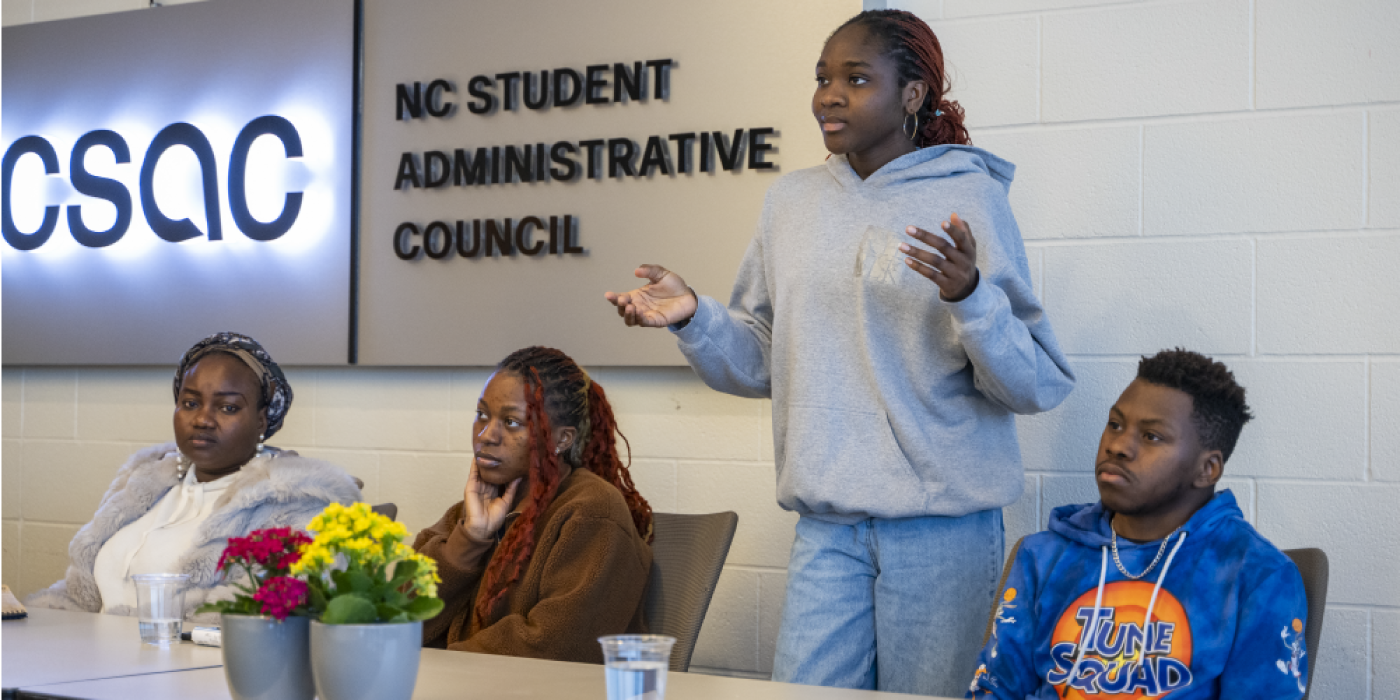
The Black Student Voice Panel gathering was held both in-person at the Welland Campus and virtually via Zoom and brought together over 50 attendees to facilitate an open and insightful discussion on how we can improve the College’s inclusivity for Black students.
Guiding the discussion was Dawit Eshetu, Professor in the School of Business and Management Studies. The panel featured insights from three NC students: Chimbe Bongabi, Mariam Edun, and Oluwademilade Daniel Noble, who each shared their personal experiences and offered thoughtful suggestions to foster a more welcoming environment at NC. Grace Stanley, NC student and President of the Black Student Association, also delivered closing remarks, expressing gratitude to all participants for their willingness to listen and engage.

Reflections From the Student Panelists
Mariam Edun:
As a Black student at Niagara College, I am proud to belong to a place where my best is being nurtured and most importantly where my concern is prioritized engaging the most diligent and encouraging team. The support from the college, faculty and staff has further improved my sense of belonging.
Oluwademilade Daniel Noble:
I believe Niagara College can enhance the sense of belonging within the Black community by showing a genuine commitment to Black History Month and other relevant events. It is important for faculty and staff to create a welcoming environment by organizing more Black-centered activities. It is crucial that the financial burden of tuition fees negatively impact the mental well-being of students, who may feel isolated and restricted in their campus experience.
I believe efforts should be made to ensure that campus events are inclusive and representative of the diverse student body, including Black students. Orientation week should focus on helping students acclimate to school life and familiarize themselves with campus resources, while reading week should be structured to allow for adequate preparation time for assignments, considering that many students have work commitments that can impact their mental well-being.
Grace Stanley:
The Black student voices panel was an eye opener for many because student panelists had an opportunity to speak on their issues and things that can be done to improve their experiences. Currently, the college is doing well in the aspect of student wellbeing and bursaries, but I believe launching a Black Student Success Center at Niagara College would greatly increase the engagement of Black students at the college and foster a conducive atmosphere for us to better relate with faculty and the college at large.
Reflection From the Moderator
Top ten takeaways from the Black student voices panel, Dawit Eshetu, PhD:
I had the pleasure of hosting Niagara College’s inaugural Black Student Voices Panel on March 20, 2024. I commend students for their open, intentional, and courageous remarks. They showed great commitment to creating a more welcoming space for Black students. Since they are all international students, their issues reflect the issues that many international students face, which was a reminder that students’ challenges have layers. Ten issues stood out for me.
- Student clubs are great hubs: The student clubs within SAC serve as hub for friendships and belonging. Associations like the Black Student Association plays a significant role in fostering support and camaraderie. Panelists stressed the importance of raising awareness about these clubs and their activities. In the words of Chimbe Bongabi, “unless you tell us, we will not know about it. Unless we know about them, we cannot appreciate them.” They agree that it is also not enough to have clubs and activities. Student groups like Black students should be invited. It looks like there are assumptions that certain events are not for everyone. Inviting diverse groups make them feel that they are welcome and that it is for them too.
- Cross-Cultural Experiences: Panelists encouraged students to engage in activities beyond their own circle. By participating in intercultural experiences, students can broaden their horizons, and enrich their experience as the College. Black students should go to other cultural events and others should come to Black student events.
- First Week of Class: One area the panelist felt strong about was the first week of class (they called it orientation week). The first weeks are critical for international students to adapt to their new environment. They asked for faculty to be more patient, and more available to students during this period, according to Daniel Noble. This brought back memories of my experience as an international student in Germany. During the first few days my mind was on housing, transport, banking, insurance, grocery, etc. I was not fully invested in school until week two. It made me wonder how I can balance student needs with my teaching need.
- Reading Week: While traditionally considered a break, students now perceive it as a crunch time for catching up on coursework. In the words of Mariam, “… it has become about beating the deadline, rather than learning.” As I hear students talk, I was asking myself if there is anything I can do to help as a faculty member. Some of what we do to help students might not be helping them. We plan to spread the workload before and after the break so that students do not get overwhelmed by exams or projects due in the weeks before. I am not sure if there is anything I can do to please everyone, but I know I must think about this and look at it case by case.
- Late Classes and Amenities: Concerns shared regarding classes and learning activities scheduled after 4pm. The limited availability of amenities like the cafeteria and extracurricular including club activities after 4pm has limited the student experience, according to panel members.
- Targeted Information and Services: Students expressed a desire for targeted information about college services such as career guidance, training opportunities, financial aid, and scholarships. It appears some folks assume these services are not meant for them. They suggested that receiving reminders that these opportunities are available and available to all.
- Cafeteria Menu: The cafeteria plays a vital role in student life, and students desire a more diverse and culturally inclusive menu. Transitioning to new cuisine can be challenging, especially for those from diverse backgrounds. By offering a broader range of options, the college can better cater to diverse tastes and preferences.
- Transit Arrangements: The panel commended SAC’s collaboration with the region to bring back transit options. However, recognizing that many students use cars students wondered if there are any incentives for them.
- Visibility of Black Students: Students shared their concern that they are not getting enough attention because of the small number of Black students at the College. There is a perception that services are geared to some large student groups. The audience joined in calling for more visibility, more unity within the Black voices and called for continued conversations about the Black student experience.
- Representation and Support: Black students, while a smaller group, seek targeted representation and support. Ensuring their voices are heard and their unique needs addressed is vital to the panel. They suggested that a focused approach can help create an inclusive environment where every student feels valued. Grace Stanley, the President of the Black Student Association emphasized that actively addressing the concerns of concerns will contribute to a more inclusive and supportive college environment.
Reflections from Attendees:
- “It was a very valuable opportunity to hear directly from Black students, who, with great passion and skill shared their lived experiences and provided real examples on how we can do better as an institution.”
- “Representation matters and we need to see it in all aspects of the college – from the staff hired to the food served in the cafeteria.”
- “The need to open spaces for student voices. Inclusion is key!”
- “Great dialogue and opportunity to listen and learn from Black student’s experiences here at NC.”
- “It is always wonderful to hear our student reflections and ideas. We are a learning organization, and we can certainly always learn more.”