
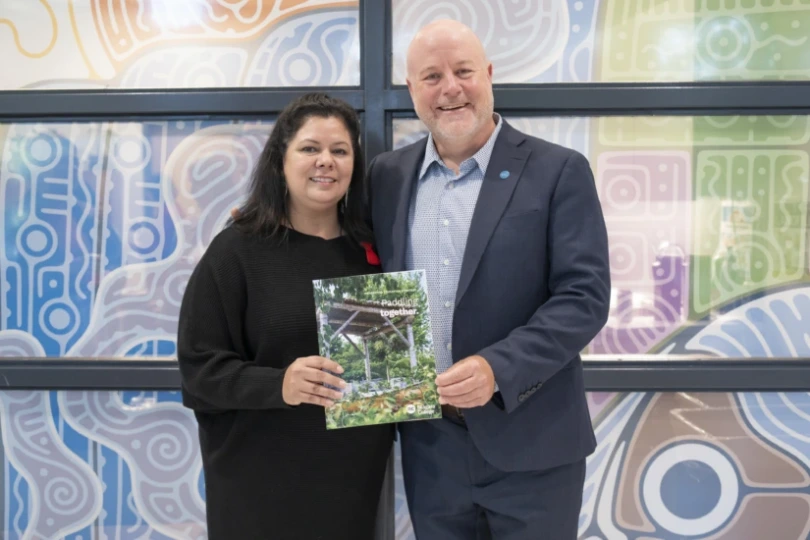
We are pleased to share that Niagara College has officially launched its Indigenous Education Strategy, Paddling Together, an important step in our work to increase access, inclusion, and support for First Nations, Inuit, and Métis Peoples across our College community.
The strategy provides a clear vision for Indigenous education at NC, outlining shared goals, priorities, and responsibilities. By drawing more fully on the diverse knowledge and experiences within our community, we can create a place where Indigenous learners continue to thrive, feel a stronger sense of belonging, connection, support and representation, and have meaningful opportunities to share their voices and shape the future of NC. While the launch of our strategy marks an important milestone, we recognize that advancing this work is a continuous journey that requires sustained effort, relationship-building, and action from all of us.
The strategy is grounded in four key principles: respect, reciprocity, openness, and Indigenous leadership. These principles are reflected in priorities focused on building collaborative partnerships, responding to community needs, fulfilling the Truth and Reconciliation Commission’s Calls to Action, and aligning with the Colleges and Institutes Canada (CICan) Indigenous Education Protocol.
Through consultations, surveys, conversations, and teachings, we listened to Indigenous partners, students, and members of the NC community. Their perspectives helped shape our approach to Indigenous education, Truth and Reconciliation, and the integration of Indigenous ways of knowing, being, and doing into College-wide systems and practices as we continue this journey together.
In keeping with the principles of the Two Row Wampum and recognizing the waterways that have shaped the Niagara region, the strategy’s five priority areas are represented as canoes: Community Relationships, Governance, Teaching and Learning, Indigenous Student Empowerment, and Organizational Culture and Systems. Paddling Together reflects both the journey ahead and the importance of moving forward through listening, learning, relationships, and shared responsibility.
This work belongs to all of us. Indigenous education and our commitment to Truth and Reconciliation are not the responsibility of one person, one team, or one department. Each of us has a role to play in creating a more inclusive College community, strengthening relationships with Indigenous Peoples and communities, and contributing to meaningful and lasting change.
We are deeply grateful to the Indigenous partners, students, employees, Elders, Knowledge Keepers, community members, and everyone across the College who contributed their time, perspectives, teachings, and experiences to the development of this strategy.
As we launch Paddling Together, we invite our entire College community to carry this work forward with respect, openness, reciprocity and a commitment to Indigenous leadership. We also invite you to explore and learn more about the canoes and the new Indigenous artwork that brings this theme and the visual identity of Indigenous Education to life. Discover the stories and meaning behind this work, learn more about our journey, and find ways to get involved as we continue to build a more inclusive and supportive community together.
For more information, please visit the Strategy webpage at niagaracollege.ca/paddling-together.
