
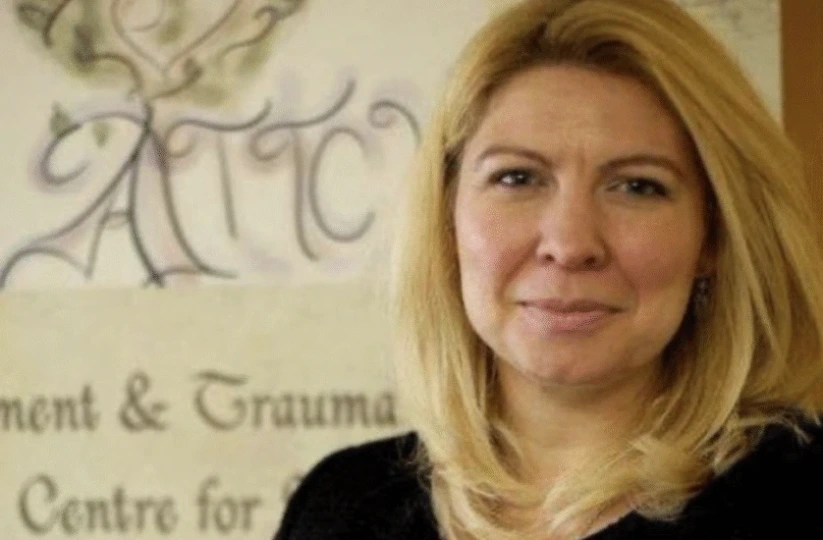
For more than 27 years, Niagara College alumna Lori Gill has dedicated her career to helping individuals and families navigate trauma, adversity and mental health challenges, while working to break down barriers to specialized mental health care.
As the Founder and Executive Director of the Attachment and Trauma Treatment Centre for Healing (ATTCH) Niagara, Gill leads a non-profit organization providing free and low-cost trauma-specialized therapy to individuals who may face barriers to accessing care.
Her commitment to supporting the well-being of others goes beyond her clinical practice. An award-winning clinician, educator and internationally recognized trainer, Gill is helping prepare the next generation of mental health professionals with the knowledge and skills to provide compassionate, trauma-informed care.
Her career has come full circle as a four-time NC graduate, who has returned to the College as a part-time professor to share her expertise with students preparing to enter the field.
Building a foundation at NC
Originally from Prince Edward Island, Gill first moved to Niagara with her now-spouse. Having always enjoyed working with children and youth, she was drawn to Niagara College’s Child and Youth Worker program (now Child and Youth Care program).
Gill completed four NC credentials: General Arts and Science (2001), Criminal Psychology and Behaviour (2001), Child and Youth Worker (2002), and Counselling Skills for Human Services (2002).
“I often say that my schooling at NC laid the foundational bedrock that the rest of my academic and clinical learning has built upon,” she said.
Her time at NC helped shape not only her professional interests but also her understanding of the lasting impacts of trauma and adversity.
“My time at NC was deeply transformative,” she said. “Learning about and unpacking the systemic impacts of trauma and adversity – including forming meaning around my own childhood experiences – gave me a phenomenal foundation both as a clinician and as a parent.”
“It taught me to look past a person’s behavior and ask, ‘What happened to you?’ rather than ‘What is wrong with you? ‘” she added. “That shift in perspective is the very core of trauma-informed care.”
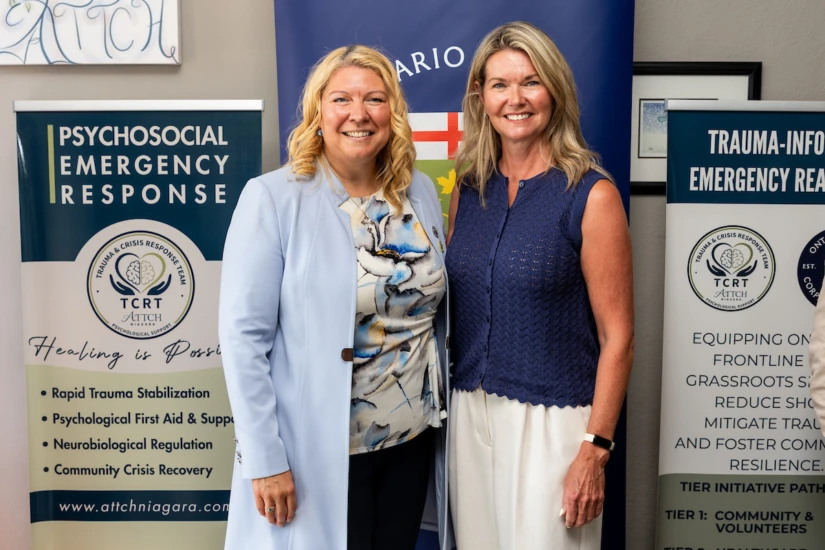
Gill (left) founded ATTCH Niagara, a non-profit providing accessible trauma-specialized therapy, and developed the Integrative Trauma and Attachment Treatment Model (ITATM™), used by organizations across Canada and internationally.
Expanding access to trauma-informed care
Over nearly three decades, Gill has worked across children’s mental health, child welfare, addictions, education, suicide prevention and adult mental health services, building extensive expertise in trauma and attachment.
Through ATTCH Niagara, she has worked to address gaps in access to specialized mental health services, providing support to individuals who may otherwise struggle to receive the care they need.
In addition to leading the non-profit, Gill operates her private practice, Lori Gill Psychotherapy, and ATTCH Inc., through which she developed the Integrative Trauma and Attachment Treatment Model (ITATM™), a somatic-based approach to trauma treatment now used by organizations across Canada and internationally.
Her work also extends to training, advocacy and community capacity-building. As an international speaker and trainer, Gill shares her expertise with clinicians, first responders, medical students and other professionals, helping strengthen trauma-informed approaches across sectors.
Over the past two years, she has also supported efforts to build trauma-informed emergency preparedness and response capacity across Ontario through a provincially funded initiative.
Most recently, she created a workbook designed to help children understand the impacts of trauma and work through overwhelming experiences in a safe and playful way.
Gill credits her passion for lifelong learning that started during her time at NC, with inspiring her to explore new approaches to trauma treatment.
“My love for learning – which truly ignited during my time at Niagara College – drove me to complete extensive training and research,” she said.
Recognizing gaps in access to specialized trauma care, Gill developed her treatment model to turn complex research into practical approaches that professionals can use to support individuals on their healing journeys.
Her contributions have earned recognition locally and nationally, including the 2025 Canadian Counselling and Psychotherapy Association (CCPA) Humanitarian Award and the 2024 Women in Business Excellence in the Not-for-Profit Sector Award. She was also previously nominated by Niagara College for a provincial Premier’s Award.
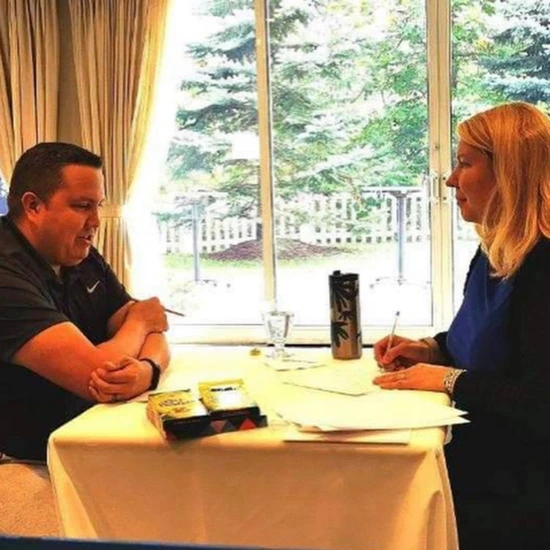
Gill leading a live demonstration of her Integrative Trauma and Attachment Treatment Model (ITATM™).
Coming full circle at NC
As a part-time NC professor, she has returned to the classroom to share her professional knowledge and experience with students in Child and Youth Care, psychology and related fields, including the College’s new Mental Health and Addictions graduate certificate program.
“One of my greatest honours has been the opportunity to return to Niagara College as a part-time professor, teaching CYC students, psychology, and related fields,” she said.
She also supports emerging professionals through ATTCH Niagara, where she developed a mentorship program that provides graduate student interns with intensive clinical training and supervision.
Over the past decade, the centre has trained and supervised up to nine graduate student interns annually, helping expand its capacity to support clients while preparing future clinicians to enter the workforce.
Gill has personally supervised and mentored more than 50 students, including NC students completing placements at the centre. Many have gone on to secure employment with the organization following their practicums.
Guiding the next generation of mental health professionals
For students considering a career in trauma-specialized therapy, Gill emphasizes that supporting the well-being of others also requires an understanding of one’s own mental health and emotional needs.
“My foremost advice is to take every single opportunity to learn, but remember that academic knowledge is only half the equation,” she said.
She encourages aspiring clinicians to prioritize self-awareness, recognize when they need support and approach their work with humility and curiosity.
For Gill, the greatest reward of her career is the opportunity to help others feel supported and empowered throughout their healing journeys.
“At the end of the day, our greatest privilege is helping another human being feel seen, heard, and supported on their path to a more authentic, peaceful, and embodied life and to help them to know that healing is possible!”
