
Isabella Geberdt never imagined her first few weeks of college would involve stomping frantically in a barrel crushing freshly picked grapes with her bare, purple-stained feet, but for the latest crop of students from NC’s Winery and Viticulture Technician program, the messy, high-energy grape stomp proved to be a perfect kickoff to their applied learning journey.
“I never pictured this at all, but I’m so glad we’re doing it,” she said. “It’s so much fun and will be part of so many new experiences for us in the program.”
This hands-on – and feet on – lesson is just one of the “only at NC” experiences that await the College’s wine students. With Canada’s first and only commercial Teaching Winery right on campus, time-honoured industry traditions like the grape stomp – as well as the Icewine harvest – have become annual rites of passage for NC Winery and Viticulture Technician students.
On the morning of September 21, Geberdt and her classmates leapt into the annual grape stomp.
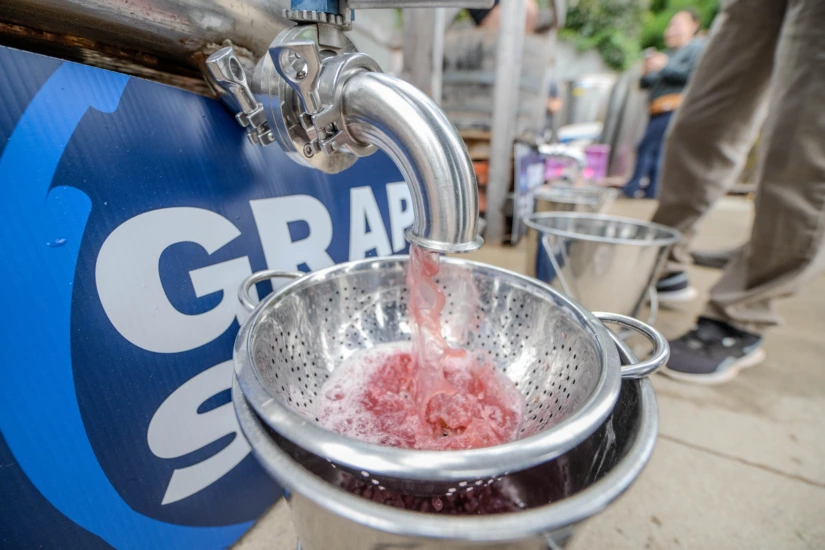
After picking fresh fruit directly from the campus vines, the students kicked off their shoes, divided into teams, and dove into the fun competition to see which team could yield the most juice. During the relay-style event, teams were provided with equal 40 to 50 kilograms of freshly picked grapes. Students took turns leaping into large bins to stomp the fruit as fast as they could to extract every possible drop before the clock ran out and the final juice-to-fruit yield was measured. Part of the Winemaking 1 class, the activity served as a critical first step into the industry.
“This is an important foundation for what we do across 5 terms and two years in our program,” said Gavin Robertson, Professor and Coordinator of the Winery and Viticulture Technician program. “It’s a fun icebreaker that acts as a warm welcome to NC and the Canadian wine industry by allowing students to get out into the vineyard and get their feet dirty in the service of a hilariously competitive old school winemaking activity.”
Beyond the fun, the grape stomp imparts essential lessons in fruit ripeness, quality and ambient microbiology.
“Fundamentally, we are allowing the sugars and other components in the grape to interact with wild yeasts that inhabit grape skins and cellular environments,” said Robertson, who noted that the dynamics haven’t changed in over 8,000 years.
Head Winemaker Allison Findlay echoed this sentiment and added that this physical approach is the perfect baseline for newcomers.
“We’re introducing them to winemaking from the very bottom, with no intervention – no stainless steel, no picking mechanisms – in order to show students what it used to be like the ancient way,” said Findlay. “Then we show students the interventions used these days to produce high quality wines.”
For the students, the physical reality of traditional crushing brought some unexpected surprises.
“It was a lot colder than I expected and it was a very odd texture,” said first-year student Isabella Gerberdt. “It was kind of squishy, but kind of like stepping on Orbeez.”
The chillier temperature they experienced was a result of an abrupt drop from unseasonably warm conditions earlier in the month. Robertson noted that extreme rain events and variable weather resulted in mixed levels of ripeness in the vineyard this year and encouraged students to forage a complex mix of varieties.
“The resulting wines should be truly unique and interesting and quite different from more traditional single varietal or blended wines,” he said.
Despite the playful nature of the class, student students took in the serious academic value behind it.
“I decided to go into this program because it’s a very applicable science,” said Geberdt. “There are a lot of sciences that are involved in winemaking including earth sciences, geology, biology, and chemistry.”
Matthew Brohman, who is taking the program while already working in production at Tawse and Redstone wineries found the relay-style grape stomp to be a serious workout.
“I was the last person in my group so there was a lot of pressure on me. I went really fast,” he said. “I wasn’t expecting how much it would wind me, but it was fun squishing all the little corners and nooks and crannies.”
For student Nick Wuhlar, the challenge highlighted exactly why modern winemaking equipment is so valuable today.
“I expected them to crush more easily. Instead, when you step on a full grape… it kind of just moved out of the way rather than actually squishing,” Wuhlar said. “Making quality wine without all of the technology that we have today would have been really difficult.”
This year’s grape stomp featured the closest competition in the event’s history, with Group D producing the highest juice-to-fruit yield ratio at 54.09%. Robertson noted that a simple lesson is baked into this exhausting process: modern wine presses yield 65-75% with much less sweating required, along with the ability to press several metric tons of fruit an hour.
With the juice now collected, the real-world experiential learning is just beginning. Students will conduct chemical analysis on their ‘foot stomped juice’ and monitor the natural fermentation process daily – including on the weekends. Once the sugars are metabolized they will perform a finished wine analysis and a structured sensory analysis comparing their results to conventional white winemaking projects later in the term.
“As always we have an amazing group of students from diverse backgrounds with a shared passion for grapes and wine and a clear motivation to learn everything they can while we have them in our world class training facilities” said Robertson. “It’s a privilege to be able to work with such a bright engaged and inspiring students.”
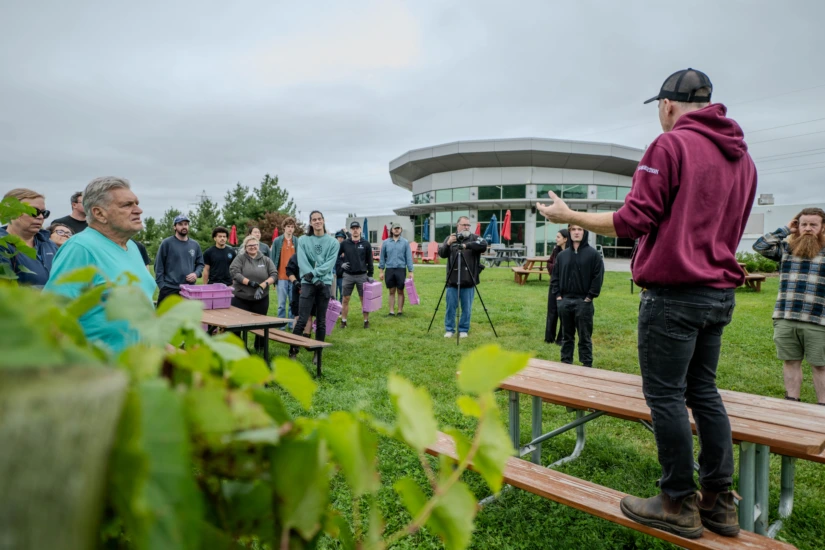
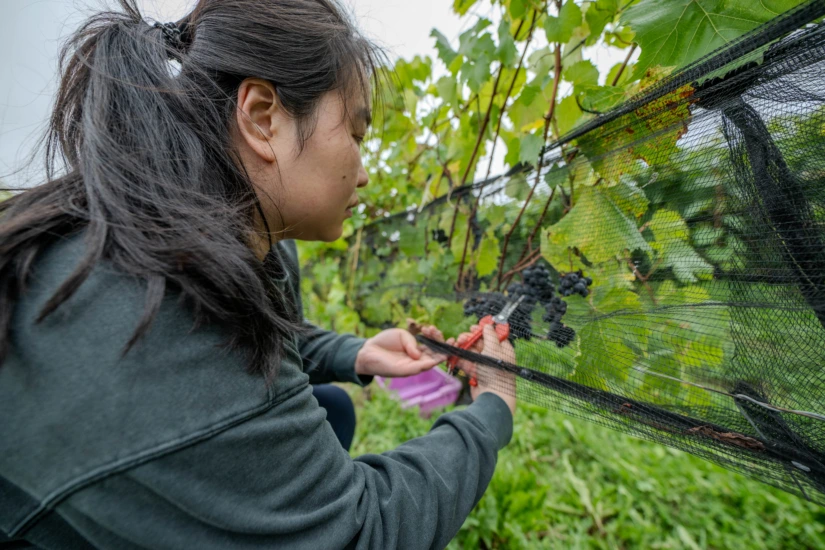
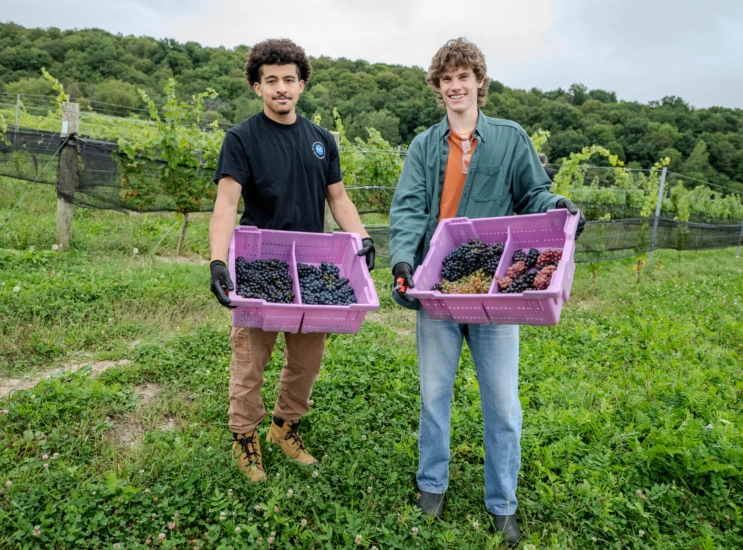
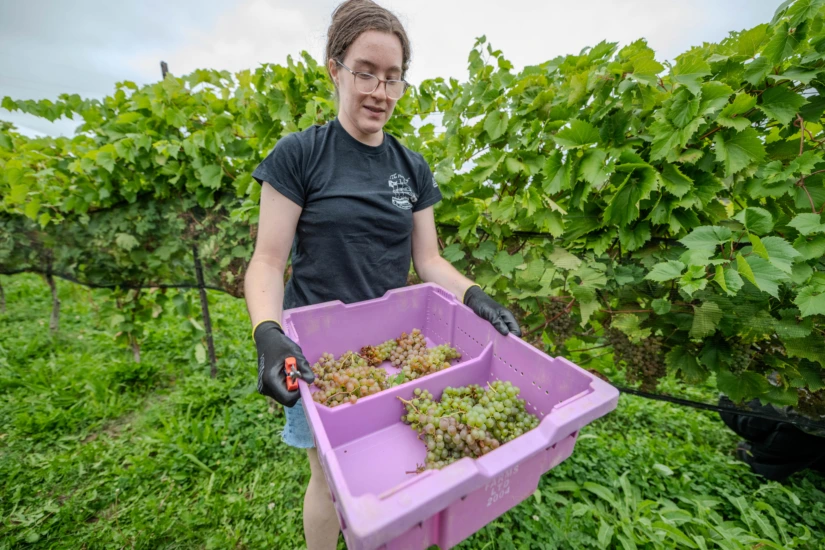
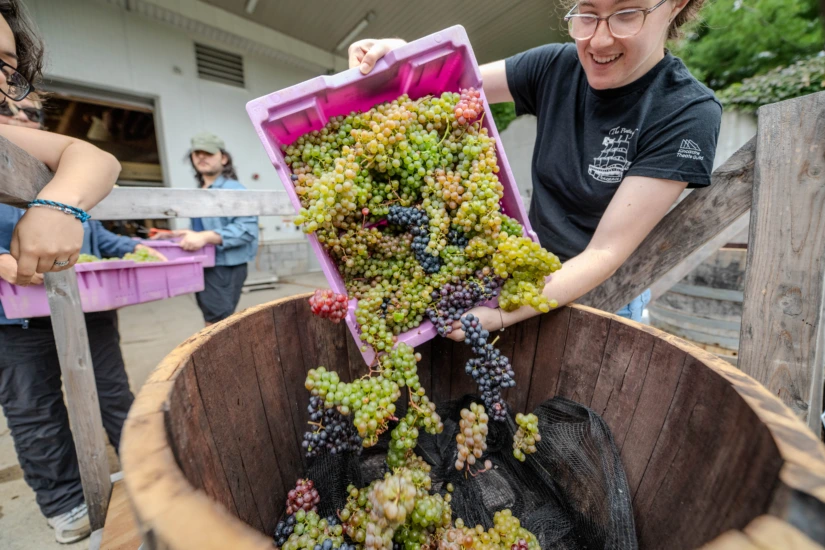
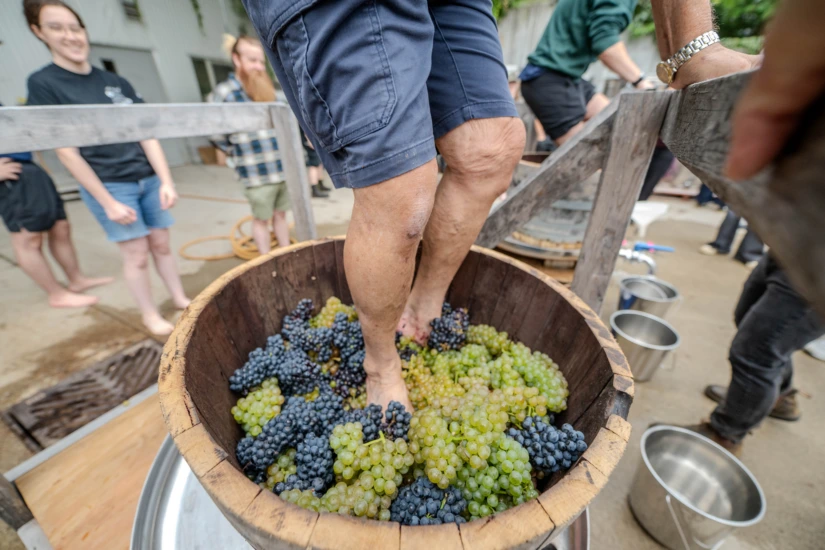
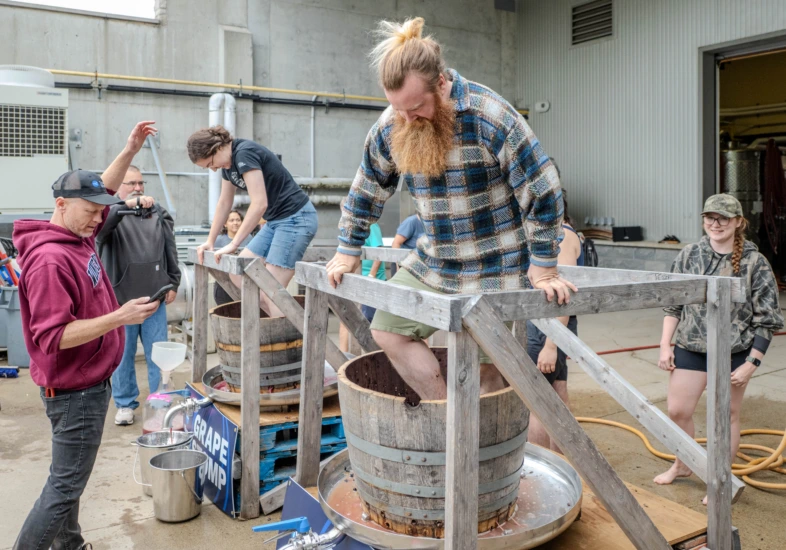
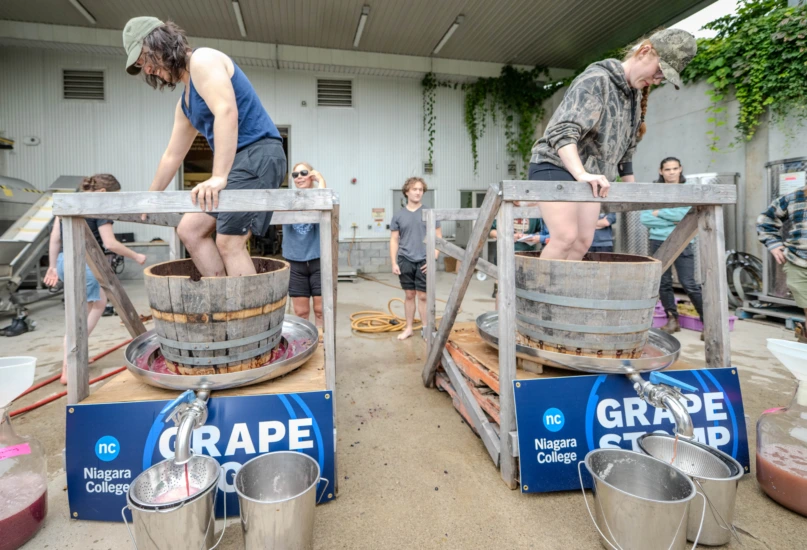
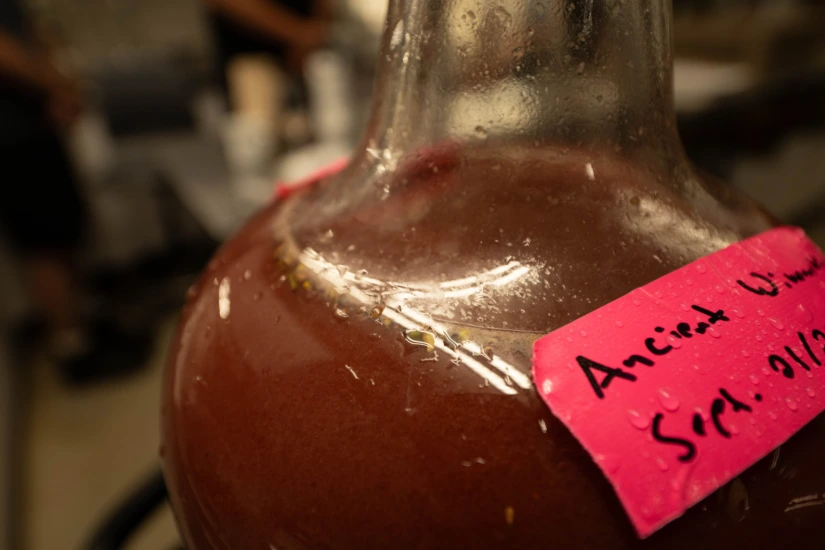
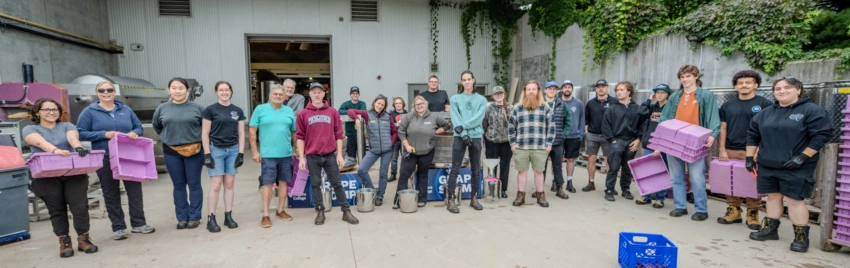
A class of first year Winery and Viticulture Technician students prepare to jump into winemaking with both feet at the annual grape stomp. Professor Gavin Robertson led the activity as part of his Winemaking 1 Class on Sept. 21.
Media
Video by Dave Johnson, Niagara dailies (Welland Tribune):
