
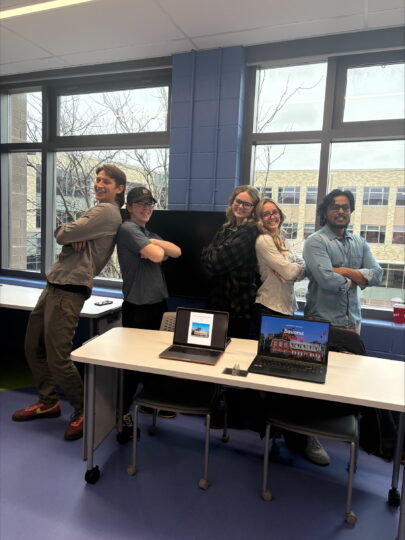
Students in NC’s Advanced Communications for Horticulture course had the opportunity to put their communication and presentation skills on display during an end-of-term project showcase held on April 16. The event saw students present their final proposals to representatives from a real industry partner — RiverBrink Art Museum, a not-for-profit collecting and exhibiting museum in Niagara-on-the-Lake.
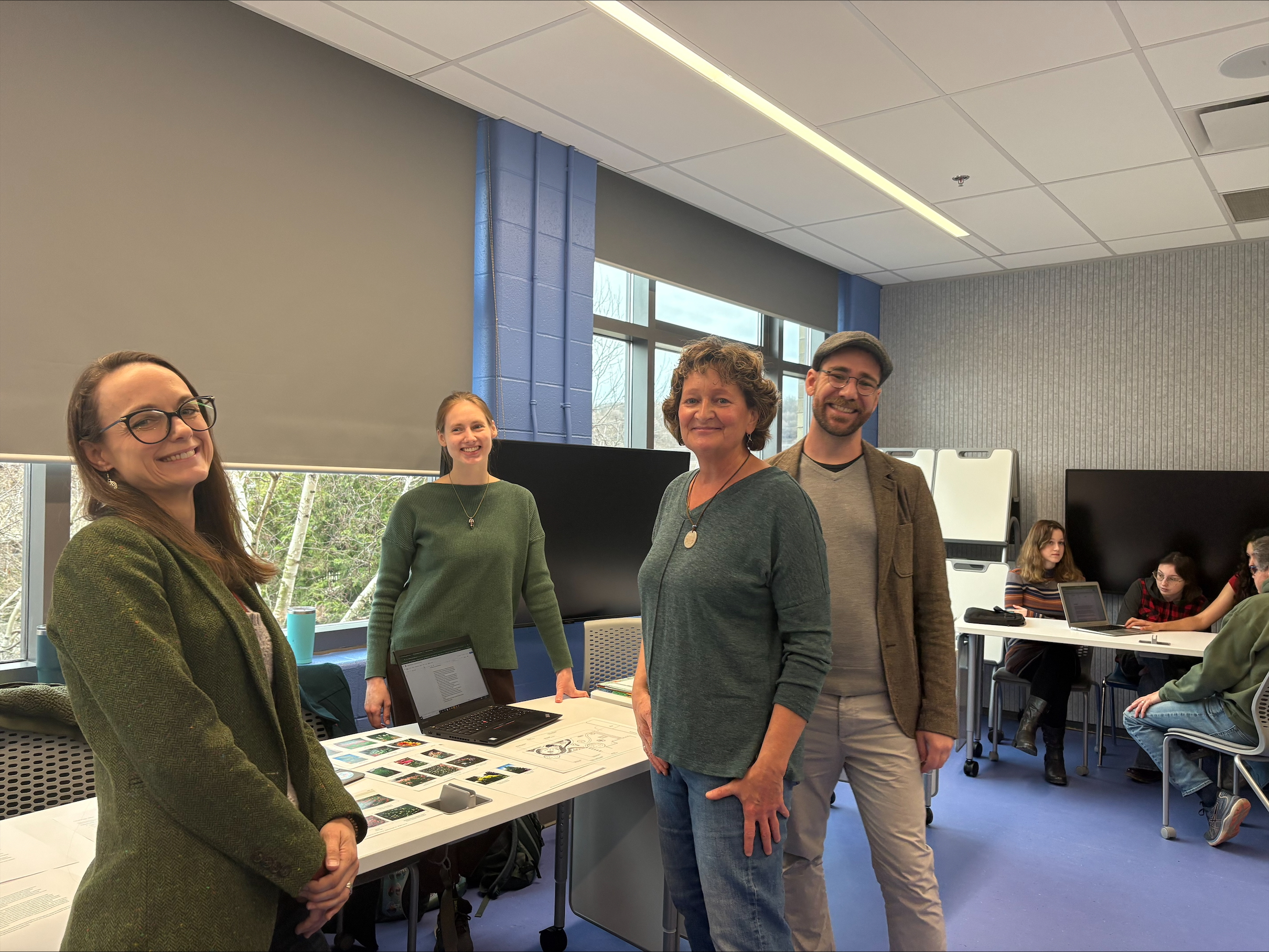
Throughout the term, students were challenged to apply their communication skills in a practical, career-relevant context. Working in teams, they developed proposals tailored to one of two major challenges identified by the client: to create a master plan for the museum’s grounds that honours founder Samuel Weir’s vision of the site as both an art museum and a public space; or to develop a planting plan designed to attract beneficial indigenous pollinators, while raising public awareness about invasive species and their impact on local biodiversity.
Located in a former summer home, RiverBrink has struggled with an identity challenge. While the site is home to a significant art collection and operates as a public institution, its residential exterior can cause potential visitors to overlook it as a destination. Students were encouraged to consider these challenges in their communications strategy, design, and presentations.
“Our partnership with Riverbrink Museum offered a genuine industry situation that mirrors real-world scenarios these students may face in their careers,” said Professor Tania Fera-VanGent. “This approach not only gives them hands-on experience but also makes the study of Communications more compelling, which is reflected in the exemplary work they produced. It is truly exciting to see what students come up with and how they communicate their ideas to our experiential partner.”

The course helps students strengthen their verbal and written communication with a focus on horticulture-related applications. They develop research skills and produce industry-relevant documents, including customer information sheets, instructional materials, persuasive and sales-related content, and formal proposals. This project in particular helps students gain confidence working with and presenting to real-world industry clients.
“This collaboration exemplifies the kind of experiential learning that sets our Niagara College students apart,” said said Jennifer Roberts, Associate Dean, Academic and Liberal Studies. “By working with a respected industry partner like RiverBrink Art Museum, our students were able to merge their program-specific horticultural knowledge with advanced communication strategies in a meaningful, career-focused project. These experiences not only enhance their skills but also empower them to see the real-world impact of their education.”
First-year Horticulture Technician Co-op student Dexie Canceran said the experience challenged him and his classmates to develop professional communication skills tailored to their field of study.
“It was a challenge to present our proposal in a way that was understandable to board members who might not be familiar with the horticulture industry,” said Canceran. “But through this course, we learned how to organize our thoughts and communicate effectively, which helped us deliver strong final presentations.”
Representatives from RiverBrink Art Museum were also impressed with the collaboration.
“The experience working with NC students on this project was wonderful,” said Katie Heikoop, a board member at RiverBrink. “I really enjoyed the interaction with the students and the challenge of developing the assignment. Making community connections is so important. I think offering a ‘real world’ and local example of potential future work for the students benefited everyone involved.”
