
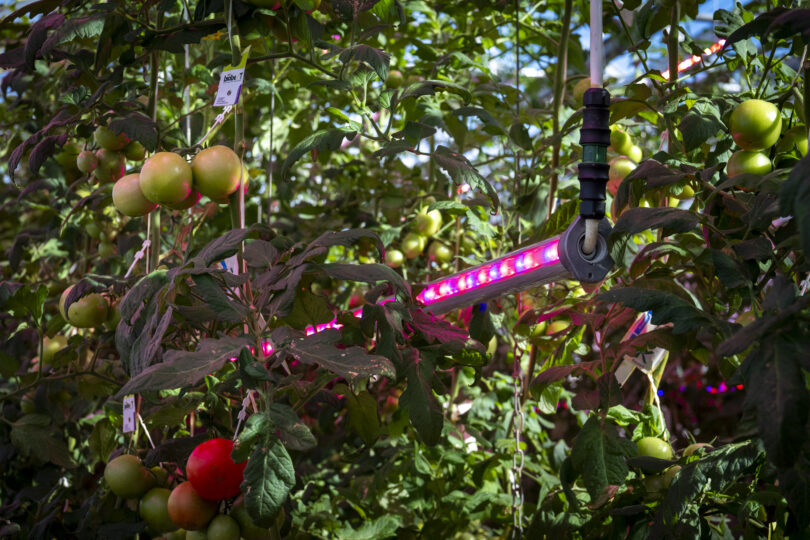
Over the last few years, NC’s Energy Team have been on a mission to upgrade campus lighting to LED’s to save energy and reduce costs.
This work supports both the Strategic Plan and Sustainability Plan, through which NC is committed to excellence in the operation of our college, including reducing carbon emissions.
Light Emitting Diode (LED) bulbs are more than 90 per cent more efficient than incandescent bulbs, and last at least 15 times longer. LEDs generate very little heat and can help lower costs for heating and cooling, without compromising brightness.
Two major upgrade projects included the Teaching Greenhouse and Commercial Cannabis Production Facility, both which require a lot of specialized lighting.
NC’s Teaching Greenhouse
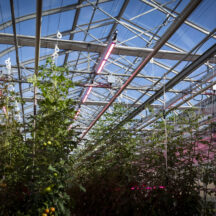
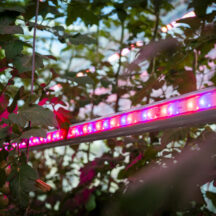
This spring, a fresh crop of tomatoes, cucumbers, peppers, eggplants, beans, and strawberries are growing under new LED lights at the Teaching Greenhouse.
In the summer and fall of 2024 the majority of high-pressure sodium (HPS) grow lights were upgraded to LED.
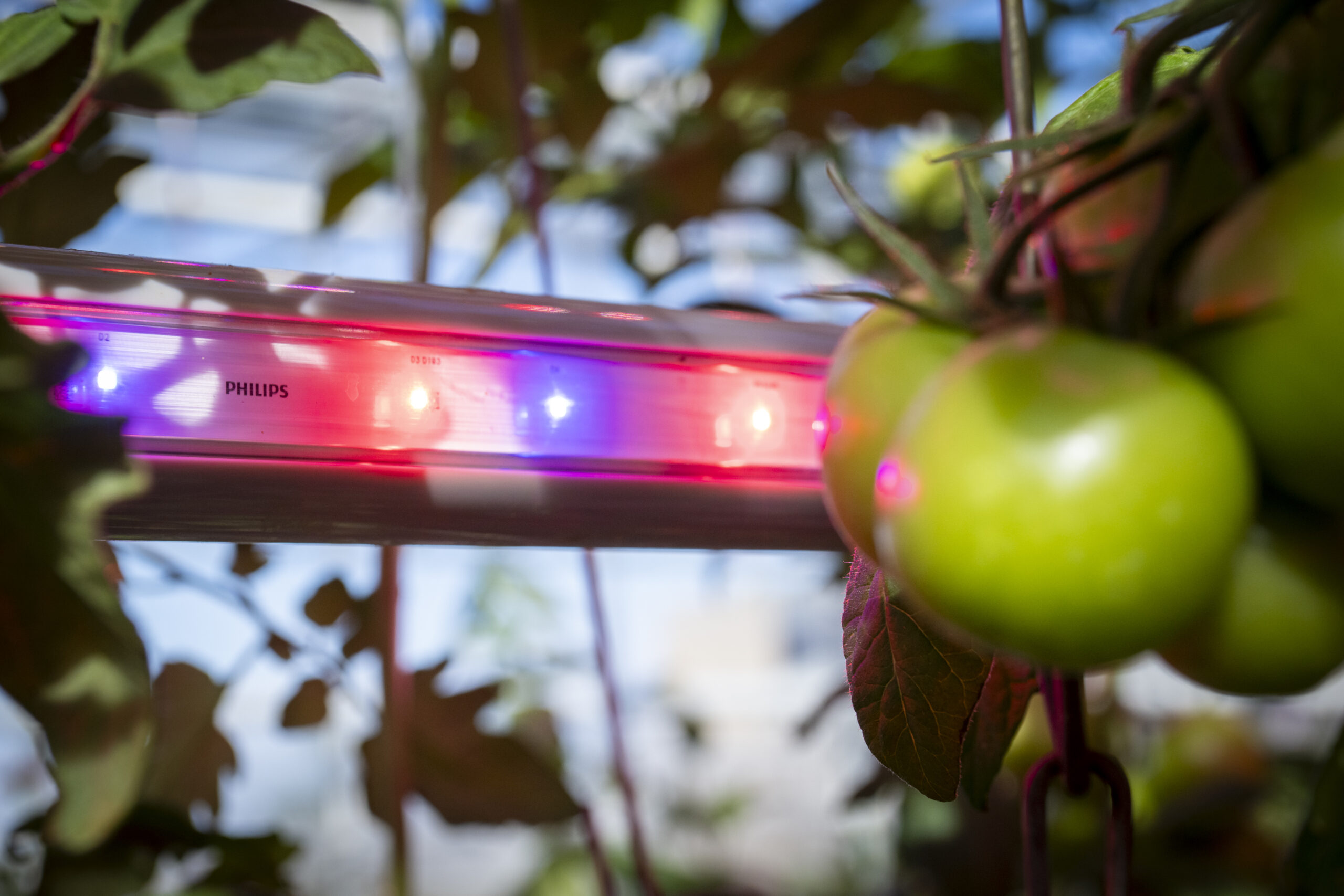
“A large percentage of the industry has transitioned from HPS light fixtures to LED,” explained Matthew Orr, Manager, Grounds & Greenhouse Operations. “It is important for our learning enterprise to have the equipment being utilized in the industry so that our students have hands on experience and first-hand knowledge of what the greenhouses are using.”
Orr explains that using LED lighting for growing crops is more energy efficient, and that they are exploring how
different plants respond under them.
“It has been interesting to work with lighting experts and industry professionals to learn what LEDs to use and what plants grow best under them.”
For learning purposes, a small number of lights were kept as high-pressure sodium to be able to compare growing with different lights.
In total, 143 new fixtures were installed, with an estimated annual savings of 36,403kWh/year, and $5,100. The upgrade also qualified NC for a rebate of $26,400 through SaveonEnergy.
Commercial Cannabis Production Facility
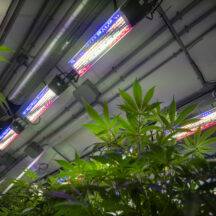
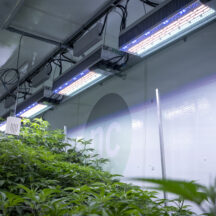
Since opening its doors as Canada’s first Commercial Cannabis Production Program, the overhead grow lights at NC’s facility received an upgrade to the latest technology.
The new lights have a highly intuitive control system to create different lighting ‘recipes’ to adjust to light intensity and spectrum.
“We are loving the new lights,” said Laurie Zuber, Horticulture Technologist at NC.
Zuber explains that the new lights – made by Quebec-based company Sollum Technology – offer a broader spectrum than their previous lights and come on gradually with dimming features.
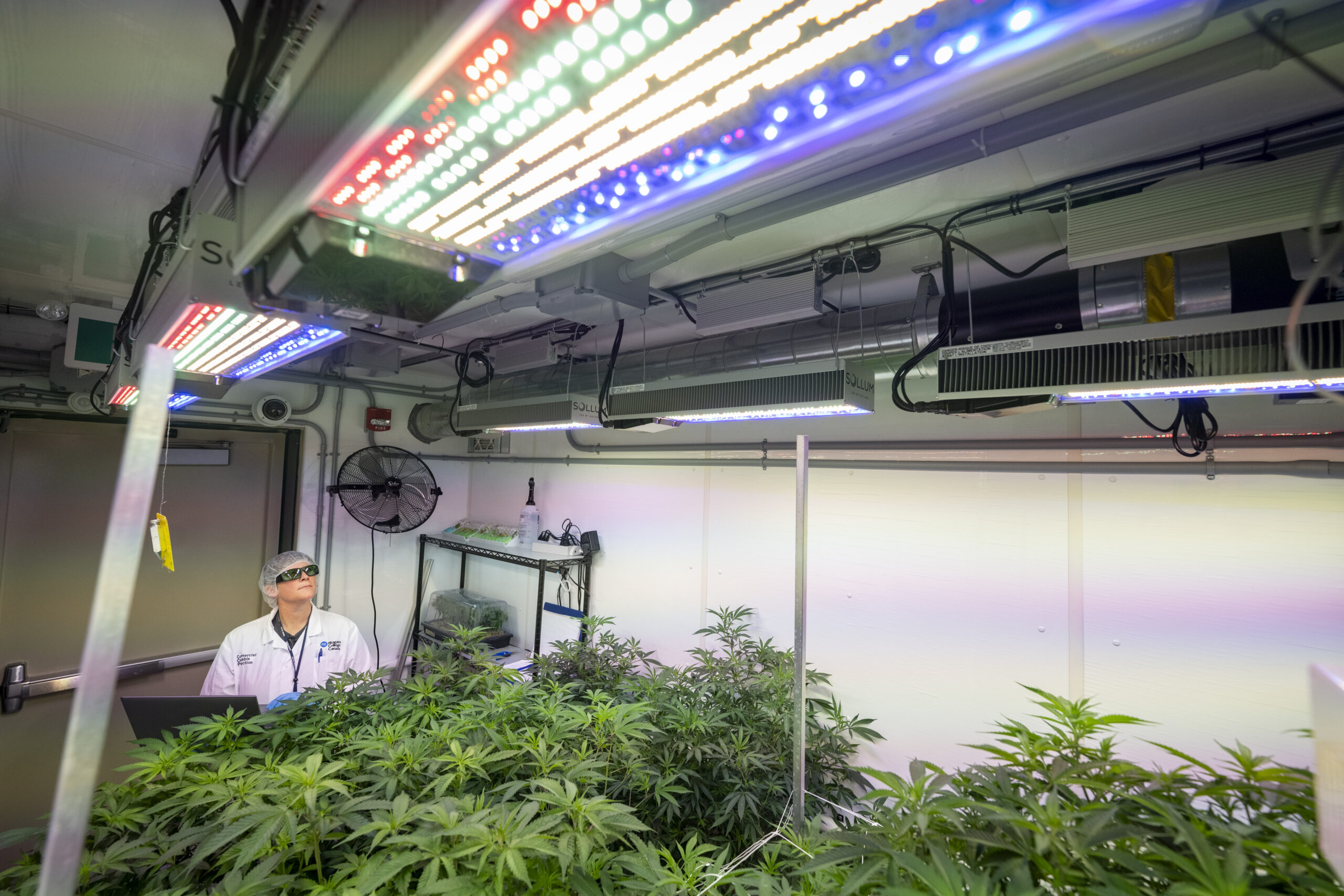
“This helps with the overall energy loads being drawn at one time,” said Zuber. “It’s not such a drain on the power load at one time.”
Using Sollum Technology’s online platform, SUNaaS, Zuber and her students can control the lights remotely and adjust colour spectrums and light intensity to best fit the plant’s needs.
“This versatility really allows the students to see how both the quality and quantity of light can affect plant health and final yields.”
Additionally, students can use the SUNaaS platform to monitor the power consumption and cumulative costs based on local hydro rates.
“This gives students a great perspective on how the daily light integral (DLI) influences yields and quality as well as the overall operational costs of the lighting.”
The project qualified for rebates, with long-term savings projected thanks to the new control system.
Campus-wide retrofit
These changes align with the previous conversion of all exterior and interior lighting to LED at the Daniel J. Patterson Campus. By 2021, the College had replaced all wall packs, pole lights, and lighting in offices, classrooms and hallways to LED.
A total of 7,065 T8 tubes were retrofit to LED tubes, and 940 CFL bulbs in pot lights were replaced with LED bulbs.
The campus-wide project qualified for significant rebates, with estimated savings of over $140,000 per year.
