

Temperatures dropped but spirits rose at the NC Teaching Winery on January 8, as a group of students gained a ‘gloves-on’ learning experience like no other on the planet: a chance to pluck frozen grapes from the vines to be transformed into ‘liquid gold.’
It was just days into the Winter term and luck was on their side as the temperature stabilized at the minus eight degrees required for Icewine that morning. At 8 a.m., about 45 students from Winery and Viticulture Technician and Beverage Business Management programs – along with a couple of Brewmaster students – could be found in a flurry of activity at the campus vineyard, bundled up in warm winter layers as they made their way down rows of vines harvesting grapes for Icewine.
“The wine gods were kind this year,” said wine Professor Gavin Robertson. “The Icewine harvest was timed perfectly to coordinate with term processing and fermentation projects.”
Robertson, who spent years as the NC Teaching Winery winemaker prior to Allison Findlay taking the reins in 2022, when he transitioned to faculty – both are also NC Winery and Viticulture Technician alumni – pointed out that adequately cold weather doesn’t typically set in until late January or February, which makes it difficult for students to take the fruit from harvest to bottle and the sensory lab, given the time constraints.
“Any good winemaker or wine curriculum can adapt to the realities of environmental conditions, but we’ll take the early term harvest any day,” he said.
While this year’s conditions were technically warmer for an Icewine harvest, he noted that the wind felt bitterly cold when the students began picking that morning and was impressed by how they rose to the occasion, despite the chilly weather and early hour, without complaint.
“That attitude will stand them in good stead in their careers,” he said.
While the Icewine harvest has become an annual rite of passage for NC wine students, it is a rare experience in the global wine industry.
“Icewine really only happens at scale in Canada these days– and this is literally the only post-secondary program on the planet that incorporates this experiential learning opportunity,” said Robertson. “Icewine remains an important product for the Canadian wine industry, so it’s important that we graduate students with strong theoretical and applied knowledge and skill of the intricacies of making this unique dessert wine style.”
And it’s important that the students have fun doing it.
“There’s something about picking and pressing grapes in a polar wind that brings people together in a way that distills the culture of hard work and camaraderie that’s so important in our business,” he said.
Second-year Winery and Viticulture student Carley May admits she’s more of a “fair weather girl” but she took the cold in stride and her warm layers served her well. She valued the opportunity to gain unique experience at the Icewine harvest alongside students from different classes.
Apart from the weather itself, the Icewine harvest is a much different experience than other wine harvests. She pointed out that from September to November, they use shears to cut the grapes off the vines for regular wines, but for Icewine, the frozen fruit can be pulled away with their hands. Plus there are far fewer grapes on the vines during the winter.
“It makes it even more valuable, so we’re making sure that we get every single berry into the bins,” said May. “You’re doing a lot more work for a lesser amount.”
Originally from Newfoundland, May worked two harvest seasons in British Columbia and one in Argentina before enrolling at NC to pursue her aspirations of becoming a winemaker. She values the practical experience she is acquiring in the program.
“We have a winery right on campus, we have a vineyard right on campus. We also get to make all kinds of wines here, so we get to see every aspect of winemaking,” she said. “In this course, we make White wine, Red wine, Rosé, Sparkling wine, and we make Icewine … so it’s the whole gambit, which is really cool.”
After the grapes were picked, second-year Winery and Viticulture Technician students pressed out the fruit in a 300kg single hydraulic basket press where juice was recovered and was left to ‘cold settle.’
The fruits of their labour will be entirely devoted to student projects. During the weeks ahead, students will work with individual volumes to craft their own unique wine projects.
“Since it’s their last term, I let them get really creative; they pitch me on often very innovative target wines, create a full production plan, then try to execute the plan and judge results together in the sensory lab before end of term,” said Robertson.
“Last year, we had a group create a fortified, maderized (heated) Icewine, which was probably the first time Icewine has ever been made in this style on the planet. And it was really good!”
As for the 2025 Icewine harvest in general, Robertson noted that a lot of fruit was lost to hungry birds in December; however, both chemical and sensory analyses point to excellent quality.
“Low yields, but terrific wines,” he said.
-
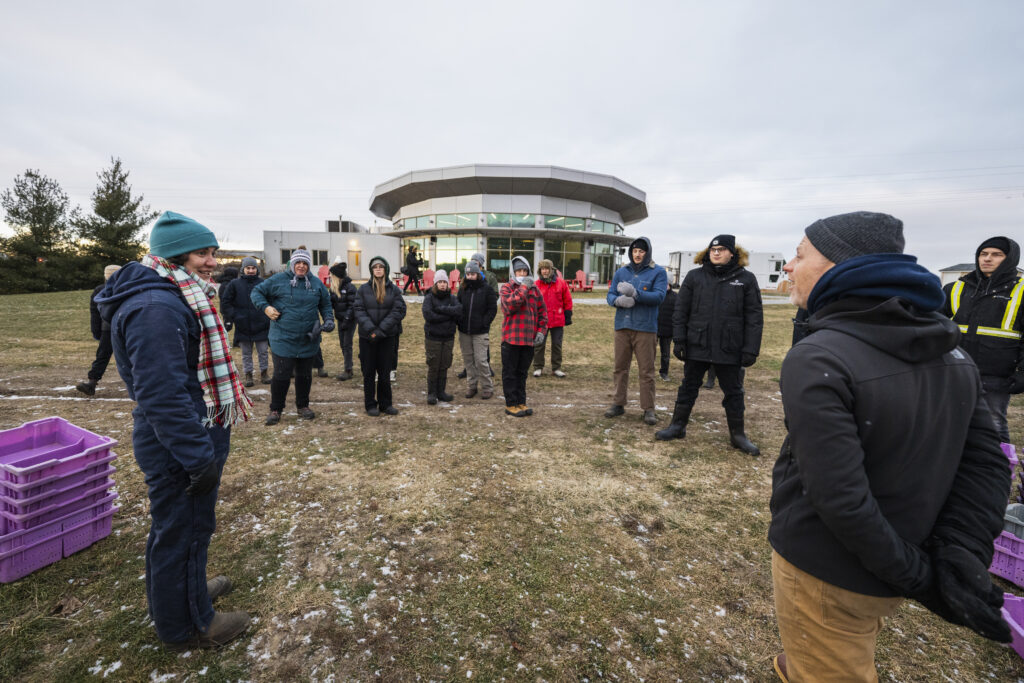
- Students participate in the Icewine harvest outside the Teaching Winery.
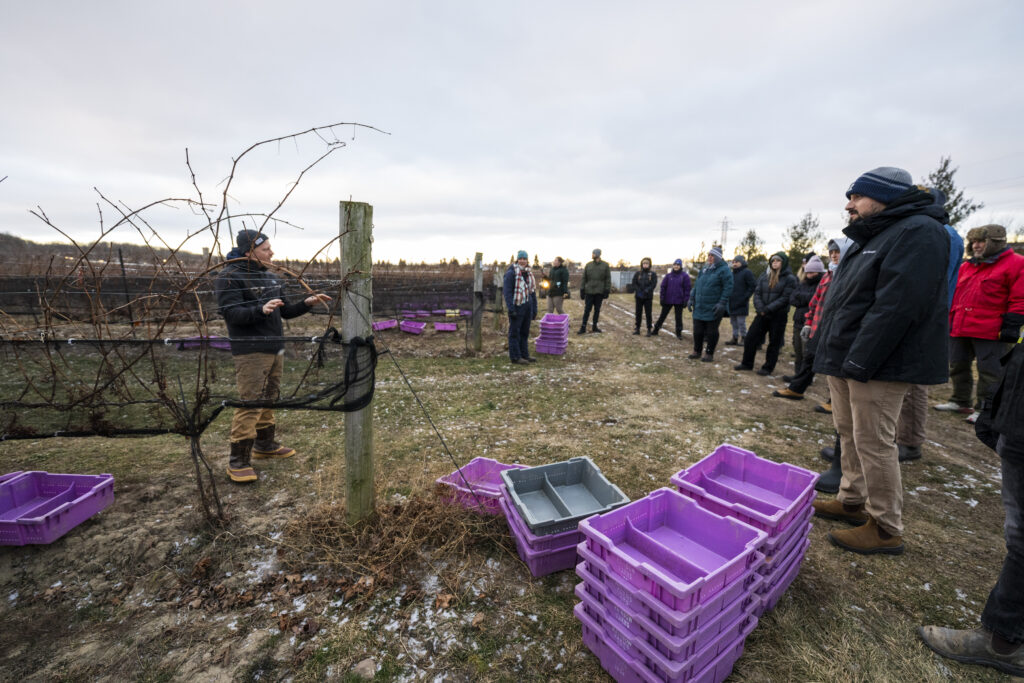
-
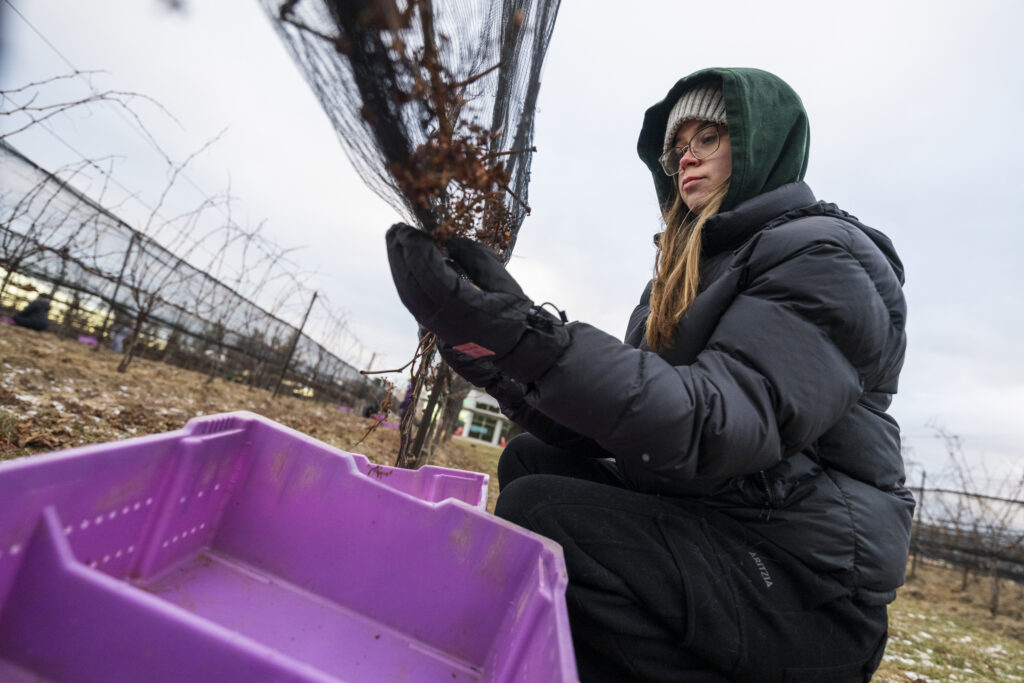
- Student Carley May plucks frozen grapes from the vines.
-
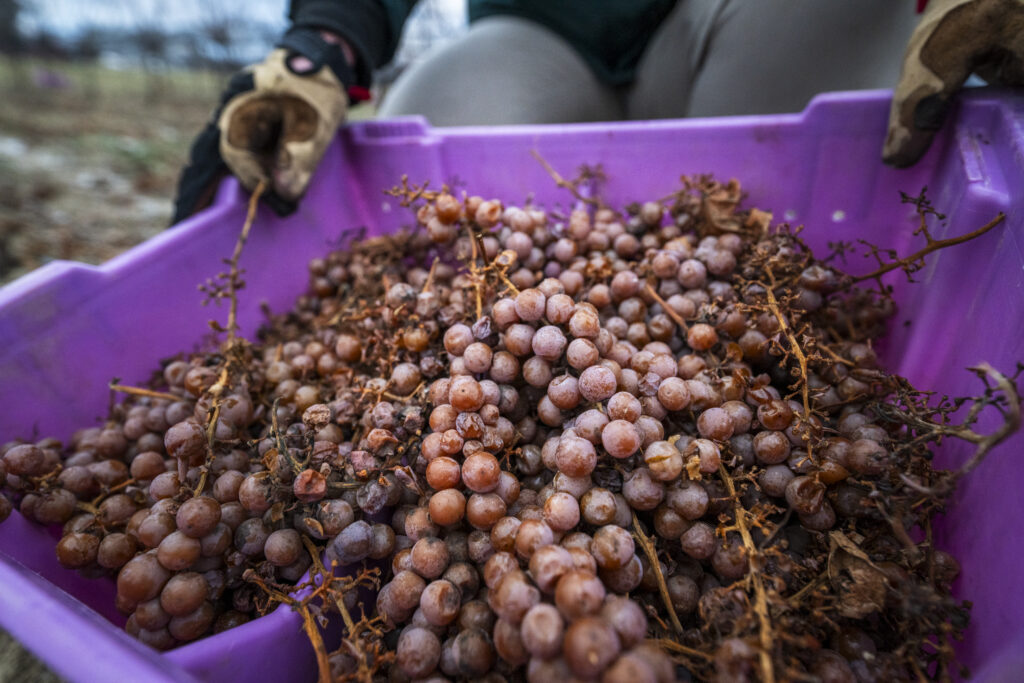
- Frozen grapes are picked and collected in bins.
-

- Frozen grapes were plucked off the vines on January 9 for the Teaching Winery’s Icewine Harvest. Locals and visitors alike can sample the College’s ‘liquid gold’ alongside other local wineries as part of the Icewine Festival, which runs until January 26.
-

- Wine Professor Gavin Robertson leads students in pressing grapes following the picking.
-
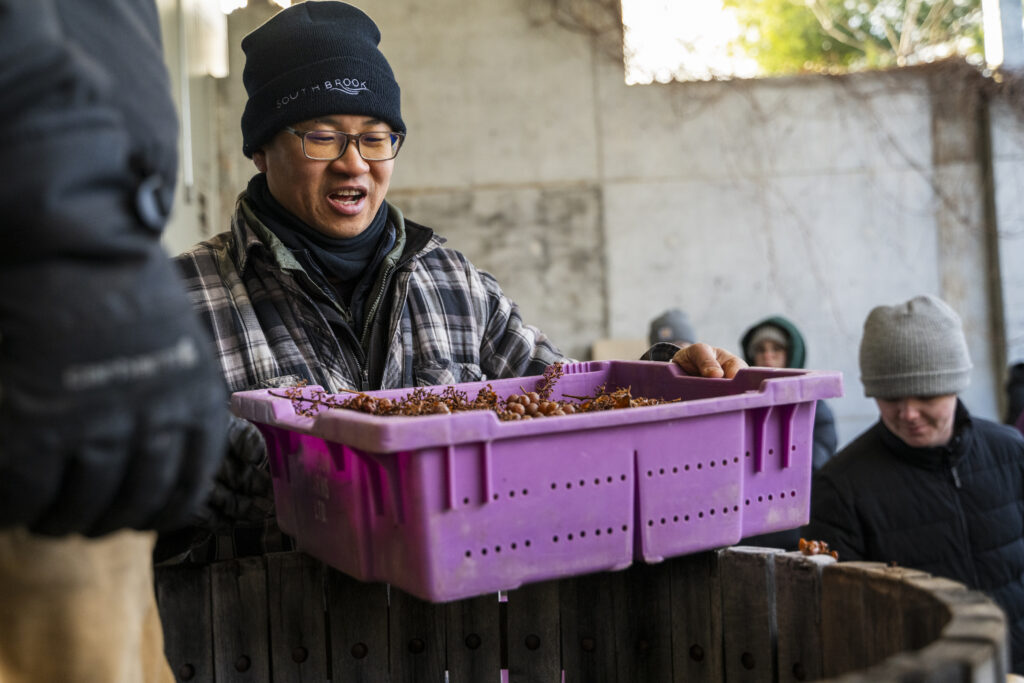
- A student carries a bin of grapes into the winery.
-
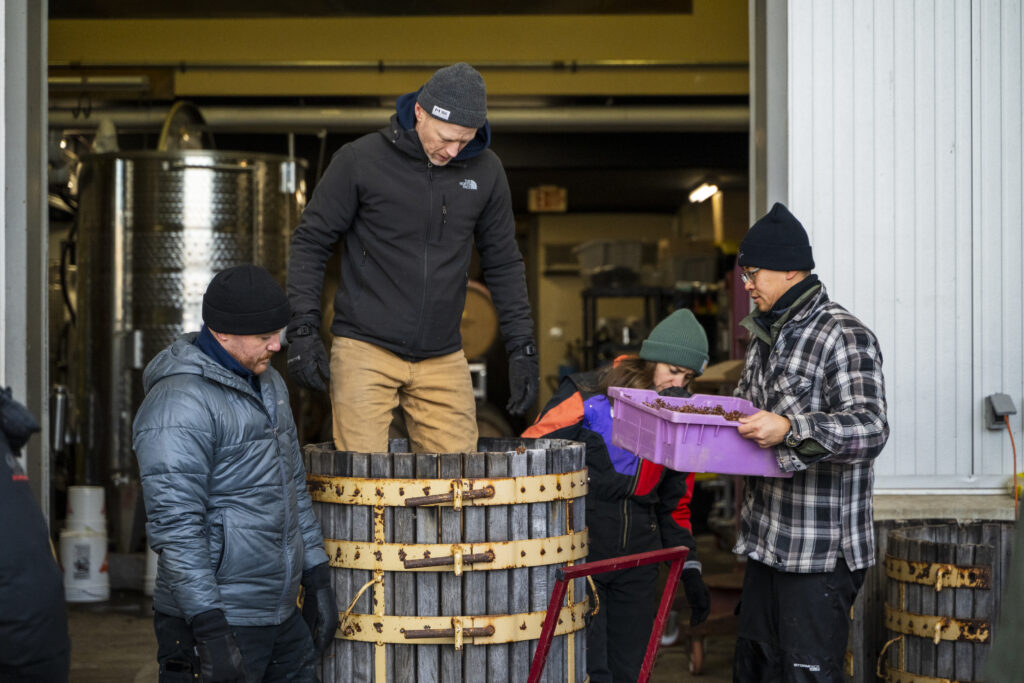
- Grapes were crushed in a 300kg single hydraulic basket press.
-

- A digital refractometer measures the brix (sugar content)..
