
Employees can register now for the next session on November 26.
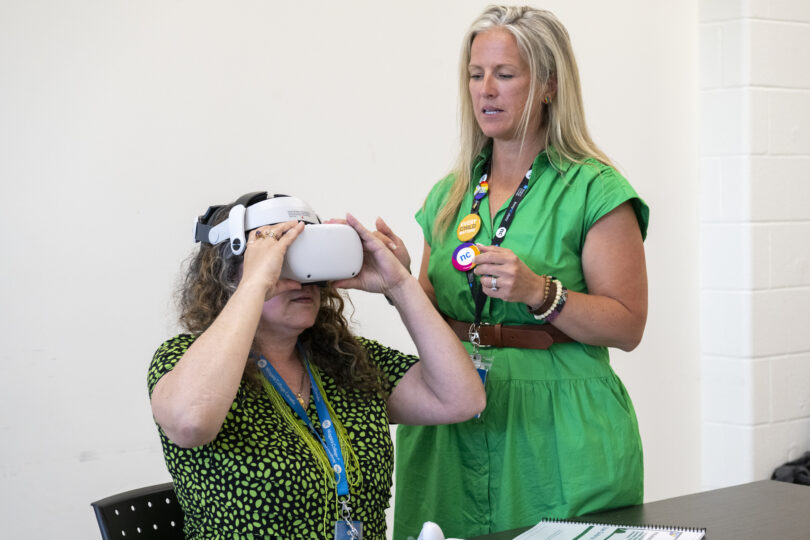
This summer, educators at Niagara College immersed themselves in the experiences of students with disabilities using a made-at-NC virtual reality (VR) learning tool.
Released in 2023, IT’S AN IDEA (Inclusion, Diversity, Equity and Accessibility) Learning to Foster Authentic Inclusion for Accessibility Through VR Simulations, was co-developed by a team of NC and Brock University educators and local e-learning company Xpert VR.
To date, over 300 NC students have participated in the VR training as part of SOC 1430, a course on Equity, Diversity and Inclusion in Canada offered to students in more than 40 programs.
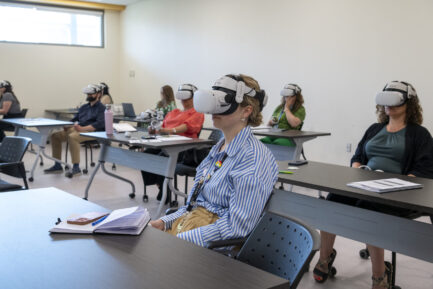

The team who developed the VR scenarios in consultation with disability community members included NC professor Jamie Oresar and Adaptive Technology Specialist Jim McEwen, who led the training with seven NC employees from across the College, including HWAS, Indigenous Education, International Student Services, and Academic and Liberal Studies. Professor Theresa Anzovino was also integral to program development.
“The VR accessibility training offers a revolutionary approach to education around disabilities and inclusivity,” said Jennifer Roberts, Associate Dean, Academic and Liberal Studies, who took part in the pilot. “The training promotes empathy, awareness, and drives NC’s commitment to inclusivity in its design of more equitable spaces and experiences on campus for all members of our NC community.”
Users can experience the simulations using Oculus Quest II VR headsets with handheld controls, or, via a PC version. The simulations are an exercise in perspective-taking, allowing learner to engage with characters from different backgrounds and scenarios on post-secondary campuses that focus on a range of barriers including physical, architectural and attitudinal. Learners make choices on how to engage from a series of prompts to learn about ableism.
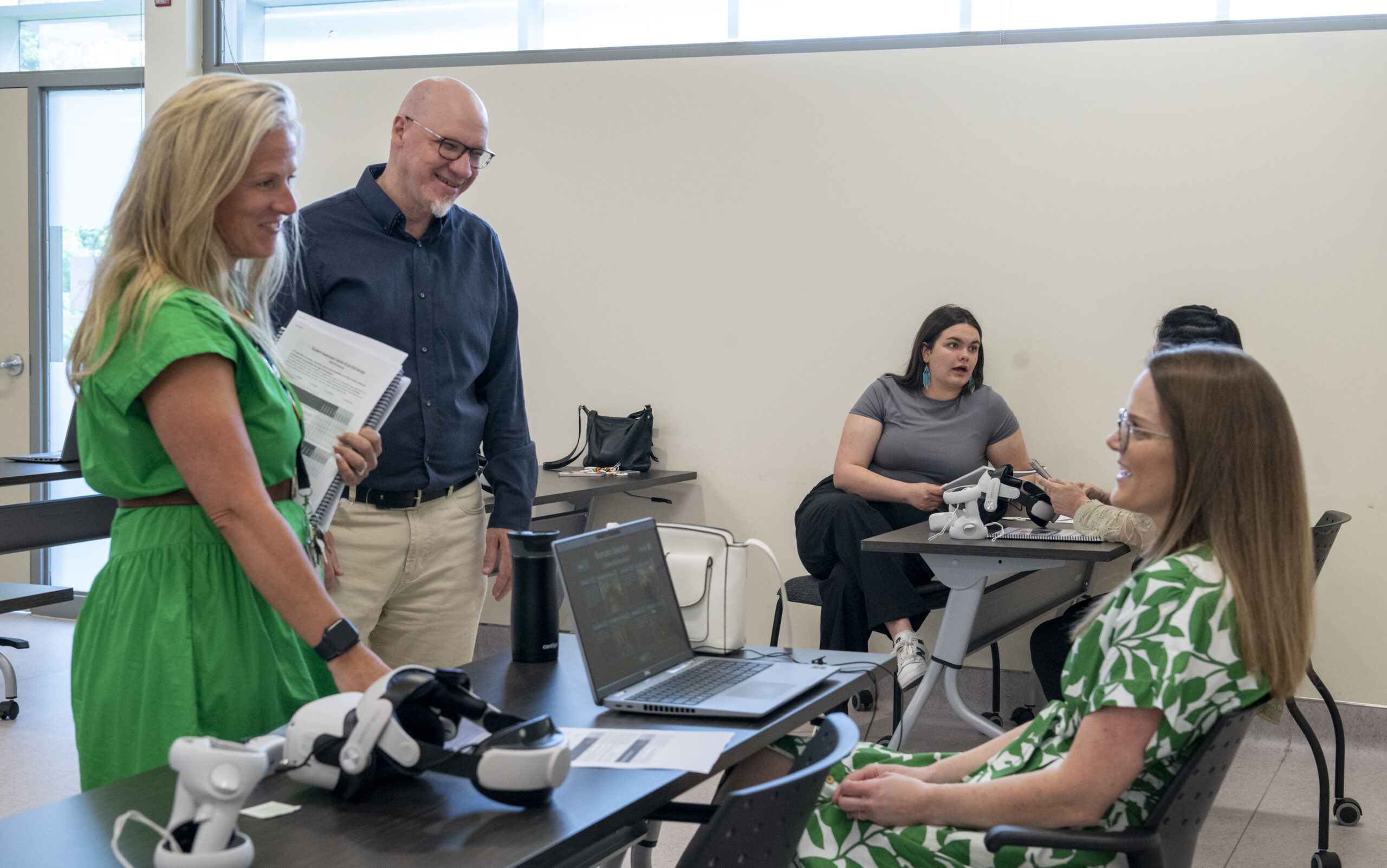
Participants not only learn about, but have the opportunity to practice anti-ableist strategies. Having the chance to reflect on their learning enables participants to consider how they can apply what they have learned to the work they do at NC.
“One of the key things that sets “It’s an IDEA” apart from other disability simulations is that users don’t “try on” a disability for a short period of time; this can trivialize the complexities of disabled experiences and reinforce stereotypes and barriers to accessibility,” said Oresar. “Instead, the user takes on the role of a faculty member, security officer or parking administrator who is working with a student with a disability. This centres the student as the expert on their own lived experience who then works with the user (based on the user’s response selection) to highlight common barriers, suggesting more accessible and inclusive approaches.”
Two student techs, Evan and Matthew Keyes from the Game Development program, supported the pilot with employees.
“I felt that this VR training was a unique opportunity to experience environments that many students may encounter and a chance to empathize with the emotions in how it feels first-hand,” said Jeanine Bruinsma, Indigenous Student Success Leader. “It was a strong reminder that our students don’t get a break from their needs. Each new term, classroom or environment they must advocate for their needs, once again. I found that after the VR raining, I looked at spaces differently, and noticed the various ways a space could still be adjusted to accommodate a range of needs more efficiently.”
“I would highly recommend my NC colleagues to take the training as I believe that it would help to reinforce ones knowledge beyond textual training by means of a hands-on practical way,” said Bruinsma.
Registration open to employees for session on November 26
Ahead of International Day of Persons with Disabilities on December 3, more employees will have a chance to try the VR simulations. The Employee VR Accessibility Training will be offered on November 26 from 10 a.m. to 12 noon at the Welland Campus.
Please register here. A maximum of 15 spaces are available for this session on a first-come, first-served basis.
