
Niagara College’s Institute for Global Education & Training is taking its expertise in sustainability to the world through a recently launched webinar series on clean energy, in partnership with the United Nations Educational, Scientific and Cultural Organization (UNESCO) International Centre for Technical and Vocational Education and Training (UNEVOC).
The webinar series “Going Clean: TVET (Technical and Vocational Education and Training) and the Green Energy Transition” is part of the Bridging Innovation and Learning in TVET (BILT) project, aimed at tackling the challenges posed by technological, social, environmental, and workplace changes. With a keen focus on new qualifications and competencies, BILT addresses critical issues such as digitalization, greening, entrepreneurship, and migration in TVET.
This initiative is supported by the Bundesinstitut für Berufsbildung (BIBB) Federal Institute for Vocational Education and Training and sponsored by Germany’s Federal Ministry of Education and Research.
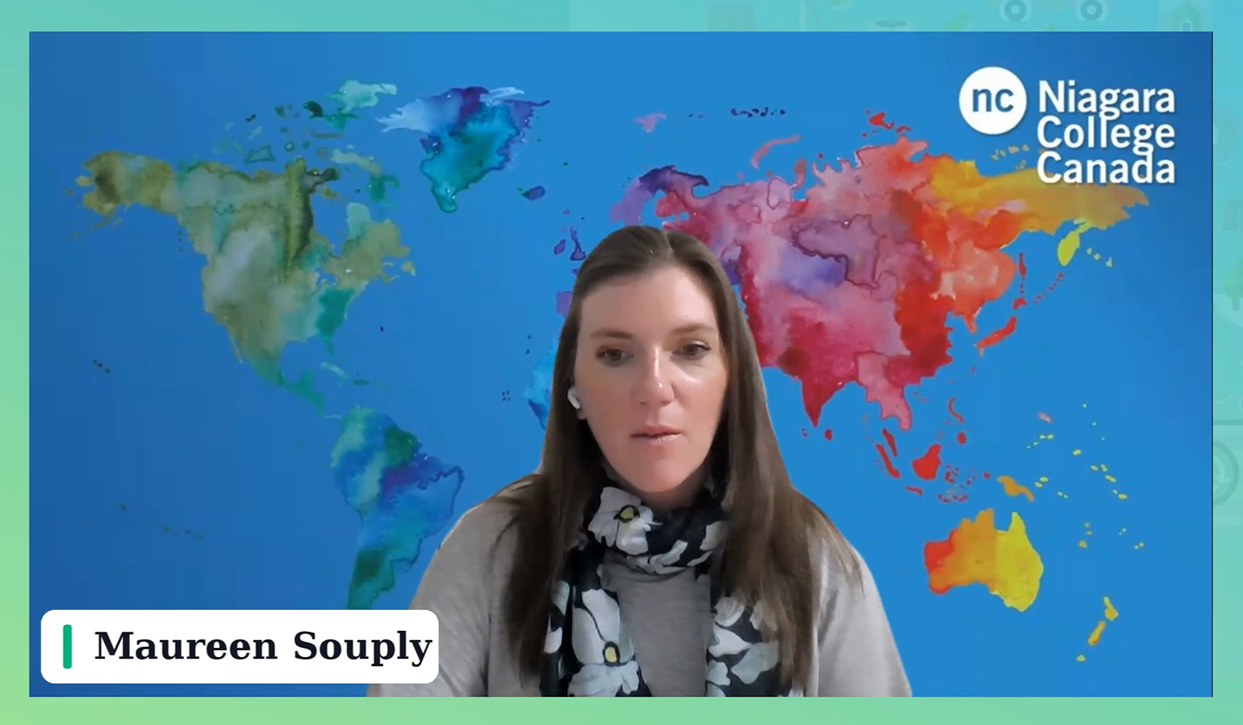
NC’s TVET Curriculum Specialist Maureen Souply moderated the inaugural webinar on July 2.
The first session, on July 2, attracted an impressive turnout of around 300 participants from 62 countries. Click here to learn more and register for the upcoming sessions..
Focused on “Preparing the labour force: Future skills identification, reskilling, upskilling, and development of core competencies“, the inaugural webinar was moderated by NC’s TVET Curriculum Specialist Maureen Souply.
The session also featured a diverse lineup of esteemed speakers. Kenneth Barrientos from UNEVOC, Germany; Gabriela Pratadias from the United Nations Environment Program (UNEP), Denmark; and Hae Kyeung Chun, from the International Labour Organization (ILO), Switzerland.
The speakers shared their insights on the international perspective of skilling, reskilling, and upskilling the clean energy workforce. The session highlighted effective strategies and best practices for meeting the demands of the green economy and outlined the critical role of TVET institutions in developing necessary competencies.
Participants from Africa, Asia-Pacific, and Europe engaged in enriching discussions on global, regional, and national TVET policies. The session also included valuable contributions from national models like Tobias Maier from BIBB, Germany; and Lalithaa Maniam, from SkillsFuture, Singapore. Their discussions on reskilling and upskilling strategies underscored the global effort in addressing future skills in the green energy sector.
The subject matter expert roundtable provided an in-depth look at the challenges and solutions for reskilling and upskilling the workforce. Dr. Maribel Illig, from the Chamber of Skilled Crafts of Ostwestfalen-Lippe, Germany, presented on implementation strategies, while innovative practices were shared by Victoria Hepplethwaite from the University of Witwatersrand, South Africa.
On July 19, the second session emphasized “Mechanisms for Integration of New Competencies into TVET Curricula“. As the keynote speaker, Taryn Wilkinson, NC’s Sustainability Manager, highlighted how Niagara College is enhancing clean energy through the development of new competencies, by creating new programs, offering volunteer opportunities to complement skills, and engaging with industry, among other initiatives.
In addition, Tom Makomere, former Kenya Education for Employment Program (KEFEP) Project Lead for Sigalaga National Polytechnic (Kenya), Dr. Maribel Illig, Managing Director of the Chamber of Skilled Crafts of Ostwestfalen-Lippe; and Ahmad Zakky Habibie, Executive Director of Ancora Foundation (Indonesia), shared successful cases of integrating new competencies in clean energy into TVET Curricula.
“As we navigate the transition from a brown economy to a green one, TVET’s role becomes increasingly vital”, said Esteban Navarro, Project Manager of the GEP team. “TVET not only prepares the workforce but also adapts resiliently to these transformative goals. Niagara College is proud to be at the forefront of this initiative, contributing to the development of a sustainable and inclusive energy sector.”
Through these collaborative efforts, Niagara College is taking important steps to advance sustainable education and drive positive change. This initiative also allows NC to continue supporting the United Nations Sustainable Development Goals (SDGs), specifically SDG 4 (Quality Education), and SDG 7 (Affordable and Clean Energy).
Niagara College’s Institute for Global Education & Training
Bringing together the expertise of a highly skilled NC team with partner organizations worldwide, Niagara College’s Institute for Global Education & Training proudly provides educational solutions designed to inspire sustainable global change. For over 20 years, NC has been collaborating with global institutions, including developing and delivering customized education and training programs and capacity building projects to support learners around the world and global partners in achieving their goals. Drawing on this expertise, NC established in May 2024 an official global education hub – a one-stop-shop to leverage its world-renowned education and training programs and to offer newly developed modularized global programs. The Institute also strives to support partners in alignment with the United Nations’ Sustainable Development Goals (SDGs).
