
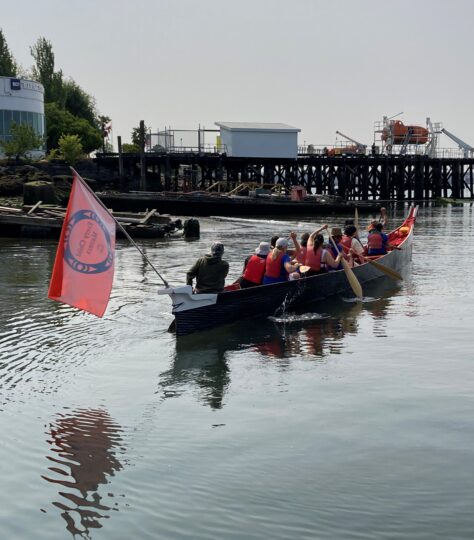
From July 31 to August 4, members from the Niagara College community will embark on a trip to unceded Coast Salish Territory in North Vancouver to participate in an immersive land-based program designed to provide an entry point into learning how to put truth and reconciliation into practice.
The experience – “Gathering our Medicine: Walking in the Ways of the People” – is based on a program called “Moving Together in the Ways of the People,” developed by Denise Findlay, an educator, facilitator and consultant who belongs to the Skwxwú7mesh Úxwumixw (Squamish Nation). Findlay has travelled throughout B.C. and across Canada working in Indigenous communities facilitating processes focussed on collective healing.
This is the second time that a group from NC will travel to Coast Salish Territory for a land-based learning opportunity with Findlay and her team.
In July 2023, NC’s Indigenous Education department and the Be World Ready program collaborated to send 12 employees across the country to participate in a similar experience called “Decolonizing Pedagogies.” The opportunity was transformational for participants who were moved and inspired by the people they met and their teachings.
“I am excited to journey alongside my colleagues under the care of Denise Findlay and her team who have developed a program centering ceremony and immersive learning to find meaningful and practical approaches towards reconciliation,” said Leah Hogan, Director, Indigenous Education. “Our experience in Sḵwx̱wú7mesh territory will make space for these important conversations while honouring Indigenous ways of knowing and being, which to me, signals we are ready for the next phase in our TRC work.”
“At the heart of the Gathering Our Medicine program is relationship, creating an intensely transformative experience for participants,” said Maxine Semple, Associate Director, Cultural and Global Engagement. “Land-based learning offers the opportunity to deeply connect with our natural environment – one of our most crucial relationships. The Skwxwú7mesh Úxwumixw community’s unwavering care, commitment, and the demonstrated love they share and honor with the land through relationship left an indelible mark last year. Receiving these teachings from the community is a true gift, and I feel fortunate to be part of this program. I know our EDI catalysts will receive so many more important teachings while with the community this coming week that will support their continued important work as catalysts.

Funded through the Dream Big Fund, this year’s trip is a collaboration between Indigenous Education and EDI and Accessibility (Human Resources) to support those advancing work around the College’s commitment to truth and reconciliation.
Over four days, participants will participate in hands-on learning with and from Sḵwx̱wú7mesh (Squamish) knowledge carriers and elders, experiencing the pedagogical power and pathway of ceremony, ritual and rites of passage. They will spend time with a community of learners in meaningful reflection and dialogue on issues of decolonization, indigenization and reconciliation.
Among the participants are NC’s EDI catalysts – Carol Phillips, Maijia Saari, Tina Annett, Bellan Dye, Tallulah Williams and Baljit Bhamber – who are working on action items associated with Indigenous Ways of Knowing, Being and Doing as part of the College’s EDI Blueprint.
The opportunity will help the catalysts find practical ways to take action towards reconciliation, supporting their learning as they take on key roles in the development of an Indigenous Education Strategy for NC.
“I had the honour of participating in this experience last year and am delighted to collaborate with Indigenous Education to create space for more colleagues across the college to engage in such a special way with Indigenous Ways of Knowing, Being and Doing,” said Samah Sabra, Director, EDI and Accessibility.
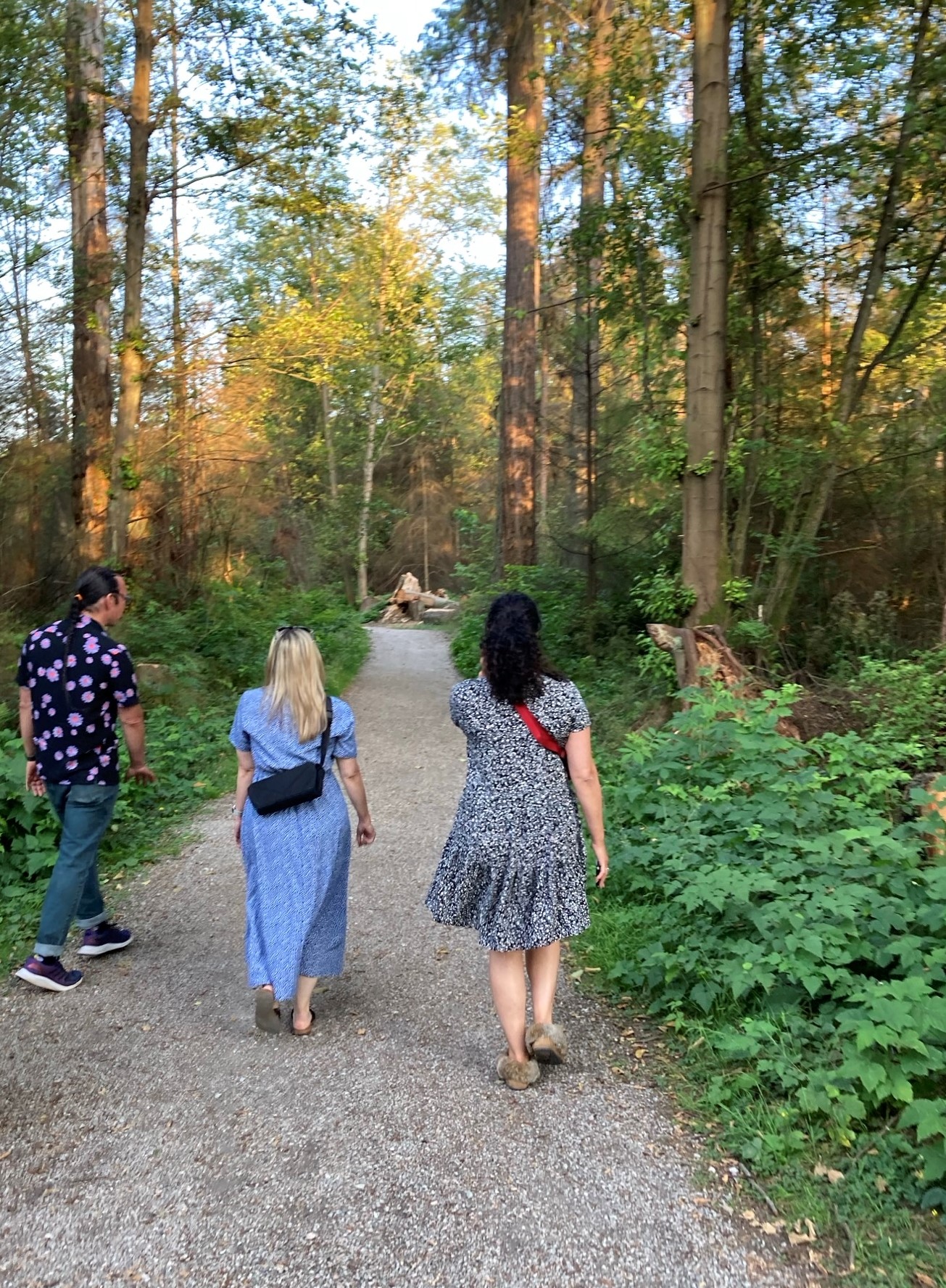
“This trip provides an avenue for learning to be led by Indigenous peoples in ways that reflect a deep commitment to truth and reconciliation as well as to respecting Indigenous sovereignty. It creates space to engage in learning that is holistic in its attention to intellectually and emotionally engaged learning.”
Part of the experience will also serve as a train-the-trainers opportunity for Hogan, Karl Dockstader and Aria D’alimonte from the Indigenous Education team, as well as Jennifer Dockstader, an Indigenous Education Management Circle (IEMC) member and Executive Director of the Fort Erie Native Friendship Centre. The goal is to provide them with the background to build a localized, immersive, experiential learning opportunity for NC students, employees, and community partners.
“We are particularly excited to consider ways that we can partner with local First Nations to create a similarly profound learning experience for our NC community,” added Sabra.
Hogan, Dockstader and D’alimonte participated in 2023, along with Sabra, Semple and Whit Ross, Associate Director, Educational Development, who will all attend again this year.
From NC’s Executive Team, President Sean Kennedy and Vice President, Students, Dr. Chris McGrath will join the group in B.C, along with Stephanie Wilson from the Centre for Organizational Excellence and Michele O’Keefe from Athletics and Student Engagement.
From the faculty and student side, Professor Peter “Dutch” VandenBerg from the Broadcasting – Radio, Television and Film (BRTF) program and BRTF student Jayden Joseph Voyer will also participate and will film the experience.
