
On May 17, Niagara College hosted its third event to acknowledge the Moose Hide Campaign, an Indigenous-led grassroots movement of men and boys – and all Canadians – who are standing up against violence towards women and children.
Grounded in Indigenous ceremony and traditional ways of learning and healing, the Moose Hide Campaign began over 10 years ago along the Highway of Tears in British Columbia and has since become a nationwide movement supported by both Indigenous and non-Indigenous Canadians.
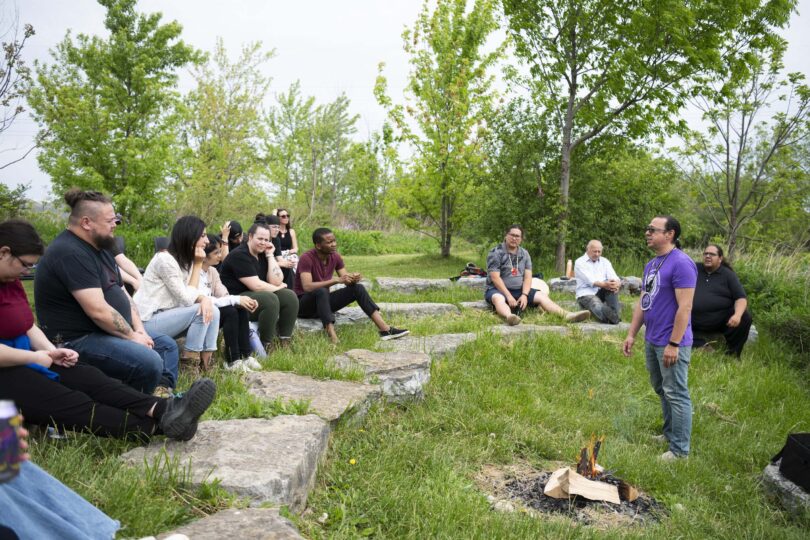
NC’s event was held in the Outdoor Classroom at the Daniel J. Patterson Campus in Niagara-on-the-Lake. Employees, students, alumni and community members were invited to drop by to learn more about the Campaign and to take a pledge – a commitment to respecting and protecting the women and children in their life, support for truth and reconciliation, a willingness to reverse the harm done by residential schools, and a symbol of honouring Indigenous medicine and belonging.

Participants from the college, including members from NC’s executive team, and community members gathered at the Outdoor Classroom at the Daniel J. Patterson Campus for NC’s Moose Hide Campaign event on May 17.
Moose hide pins were given out to participants willing to take the pledge as a symbol of their commitment.
“This is not just a pin, it’s a way of telling people that we are here together,” said guest speaker Dylan Ritchie, Bear Clan from Saugeen First Nation and a proud Ojibway who led the pinning ceremony through drumming and song.
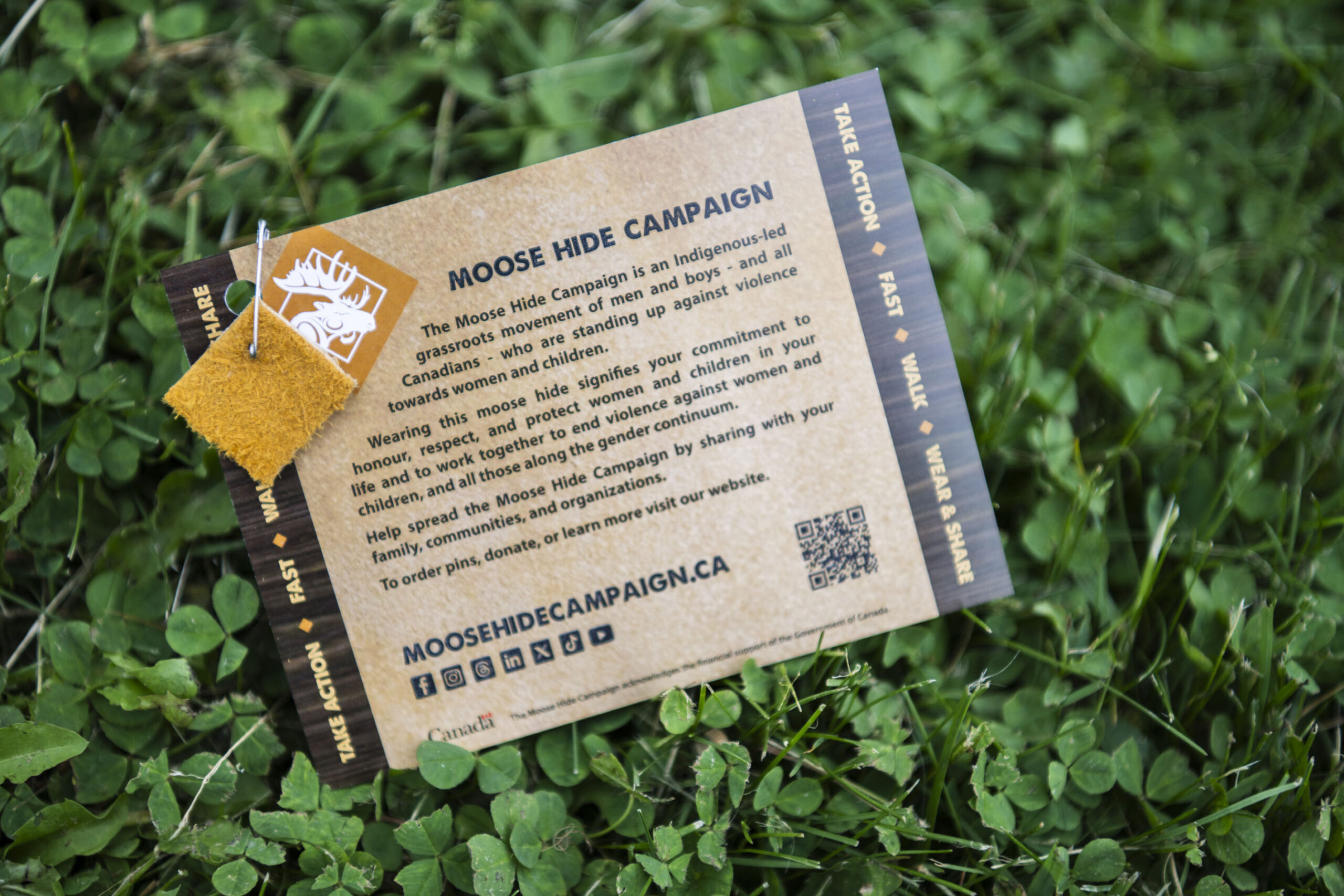
A moose hide pin is attached to information about the campaign, which notes that the moose hide signifies the wearer’s commitment to honour, respect and protect women and children, and to work to end violence against them.
Ritchie and fellow guest speaker Jeff Hill, Oneida Bear Clan and a longhouse Haudenosaunee, have been working with Indigenous men to end violence through cultural approaches and ceremonial ways of living, including fasting camps and sweat lodges – traditional practices used to cleanse past traumas.
“In order to heal [Indigenous men], we need to teach them the history,” said Hill, who explained how the intergenerational impacts of colonization and residential schools have contributed to gender-based violence, which is important for men to understand.
NC’s Indigenous Education and Cultural Consultant Karl Dockstader, who led the event, reminded participants that ending gender-based violence, and violence towards all those along the gender continuum, is everyone’s responsibility.
“By wearing this pin, you are saying, ‘I am responsible for ending this violence,'” said Dockstader, speaking to the men in attendance. “If you are not a man, you are committing to having conversations with men about violence against women.”
NC alumnus and Indigenous Elder Dave Labbe also joined the event and shared his wisdom with participants.
“We need to come together with people of like minds and put our resources together; to open our minds and our hearts,” said Labbe, who spoke about how the world would be a better place if more people “lived in a good way.”
As the event ended, it started raining – a symbolic cleansing gesture from Mother Earth.
NC’s Moose Hide Campaign event follows the College’s observance of Red Dress Day on May 5, when flags were lowered and red dresses were hung at both campuses to honour Missing and Murdered Indigenous Women and Girls and Two-Spirit People (MMIWG2S). A panel event was also hosted on May 6 featuring Jillian Isaacs, Linda John and Jackie Labonte, who shared their personal experiences and work with MMIWG2S.
To learn more about the role you can take to help end violence against women and children, visit the Moose Hide Campaign website.
