
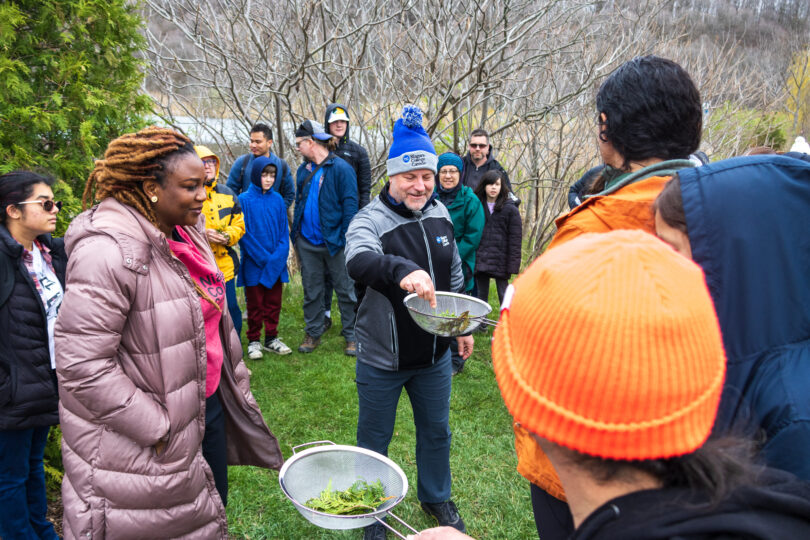
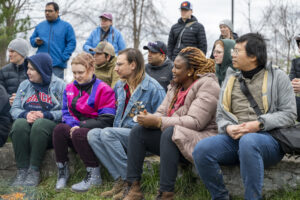
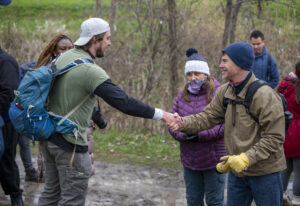
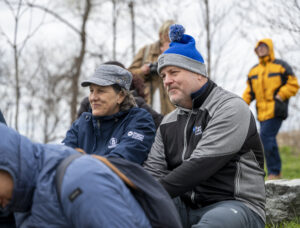
Spring has sprung at Niagara College, and over 135 nature lovers converged on the Daniel J. Patterson Campus in Niagara-on-the-Lake for the ninth annual Bioblitz on Saturday, April 13.
Bioblitz drew NC students, expert faculty, and volunteers from the community together to identify and catalogue as many species as possible, from bugs to birds, to amphibians, mammals and plants.
The day was a hive of activity, with birding and insect hikes, an Indigenous cultural exchange, an exploration of campus biodiversity, and more.
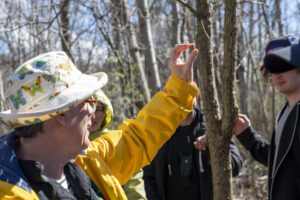
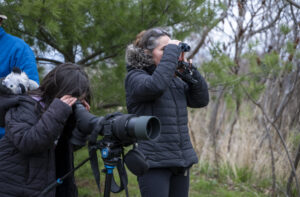
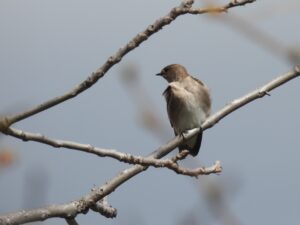
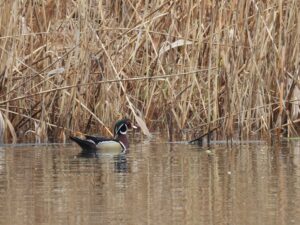
“We had more people than last year which was great considering the winds,” said Katie Bristow, NC’s Sustainability Program & Outreach Coordinator. “Some species of note were a Juvenile Bald Eagle and an Osprey, both bird species which are typically found nearer to large bodies of water like the Niagara River and the Great Lakes.”
NC’s campus in Niagara-on-the-Lake is a UNESCO-designated World Biosphere Reserve where students in a variety of environmental programs can apply their knowledge.
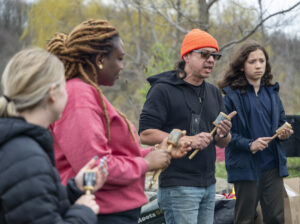
Bristow says attendees were especially excited about the Cultural Exchange event led by the College’s Indigenous Education department.
“It was our most popular event this year,” said Bristow.
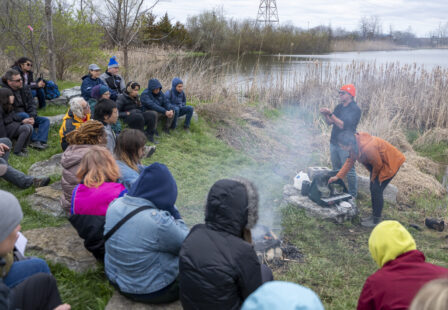
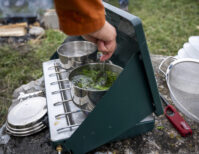
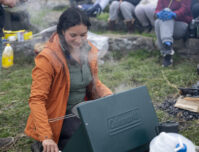

Indigenous Education & Transition Coordinator Sandra Mandamin, from Iskatewizaagegan 39 Independent First Nation, brought wild rice from the traditional lands of Treaty #3 area to share with participants. Mandamin used hot oil to puff the rice on the Teaching Fire, serving it to participants who enjoyed it with toppings like cinnamon and maple syrup.
Mandamin offered teachings about the origins and significance of wild rice as the spiritual and historical food of her ancestors.
“My teachers encouraged me to share what I know, the knowledge that was passed on to me,” said Mandamin, who explained that the process of picking, cleaning, roasting, and dancing on the rice take place annually in the late summer months, usually September and often involve whole communities.
While preparing the popped wild rice treat, Mandamin recalls a participant explaining that they make a similar treat back home in India.
“The event was a good reminder how connected we are,” said Mandamin.
NC alumnus Valerie Andrew (Ecosystem Restoration, 2023) hosted an interactive display of skulls, antlers, skeletons, furs and other animal anatomy of native wildlife.
Indigenous beadwork vendor Emma Gizzarelli of Jacob & Co Designs led a beading workshop where participants made friendship and pony bead bracelets.
Local nature clubs, the Canadian Wildlife Federation, and the NPCA were in attendance.
