
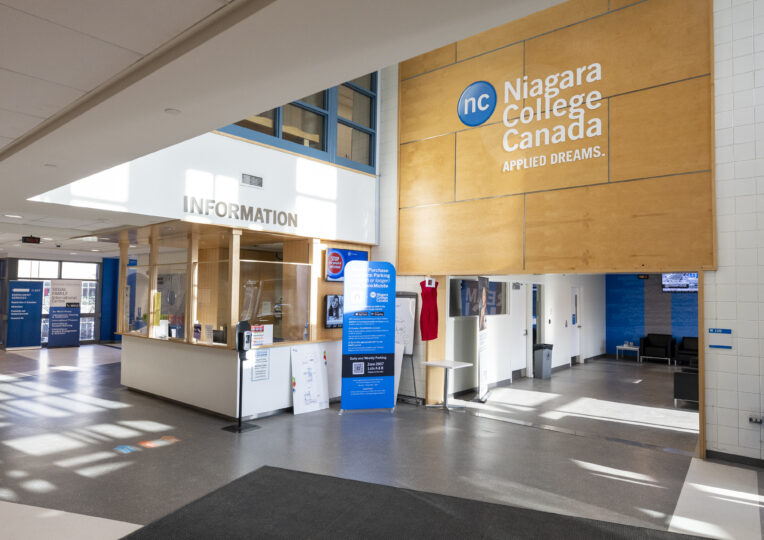
Project Refresh will create space for more active learning and student engagement at NC.
This spring, six campus spaces – four classrooms and two student gathering areas – will get a makeover to enhance learning and the student experience ahead of the Fall 2024 Term.
Among investments in students, technology, and facilities announced by President Sean Kennedy in the 2023-24 College Business Plan and Budget, was $2.5 million in funding for Project Refresh, a rejuvenation effort to upgrade technology, furniture, and design in classrooms and common spaces. The renewal of academic and student gathering spaces at both Niagara based campuses supports NC’s Strategic Plan and aligns with the Vision and Design Principles of the Master Plan.
“The work of Project Refresh is aligned with our Strategic Plan focus area of Wholistic Student Experience through creating welcoming and inspiring spaces, both within and beyond the classroom, for students to enjoy,” said Pam Skinner, Senior Vice-President, College .
“Project Refresh is a key part of our ongoing investments to enhance learning and teaching at NC. Alongside the implementation of our new LMS, D2L Brightspace, revitalizing our classrooms is an integral component in our commitment to fostering academic excellence,” said Fiona Allan, Vice-President, Academic.
Niagara College is pleased to announce the six ‘prototype’ spaces for Project Refresh, which will serve as models through which to gather feedback and recommendations to guide future space enhancements.
The spaces were selected through interdisciplinary working groups reporting to Pam Skinner, Senior Vice-President, College Operations, and Fiona Allan, Vice-President, Academic.
Academic spaces:
- Welland Campus: L103 and M212
- DJP Campus: N102 and W208
Student gathering spaces:
- Welland Campus: Corridor from commons to Secord West Foyer
- DJP Campus: Ground floor main corridor (North)
 NOTL DJP Campus: W208
 NOTL DJP Campus: N102
From a high level, the prototype phase will be an opportunity to reimagine various aspects of the space, including interior design finishes, furnishings, and technology. The designs will focus on enhancing the overall student experience by fostering active and collaborative learning in the classroom, along with prioritizing inclusion, accessibility, and environmental sustainability.
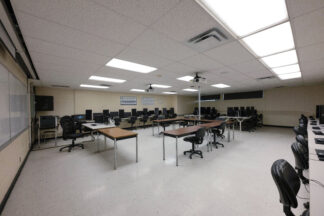
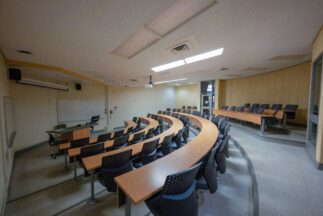
The chosen academic prototypes represent a range of classroom types and capacities, including lecture halls, a small classroom, and a traditional space, which will allow for a broader range of feedback. Accessibility and sustainability will be prioritized, with improved lighting and features like moveable furniture to facilitate active learning.
“More opportunities for faculty and students to interact tend to enhance student engagement and their ability to achieve learning outcomes,” said Evan DiValentino, Senior Director, Academic Transformation Initiatives. “Some of the modernized classroom features we’re exploring are just plain exciting – not to mention comfortable and welcoming.”
Following the completion of the prototype spaces, a Community of Practice will help leadership glean insights from faculty, students, and staff as they interact with the academic spaces to inform future space renewals.
“Input will be key through the prototype phase this fall,” said DiValentino.
When selecting the student gathering spaces, the Student Gathering Spaces Working Group was formed with a diverse representation from staff and students across campus, and consultation included a broad range of voices.

“There was a lot of passion and excitement from everyone that joined the consultations, and it was evident that
everyone is excited to create and provide input on spaces that would be welcoming and inclusive to all,” said Nadeen Shehaiber, Senior Director, Planning, Sustainability and Capital Projects. “We heard a lot about the pride everyone has in NC and wanting that NC identity to be integrated into our gathering spaces.”
Shehaiber says consultations for gathering spaces emphasized a desire for designing in inclusive ways, such as using furniture to fit all body types and levels of accessibility, so everyone has full use of every space.
The spaces selected at both campuses are high-traffic areas and will become positive spaces that inspire more student-to-student connectivity. The enhancements will better acknowledge student diversity, culture and indigeneity, feature more quiet study spaces and comfortable seating, improve wayfinding and accessibility, and more.
As the prototype phase commences, design guidelines are being developed by NC and Gow Hastings Architecture and the is developing a classroom guideline to support future revitalization and upkeep of teaching and learning spaces at NC.
Planning, Sustainability and Capital Projects, in collaboration with Facilities Management & Campus Safety, continue to make enhancements and conduct regular maintenance and updates to other campus spaces beyond the prototypes.
Please stay tuned for updates on the design scope and of the prototype spaces!
