
A local business is helping NC students give a leg up to the less fortunate in Niagara.
Lapennaco – known for its home and liquidation stores in Niagara- has donated about 200 pairs of socks to a College footcare initiative, which involves students from the School of Nursing and PSW, and Allied Health who provide assistance to homeless individuals in the region.
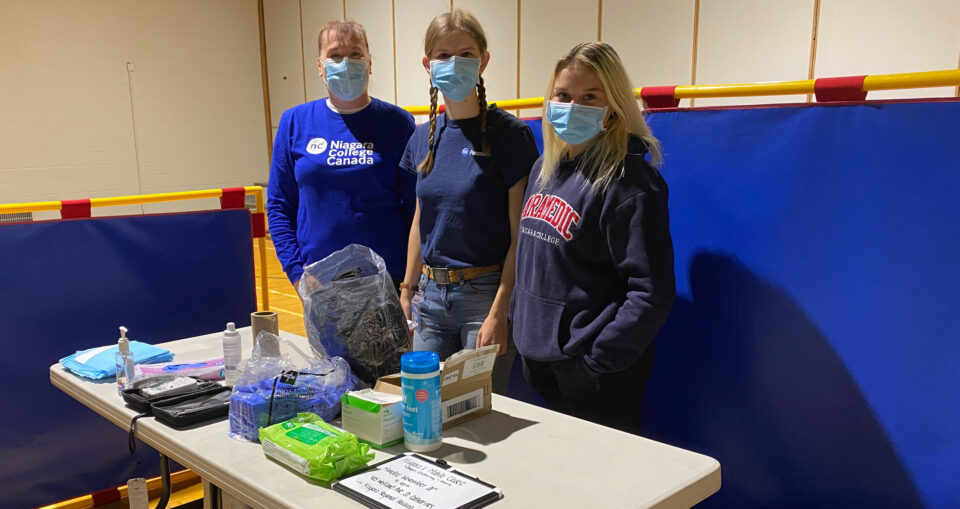
Students from paramedic, nursing and Occupational Therapist Assistant and Physiotherapist Assistant (OTA PTA) programs work with Niagara-based shelters – including Start Me Up Niagara, Southridge and Buchanan House. They rotate weekly to provide education about footcare and access to essential tools to aid foot health, such as nail clippers, lotions, socks and pumice stones. They also participate in placements at the shelters, along with two student Research Assistants -paramedic student Amber Meyer and with nursing student Jennifer Thomas, who were happy to receive a positive the donation from Lapennaco.
“We have always strived to be a low cost option for all. Over the past few years, we have noticed the growing problem of homelessness in the community,” Dale Romanuk, General Manager, Lapennaco.
Romanuk noted that Lapennaco has been working with NC through its co-op program for more than 15 years and that several of their former co-op students from the College have stayed with the company full-time. He noted that they wanted to support the College and the initiative.
“Lapennaco is a family business with deep roots in the Niagara region and, as such, we’ve always given to local charities to help the less fortunate, whether they be the homeless, recent immigrants/refugees or just people down on their luck,” said Romanuk. “It is our pleasure to assist in any way possible and to continue our long relationship with Niagara College.”
The project not only provides students with experience and the opportunity to give back to the community by helping others, it has proven to be rewarding for students involved.
“Through working with this initiative, I have learned a lot of different ways to communicate with a variety of people, as well as how often an assessment on one part of the body may lead to identifying other health problems,” said Meyer.
Meyer, who has been working on the project since March 2022, has been performing foot assessments and gathering research from the student feedback received. She has been involved with first- and second-year students from nursing and first-year paramedic students who help perform assessments, speak to homeless individuals, and complete pre- and post- questions, which are used by the Research Assistants to help grow the initiative. She has also been gathering supplies, reaching out to community connections and organizing research for presentation.
“I originally joined this initiative as a way to grow my experience working with a variety of vulnerable populations. Working with the homeless community has given me a lot of personal gain and reminded me how thankful I am for the things we all often take for granted,” said Meyer. “When requesting socks, or other donations from companies or outreach programs, it is often interesting to see the response from others, and learn their stories about how they may at one time have been in the same situations.
She noted that they plan to continue growing the footcare initiative and hope to receive more donations in the future. They are currently not accepting community donations, and encourage staff or students to donate to community resources that they have utilized, such as Niagara’s Mobile Closet, as well as Community Care of St. Catharines.
Related article:
Feb. 28, 2022: Paramedic students help vulnerable populations put best foot forward
