
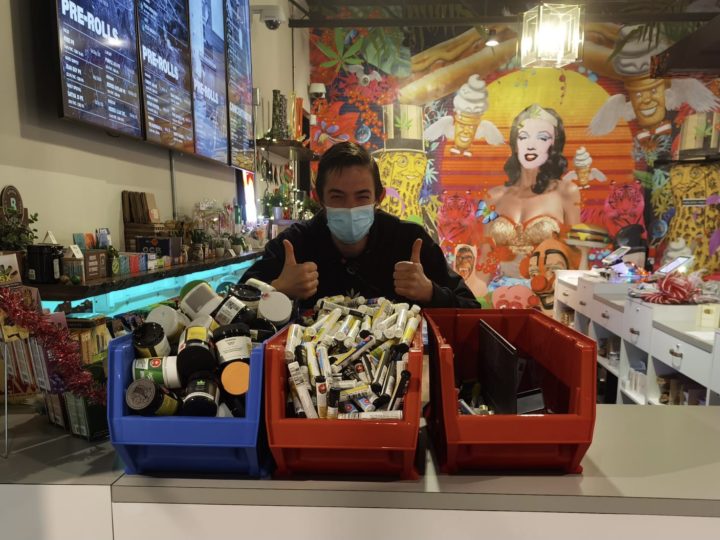
Opening Niagara’s first licensed cannabis store was an eye-opening experience for Kevin Trethowan.
One thing he really noticed? Cannabis wasn’t all that green.
“We quickly found out that there was an obscene amount of plastic being wasted,” said Trethowan, who co-owns The Niagara Herbalist in St. Catharines.
That’s because products from licensed producers come into the store pre-packaged in plastic, according to government rules.
Throwing those packages in municipal blue boxes when they’re empty poses its own challenges with concerns about residues and the types of plastics that are accepted by municipalities. Other options, including sending plastic waste to businesses that could turn it into something useful, were also challenging because couriers reject packages at the slightest scent of cannabis.
So, what’s a cannabis store owner to do?
In Trethowan’s case, he came to Niagara College for help, turning his industry-wide conundrum into an internship placement last summer for a student in the Environmental Management and Assessment (EMA) program.
Trethowan had an idea of how to solve the problem but neither the means nor expertise to execute a solution that could be implemented regionally if not provincially.
Enter EMA student Mackenzie Boyes.
“For us, we try to do as much as we can to be, and support local,” Trethowan said. “We sat down with Mackenzie and said ‘This is the problem we’re seeing. What options do we have?’ And we left her with it.”
Admittedly, it was a challenge to figure out what, exactly, needed doing.
The relative newness of the recreational cannabis retail industry in Ontario and Canada meant there was no prior knowledge, research or precedent to lean on for ideas and inspiration, Boyes said.
“(Retailers) are the last stop before product goes out, so you have to come up with creative ideas,” she said. “My first thought was ‘I have to figure out the product and how it is packaged.’ It was a very large task. I wanted to do a waste audit and determine how much waste, what kind of waste, and where to go from there.”
It didn’t help matters that licensed producers could package their product in one type of plastic one week and another type the next as they sought to find cheap, easy solutions that still fit with provincial rules. And with 400 products for sale at The Niagara Herbalist, Boyes’s job was a big one.
In the end, she came up with a deposit program like what The Beer Store uses for empty cans and bottles. In the end, Trethowan decided not to impose a levy with the hope customers would still be incentivized to return their empty packages to the store for processing and recycling.
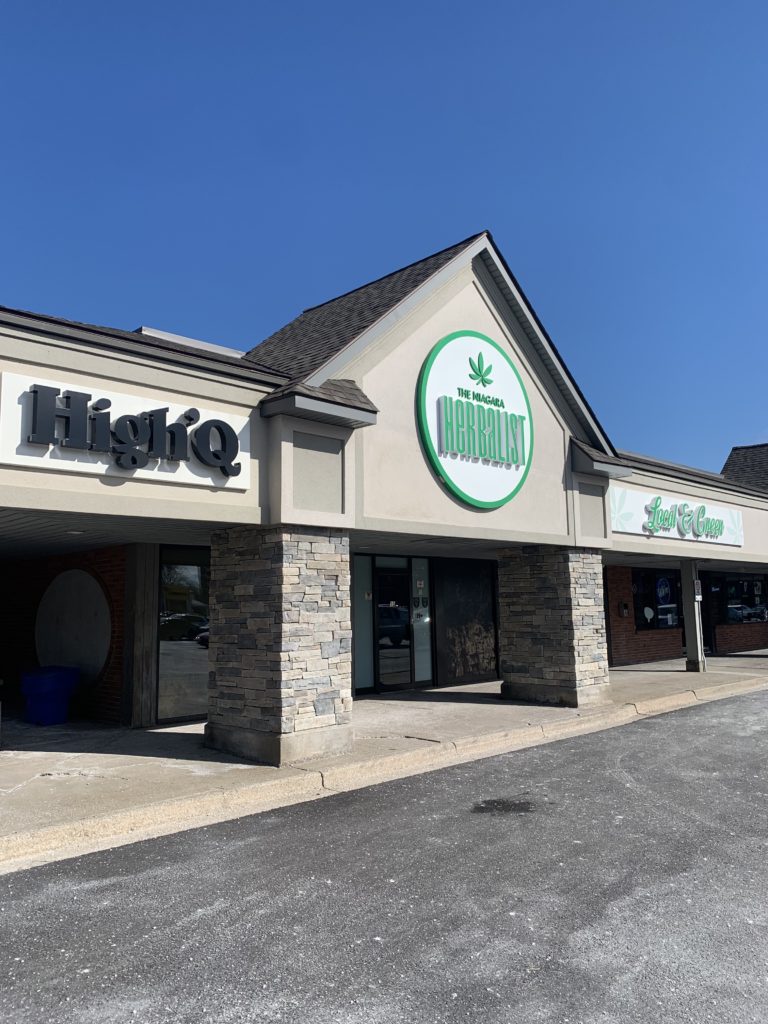
The Niagara Herbalist hired EMA student Mackenzie Boyes for an internship last year to develop a recycling program for plastic used in cannabis product packaging.
Still, there were many unknowns, including consumer buy-in, particularly during a pandemic, where to store empty packaging at the store and how to get it to municipal or private recyclers.
“It wasn’t easy, but it was rewarding, that’s for sure,” Boyes said.
So far, the program Boyes developed has been a success, Trethowan said, though it is more work for him and his staff who sort the packaging, remove labels and clean the plastic.
“It’s not about making money. It’s about trying to do the right thing,” he said. “We’re one small store in St. Catharines. If we can do something at our level, maybe others can do the same. Essentially something needs to happen to reduce the trend.”
One trend Sandy Herkimer hopes will increase, however, is more crossover internships like this one for students at the college.
Placing an EMA student within the cannabis industry is a bit outside the box, said Herkimer, Environmental Post-graduate Programs Internship Co-ordinator. But it’s a relevant opportunity, as Boyes’s placement proved.
“There’s always an environmental component or repercussion to whatever industry you’re working with,” Herkimer said. “Cannabis provided a real opportunity for us to dive in and get things done through a couple of employers.”
Another EMA student was able to find a buyer who paid $30,000 for the plastics used to grow cannabis during his internship with a licensed producer.
“Both projects could be transferable to different cannabis producers and retailers,” Herkimer said. “There so many opportunities to have those crossovers with EMA students, especially with licence holders. Our hope is to create new jobs in the industry — sustainability co-ordinator, environmental manager. It’s also an opportunity for students to try something new.”
The experience was perspective-changing for Boyes, who hadn’t thought about doing anything with the cannabis industry when she enrolled in the program in January 2021. Now she sees more career options available to her, and more crossover placements for EMA students involving other programs at the College, including those within the Canadian Food and Wine Institute.
“It opened my eyes to sustainability and how small businesses can impact sustainability and the environment, which is kind of nice,” Boyes said. “I can take this knowledge and apply it to any job. It leaves a lot of doors open, that’s for sure.”
