
Niagara College will continue living up to its reputation as an age-friendly institution when it sends a delegation of volunteers and presenters to an international conference on ageing this week.
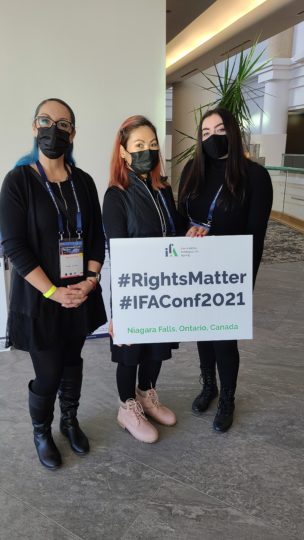
About 50 Recreation Therapy students will lend helping hands at the International Federation on Ageing’s 15th Global Conference on Ageing being held in Niagara Falls Wednesday through Friday.
The students, who are in their first term of the two-year program, will monitor online chats, help face-to-face sessions run smoothly, remind attendees of PPE rules, and provide registration and information desk support.
In addition, students will be exposed to delegates from around the world sharing their expertise in issues related to ageing. Many of the conference themes – ageism, age-friendly initiatives and long-term care – are topics students will explore as they progress through the program, noted Christine Wilkinson, Recreation Therapy Program Co-ordinator.
Students will also have the opportunity to network, practise their professional communication and problem-solving skills, and sit in on some conference sessions.
“Seeing these topics presented at this conference will help them understand the significance and relevance of these issues when they are discussed in class,” Wilkinson said. “Having this global conference hosted so close to home this fall presents a unique and meaningful learning opportunity for our students.”
Students will be asked reflect on the experience after the conference wraps up on Friday. They will also be able to log their volunteer hours, which are a program requirement.
On Wednesday, Five NC staff will co-present on the topic of Niagara College as an age-friendly institution preparing age-friendly graduates.
Carolyn Triemstra, Dean of Community and Health Studies, will be joined by professors Alison Ryder, Jaclyn Frail, Kristine Clark and Christine Wilkinson, to discuss the College’s age-friendly environment and the faculty’s partnerships, practices, and training initiatives that support students, seniors and community agencies.
“It’s what we’re doing as a division related to ageing and older adults, and preparing our students for the future,” Triemstra said. “It really highlights the great work our faculty is doing individually and collectively. It allows us to provide examples to other institutions and celebrate older adults in our community. There are a thousand reasons why we do what we do but celebrating it is what the conference is about.”
