
.
Nov. 27 Workshop honours missing and murdered Indigenous women
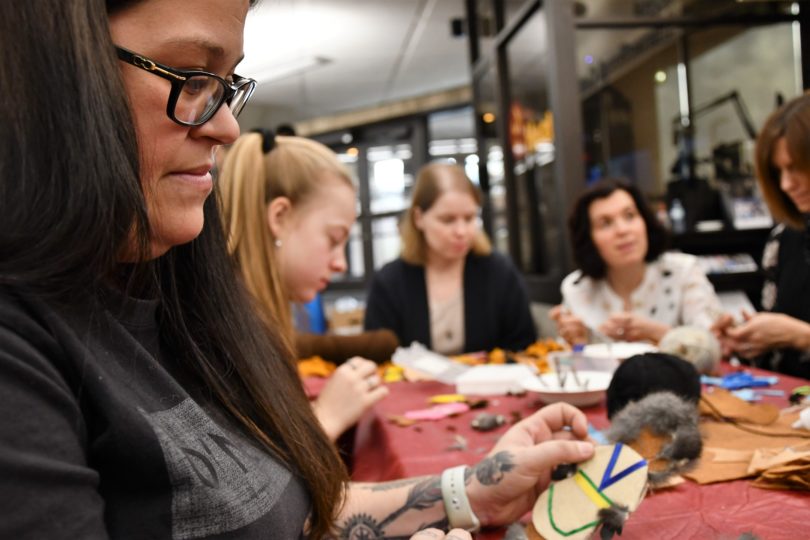
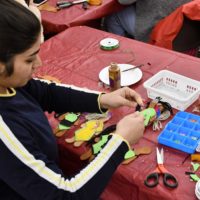
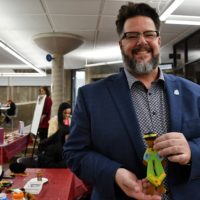
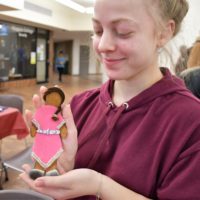
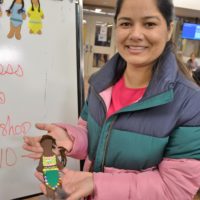
They were adorned with outfits, hair and even accessories, but there was something prominent missing from the felt dolls crafted with care at the Welland Campus on November 27 – not one had face.
The dolls are not toys. The omission of facial features was intentional and impactful. Each doll visually represented and honoured a missing or murdered Indigenous woman or girl in Canada.
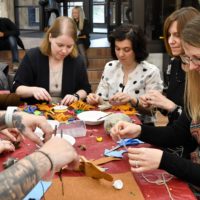
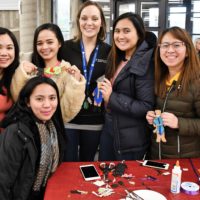
Hosted by the Academic and Liberal Studies division, the interactive Faceless Dolls Workshop was attended by students, staff and faculty who had an opportunity to learn about and reflect on the meaning behind the dolls while crafting them.
The workshop builds on the legacy of the Native Women Association of Canada’s Faceless Dolls Project launched in 2012 to visually represent the countless ‘faceless’ victims of crime, Indigenous women and girls who have gone missing or have been murdered in Canada.
NC began hosting Faceless Dolls workshops in 2015 – organized initially by then-student Alkiie-Babe Froman, and supported by the College’s Indigenous Education department. Froman’s mission was to create 1,200 dolls to represent the estimated number of missing and murdered Indigenous women and girls in Canada. This year’s workshop continued her original goal and each newly created doll was added to the College’s collection.
For Emily Jeanscalzo, participating in the workshop was highly personal. The former Horticulture student returned to the College to take part once again, through her continued connection to the Indigenous Education department.
“My aunt, Denise Bourdeau, was murdered and this is my way to remember her, to inform people, to let people know that this happens,” she said. “We do have faces, we do have names. When people come here to make a doll because women are murdered, I say, ‘no, you’re making this doll to represent my aunt.’ This has a lot of meaning to it.'”
After participating in the workshop at NC last year and learning about its meaning from its founder, Jeanscalzo organized a similar workshop at her daughter’s high school last November to spread awareness about the initiative.
Welding student Whitney Dedam heard about the workshop through a friend and wanted to participate. “A lot of people walk by and ask about what we’re doing and it’s cool to share with others the meaning behind it,” said Dedam. “A lot of people don’t know, not because they don’t want to know but because there’s so much going on in the world. I like to share why this is important.”
Several students in the Palliative Care program participated as part of their Diversity class.
“We learned about why this is important in class, it’s very new for us,” said Jasleen Kaur and Amandeep Kaur. “We’re taking initiative to tell people about it. It’s raising awareness.”
Sociology professor Crystal Adams Coons, who organized the workshop, noted that many students enrolled in Diversity and Inclusion courses participated.
“Within our department, our Sociology faculty have been working diligently to incorporate Indigenous ways of knowing and Indigenous voices into our Diversity courses,” she said. “Beyond being a learning experience for the NC community (and many of our Diversity students), it is important for our team that we model the inclusivity we teach in the classroom and that we actively work towards reconciliation.”
Ashley Buck, a student success leader with Indigenous Education, was pleased to see the workshop’s continued popularity this year, to raise the profile of Indigenous issues and awareness throughout the College.
“While students are making on the dolls, it’s a great opportunity for them to reflect on why this is meaningful, and while they are tangibly holding the dolls, they have deeper conversations,” said Buck. “The more they participate in that dialogue, the more likely they may be interested in learning more – rent out a book, or attend another Indigenous event, or come visit our lounge. Events like this help increase visibility for our students campus-wide.”
The Faceless Dolls workshop is among a roster of activities held at the College during Indigenous Awareness Month in November. NC’s Student Services and Indigenous Education encourage the College community to get involved in activities throughout the month, aimed at building stronger relationships and generating dialogue.
“Marking Indigenous Awareness Month is an opportunity for faculty, staff, and students to learn about Indigenous culture and celebrate the richness and diversity of Indigenous peoples,” said Lianne Gagnon, director of Student Services. “As a response to the Truth and Reconciliation Commission of Canada’s calls to action, Indigenous Awareness Month builds student capacity for intercultural understanding and engagement.”
Events have included an Indigenous Cuisine Experience hosted by the Bachelor of Business Administration Hospitality program (Nov. 11), free screenings of Catch the Dream featuring biographies of Indigenous people (Nov. 7, 14 ,21 and 28), Hiking the Wetland Ridge Trail to highlight the natural environment and Indigenous knowledge hosted by the Office of Sustainability (Nov. 6), and more.
