Ontario Blue Box Regulation and RPRA
The Blue Box Regulation (O. Reg. 391/21) outlines a new system for resource recovery across Ontario as a part of the province’s Resource Recovery and Circular Economy Act, 2016. On April 14, 2022, the government made amendments to the regulation to clarify the process for creating the province-wide Blue Box collection system for materials that will be operated by producer responsibility organizations (or PROs) on behalf of producers.
On July 1, 2023, municipalities and First Nation communities began transitioning their Blue Box programs to the new framework, resulting in Blue Box producers becoming fully accountable and financially responsible for collecting and recycling their Blue Box materials when consumers discard them. The regulation will make producers fully accountable for their products at end-of-life and move us towards a circular economy. The Resource Productivity and Recovery Authority (RPRA) was established to oversee compliance with the regulation. As an institution, we have registered with the RPRA and will report our produced Blue Box material annually.
You can learn more about Ontario’s shift to an individual producer responsibility framework by visiting the Circular Economy and Blue Box Regulation pages on the RPRA website.
Why does Niagara College need to report to the RPRA?
Niagara College must report to the RPRA because we supply various blue box materials to consumers (staff, students, and community members) in Ontario and are thus considered a producer under the regulation. Our obligations as a producer are to register with the RPRA, report our annual supply data, and assume responsibility for the collection and recycling of a corresponding amount of blue box material.
Each department has been appointed a representative that is responsible for reporting a list of blue box materials supplied by that department for the calendar year to the Office of Sustainability. The Office of Sustainability then compiles and reports a comprehensive list of supply data and brand lists to submit to the RPRA.
What are Blue Box Materials?
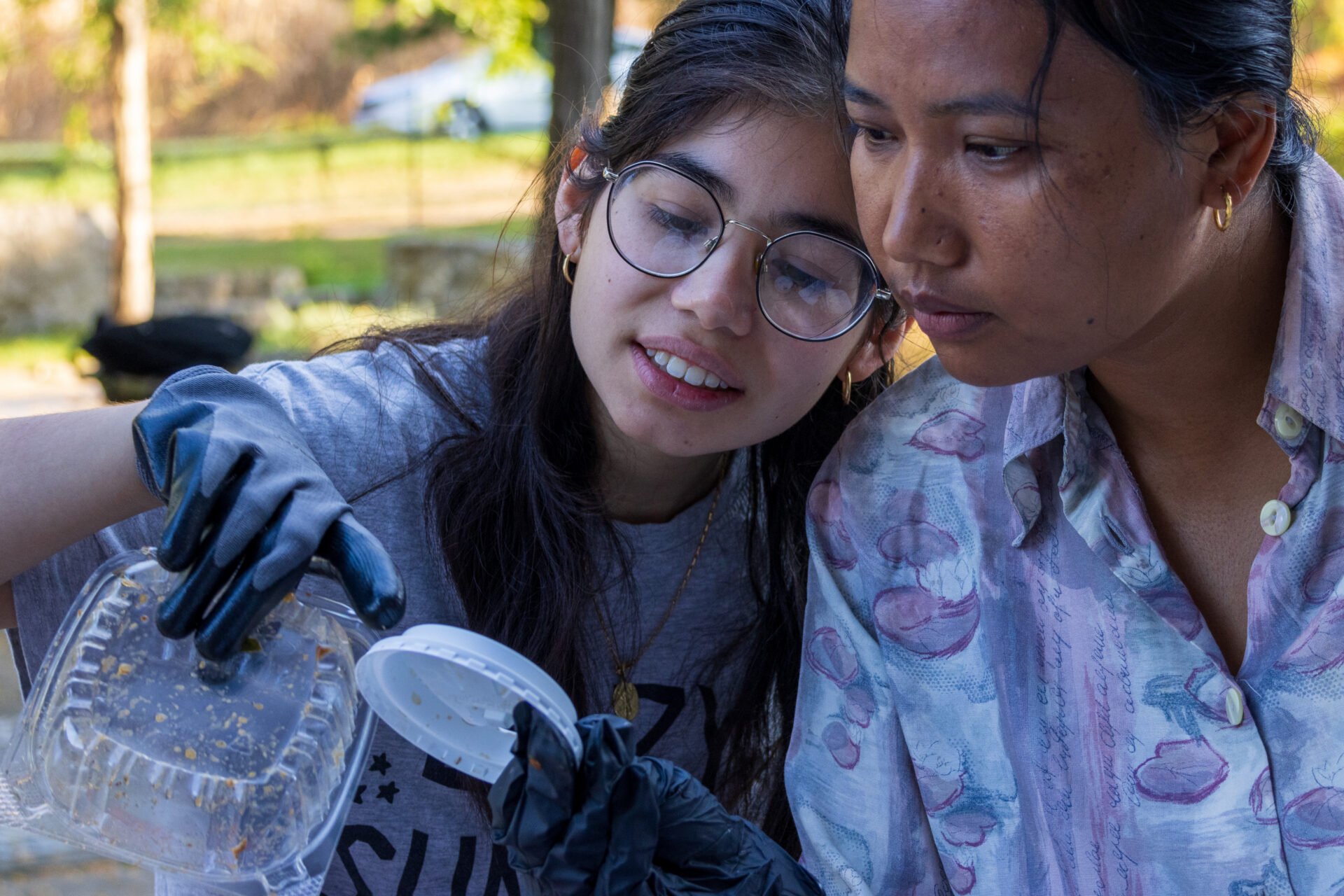
Under the regulation, there are three types of blue box materials: product packaging, paper products, and packaging-like products which are primarily composed of glass, flexible or rigid plastic, metal, paper or a combination of these materials.
More information on blue box material categories can be found on the RPRA website.
Results
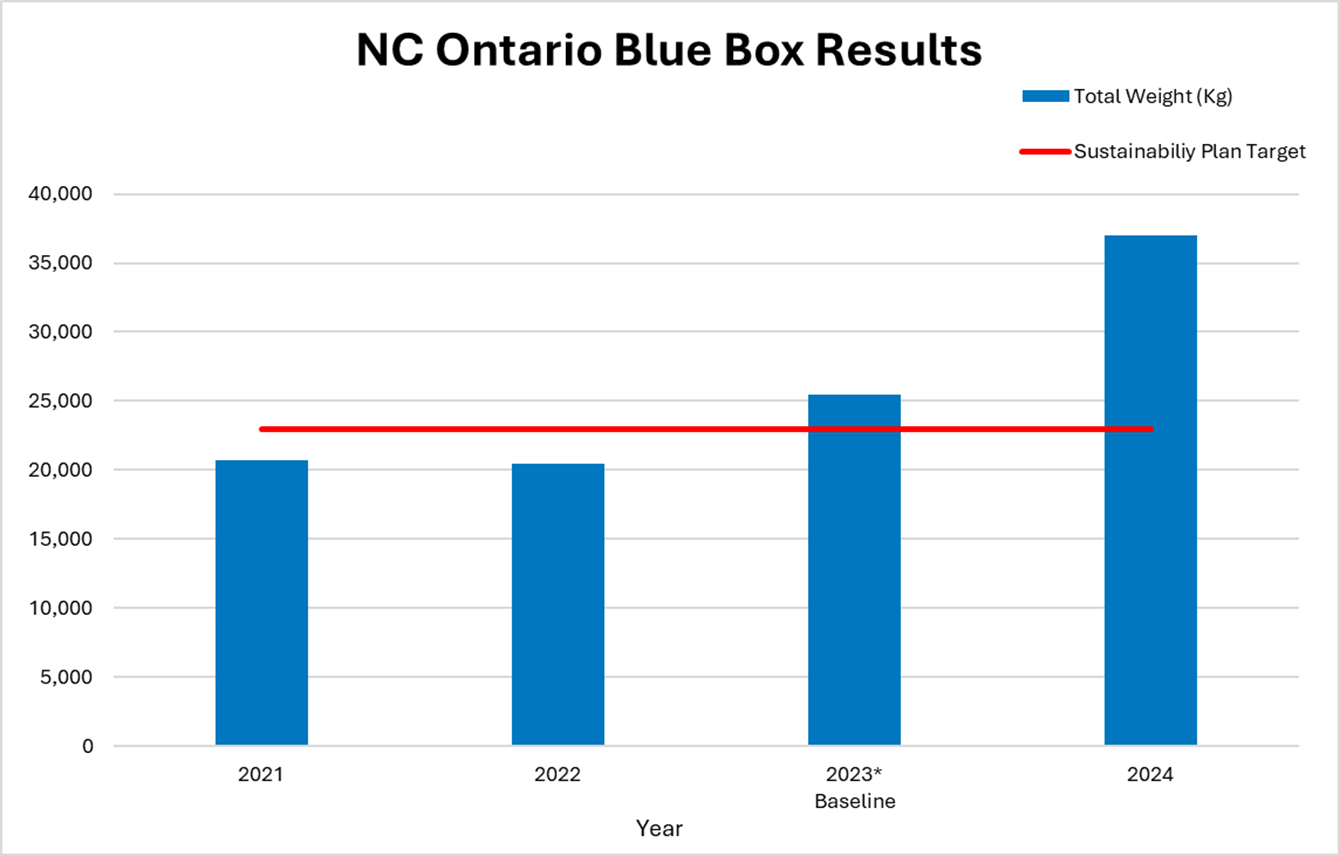
In 2023, Niagara College generated 25,941 Kg of blue box materials, which is a 24% increase in materials from 2022. Of this, 19,522 Kg, or 77% of material can be categorized as paper, making it the largest contributing category of material generated at Niagara College.
In 2024, Niagara College generated approximately 37,000 Kg of blue box materials, which is a 45% increase in materials from 2023. Approximately 83% of materials generated can be categorized as paper, making it the largest contributing category of material generated at Niagara College.
Niagara College’s Sustainability Plan 2024-2029: A Time for Action provides waste management goals and Target 8.1c sets out guidance to reduce the amount of blue box material produced by NC and sent-off site by 10% from 2023 baseline. An annual overview of blue box materials produced by Niagara College can be found in Figure 2: NC Annual Ontario Blue Box Results.
The Office of Sustainability is working with departmental contacts to find innovative ways to reduce blue box materials generated on campus and continue to meet our sustainability plan targets.
Frequently Asked Questions
Check out our FAQ sheet for some more information about the Ontario Blue Box Regulation and reporting for NC.
Resources
- Teams Channel for Departmental Contacts: NC Ontario Blue Box Regulation Reporting Teams Channel
- RPRA Blue Box Program webpage
- FAQs from the RPRA website
- Resource Recovery and Circular Economy Act, 2016, S.O. 2016, c. 12, Sched. 1
- O. Reg. 391/21: BLUE BOX
Who can I contact if I have questions about RPRA at Niagara College?
Please email [email protected] with any questions.