
Babatunde Akande is keenly aware of the value of professional development and collaborating with colleagues across the college system.
Though he knew it previously, that was recently underscored for the relatively new NC professor during latest and largest intake of the College Educator Development Program (CEDP).
The program, tailored to train and support new faculty, provided Akande with both the skills and connections that would enable him to successfully pivot to online learning at the start of the pandemic.
Akande, whose mission has been to infuse the Environmental Technician program with more technology since he joined NC in August 2019, found himself with students trying to learn at home without adequate equipment.
Then there was getting used to classes on Zoom where Akande found himself speaking to black squares rather than faces. Akande wondered if anyone was even listening.
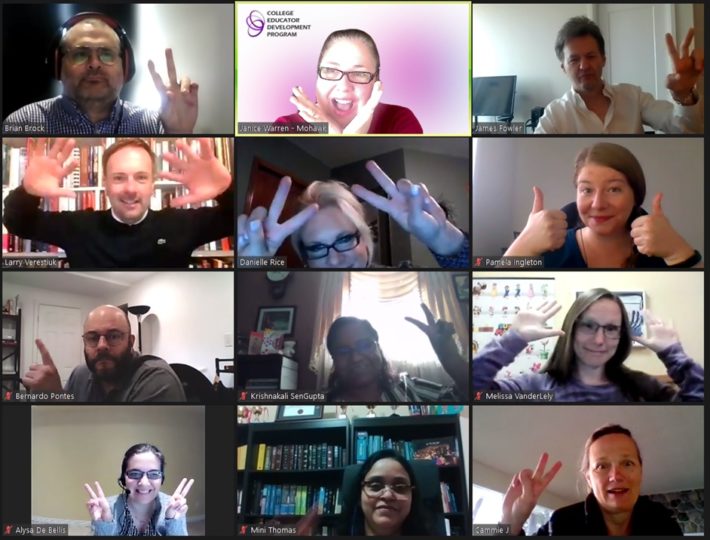
But a group of colleagues he met in CEDP was there to help. They were professors from Niagara and a handful other colleges in Southwestern Ontario, including Mohawk, Fanshawe, Lambton and St. Clair. Among them was one particularly helpful computer science professor who shared all kinds of technology tips and tricks to survive teaching in a pandemic.
“They were aware of more apps and technology to deliver classes,” Akande said. “They made us more aware of things we could apply just in case. There was some form of knowledge sharing.”
The CEDP is a collaborative professional development program intended to foster teaching excellence among newly hired, full-time faculty at six Ontario colleges.
A week after Akande started at NC, he began the CEDP with 47 other new, full-time faculty at Niagara, nearly doubling the usual 25 who participate in the two-year program to make the largest NC cohort ever.
Overall, 200 new faculty hires between the six colleges took part in this edition of CEDP, which wrapped up in May.
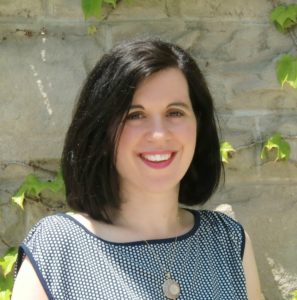
Natash Patrito Hannon, associate director of educational development at Niagara College.
The intention of the program is to help new faculty make the transition to teaching in the college classroom, explained Natasha Patrito Hannon, associate director of educational development at Niagara.
“Many new faculty join the college directly from a profession and bring that valuable expertise, but they may not have had priorexperience teaching,” Patrito Hannon said, adding CEDP teaches new faculty about contemporary research, issues, and effective practices in teaching and learning. “What’s really important is the community established through CEDP. Teaching is often a solo career … it’s often you and your students but this gives new faculty connections across Niagara College and other colleges.”
That’s typically done in-person with guest speakers, though the pandemic meant much of that happened online. There’s also direct mentorship with other faculty.
And then there’s group work with the same dozen peers throughout the two years the program runs. Together, they discuss approaches to teaching, take time to reflect on their pedagogy and support each other.
Throughout, participants put together a portfolio of artifacts, lesson plans, assessments, and student projects to share with their group.
“Particularly with the portfolio piece, it asks new teachers to reflect on what’s important to them in teaching and learning, and how they put those values into practice with students,” Patrito Hannon said. “The portfolio helps them reflect and in being reflective, it brings new opportunities for growth.”
In Akande’s case, he had already taught at Cape Peninsula University of Technology in South Africa. But teaching styles differ greatly between there and here, he noted.
CEDP also covers inclusion, universal learning and design to create course content for a variety of learners, and classroom management. Those are topics that might not have been on the radar of new faculty before being hired.
“You might be good at the subject matter and how to deliver information but there are other areas of the psychology of students you have to know about,” Akande said. “We don’t think about that. We just think that our job is to help them understand. (CEDP) made me aware of so many things I wasn’t aware of.”
That kind of professional development isn’t always common in other organizations, noted Vanessa Levay, who teaches in the Practical Nursing program. She’s since been sharing what she’s learned in CEDP with others in her department, particularly part-time faculty.
“I feel like I owe the college because they invested in me,” Levay said. “We talk about the NC DNA. The piece there is I feel like an ambassador for CEDP. I feel it’s up to me to continue the knowledge transfer.”
Levay transitioned back to post-secondary teaching after working in public health, including with Niagara Region and the Hamilton Niagara Haldimand Brant Local Health Integration Network.
She taught in the Personal Support Worker program previously, from 1999-2000, after graduating as part of NC’s last nursing program cohort.
Like Akande, connecting with others — especially with those outside her own area of expertise — was a particular highlight of CEDP.
“Before you know it, you have a plumber friend from Fanshawe,” she said. “It’s not all nursing. I know how to teach nursing. It was nice to meet a female teaching carpentry and learn about how she teaches.”
