
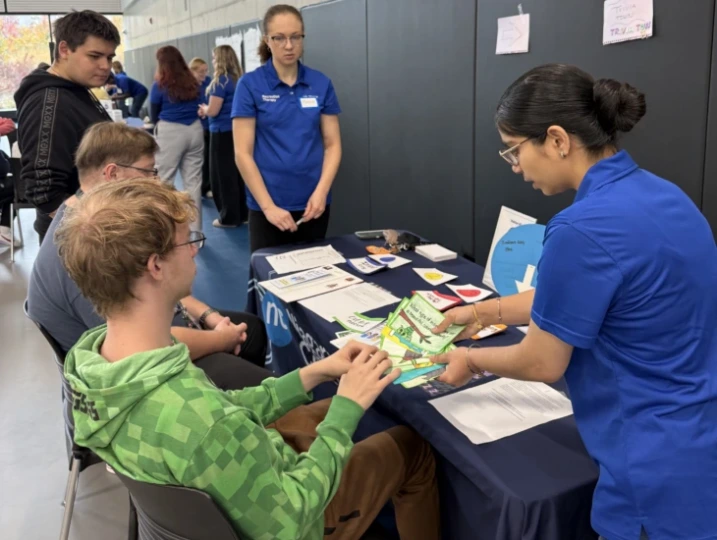
NC Recreation Therapy students put their learning into practice through two interactive events that brought together students, community partners and professionals supporting adults with developmental disabilities.
As part of their Leisure Education course, 47 Recreation Therapy students worked in teams to design and facilitate educational activities tailored to the needs and interests of their audiences. The culminating projects were showcased at the Daniel J. Patterson Campus gym on November 2 and at Bethesda’s annual staff conference at Club Roma on November 3.
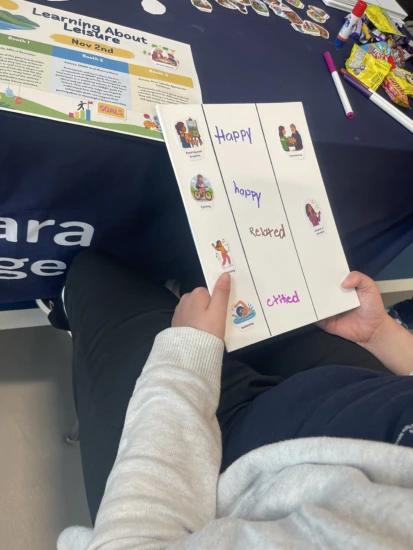
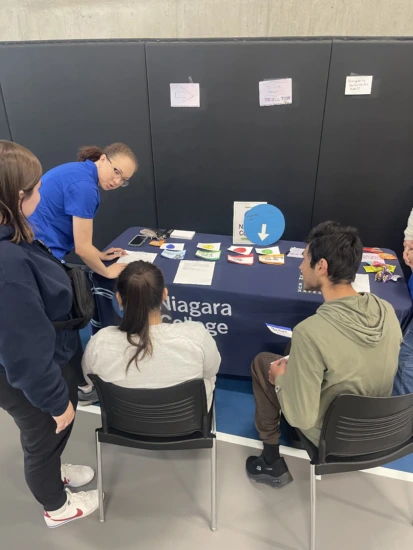
Each event featured interactive activity stations where participants could take part in games, explore leisure education concepts and discover practical strategies to support meaningful participation in recreation and leisure.
Erin Wilkie, Recreation Therapy Professor and Program Coordinator, emphasized the importance of creating meaningful learning opportunities that extend beyond the classroom.
“My focus is always on creating meaningful learning opportunities for students while finding ways to give back to our community,” said Wilkie. “Through two unique events, Recreation Therapy students and first-year CICE students in Leisure Education had the opportunity to bring learning to life through engaging, interactive activities.”
Building connections through cross-program collaboration
At the Daniel J. Patterson Campus, Recreation Therapy students collaborated with students from NC’s Community Integration through Co-operative Education (CICE) program, creating opportunities for students at different stages of their learning to share knowledge, develop skills and build confidence.
The activities explored topics such as setting Specific, Measurable, Achievable, Relevant, and Time-bound (SMART) goals, developing friendship skills, discovering new leisure interests and connecting with community recreation resources. Through games, hands-on activities and educational resources, students shared practical strategies to help participants explore the benefits of recreation and leisure in their everyday lives.
First-term CICE students also had the opportunity to showcase their learning by designing and facilitating an adapted UNO activity for their third-term peers. The activity encouraged inclusion and accessibility while providing newer students with a unique opportunity to share their knowledge, build confidence and take on a teaching role with students further along in the program.
Kellie Kirkwood, CICE Learning Facilitator, shared how the experience helped students step outside their comfort zones.
“From the CICE students’ perspective, participating in the adapted UNO activity was initially a little intimidating, as some students felt shy and hesitant to get involved,” said Kirkwood. “However, as the activity progressed, they had the opportunity to build confidence, work collaboratively with the Recreation Therapy and Leisure Education students, and recognize the value of creating an inclusive activity.”
For Kirkwood, the experience demonstrated the broader benefits of collaboration between programs.
“These collaborations are about more than completing an activity or project,” she said. “They are about creating opportunities for students to experience success, build relationships, discover their strengths, and develop the confidence to participate more fully in their academic, personal, and future professional lives.”
Wilkie also highlighted the opportunity for knowledge exchange between first-year and third-term CICE students.
“Seeing the students share their knowledge and the confidence this inspired in newer learners was especially rewarding,” said Wilkie. “These are the kinds of experiences that make community-engaged learning so valuable.”
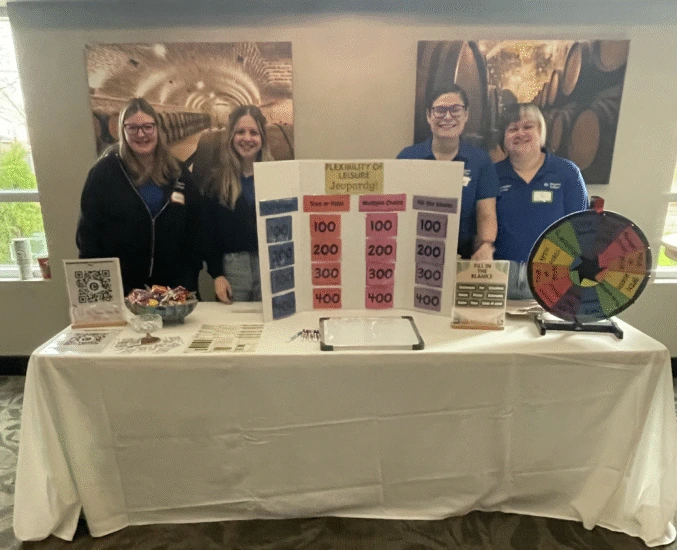
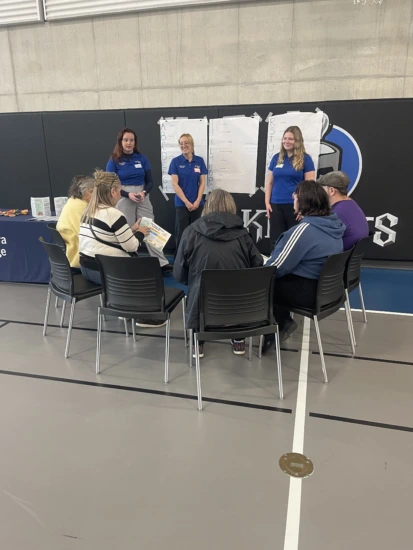
Recreation Therapy students showcased their interactive leisure education activities at Bethesda’s annual staff conference at Club Roma on November 3.
Strengthening community connections with Bethesda
The following day, Recreation Therapy students brought their projects to Bethesda’s annual staff conference at Club Roma, sharing their knowledge and creative approaches to leisure education with frontline professionals who support adults with developmental disabilities.
The event marked the second consecutive year that NC Recreation Therapy students participated in the conference, building on a longstanding partnership between Bethesda and the College’s School of Community Studies.
Sandie Narsansky, Manager, Adult Services at Bethesda, highlighted the mutual benefits of the collaboration.
“This collaboration creates a meaningful learning experience for everyone involved,” said Narsansky. “Students have the opportunity to apply their learning in a real-world setting and gain a deeper understanding of how recreation and leisure can be adapted to meet the diverse strengths and abilities of adults with developmental disabilities. At the same time, our staff gain fresh ideas, new perspectives, and practical strategies they can bring back to the people they support.”
For students, the conference also provided an opportunity to engage directly with professionals in the field, adapt their activities based on participant feedback and gain confidence in facilitating inclusive leisure experiences.
Wilkie reflected on the positive response from Bethesda staff and the impact it had on students.
“It is wonderful to see Bethesda staff engaging with new ideas and approaches while offering students such positive, encouraging feedback on their projects,” said Wilkie. “Watching students’ faces light up as staff shared their enthusiasm and appreciation was a highlight for me.”
For Narsansky, the partnership reflects a shared commitment to expanding opportunities for meaningful recreation and connection.
“Partnerships like this help inspire our teams to think creatively and expand opportunities for the people we support to participate in activities that bring them joy, connection, and a sense of belonging.”
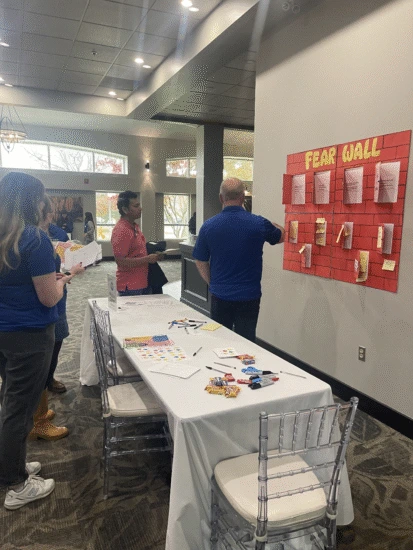

Through both events, students gained valuable hands-on experience while strengthening connections across programs and with community partners, demonstrating how learning beyond the classroom can create meaningful opportunities for students and the communities they serve.
