
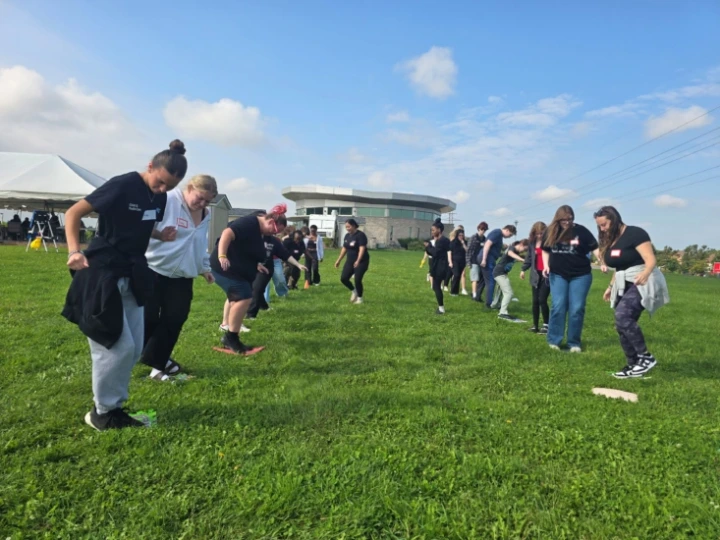
Last month, the Child and Youth Care (CYC) program kicked off the fall term by welcoming new and returning students to its Relational Retreat on September 16.
An annual tradition since 2021, the event brought Level 1 and Level 4 students together for an outdoor day of learning centered on connection, belonging, mentorship and experiential learning.
“Bringing the two groups together allows newer students to learn from those further along in their journey and gives senior students an opportunity to model the qualities we hope to cultivate in the field: presence, empathy, collaboration, flexibility and care,” said Professor Sherry Visser-Fleming.
Kim Ann Laush, Associate Dean for the School of Community Services, noted that taking learning outdoors can enrich a student’s learning experience.
“In Community Services programs, we encourage faculty to create meaningful opportunities for students to learn in outdoor settings and environments beyond the traditional classroom,” said Laush.
“The CYC Relational Retreat is an excellent example of this approach, providing students with the opportunity to engage in experiential learning, build connections with their peers, and apply their learning in a natural outdoor environment.”
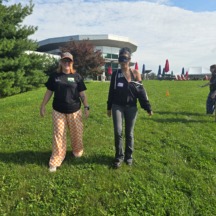
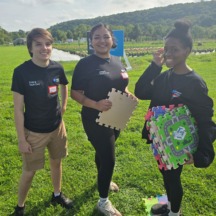
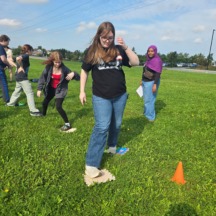
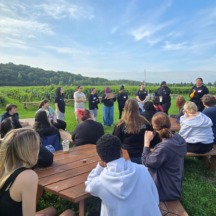
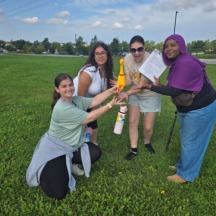
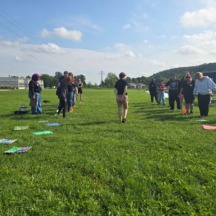
The day featured an Indigenous teaching, ‘Don’t Fall in the Lava’ and ‘Blindfolded Trust Walk’ team-building opportunities, and an ‘unlearn’ poster activity that invited students to consider how identity, culture, relationships and experience shape their interpretation.
By working together through these shared activities, students were encouraged to develop trust and to begin seeing themselves as part of the broader CYC community.
“The Retreat is such an important day to practice what we preach; the ability to build relationships is the cornerstone of the CYC field,” added Professor and Program Coordinator Jennifer White, who was proud of the Level 4 students for demonstrating leadership, mentorship, and professionalism.
For Level 4 student Alexandra MacDonald, the retreat was an opportunity to connect with classmates across program levels and reinforced the concepts being taught in the classroom.
“[The retreat] reminded me that connection does not always have to come from a big intervention or a serious conversation,” said MacDonald. “Sometimes it is just being present, doing something together, laughing, or making someone feel like they belong. I think some of the best moments with youth can happen when you are not trying to force a therapeutic moment and you are just there with them.”
Level 1 student T’amelia Lapps appreciated the experience of her peers.
“One thing I learned at the retreat that I can use as a child and youth care practitioner is the importance of leadership and compassion,” said Lapps. “Watching the Term 4s guide us through this new experience, while it being new for them too, showed me how leadership can come in many different forms.”
A CYCP’s far-reaching impact
CYC Placement Officer Carrie Reid works with community partners to offer students three unique placement opportunities in a range of settings throughout their academic journey.
This applied learning approach gives students valuable hands-on experience, helping them develop a breadth of skills for careers across sectors including education, youth justice, child and youth welfare, mental health and addictions, community outreach, residential and family-based services, and more.
“Our graduates enter the field with the ability to meet young people where they are at, build meaningful relationships, and remain present through complex circumstances,” said Visser-Fleming. “They bring a relational and strengths-based perspective to systems that do not always have enough time or space for relationship, and that contribution can be life-changing for children, youth and families.”
At the retreat, students also had the chance to connect with alumna Corine Joly (2026), who offered words of encouragement to the aspiring CYC practitioners.
“Take your placements seriously, because that is where so much of this starts to make sense,” said Joly while addressing the students.
“Be willing to be uncomfortable. Ask questions. Make mistakes and learn from them. Talk to the youth. Build relationships,” she added. “Eventually, you’ll have moments where something you learned in class suddenly shows up right in front of you, and you’ll think, ‘Ohhh, THAT’S what they were talking about.'”
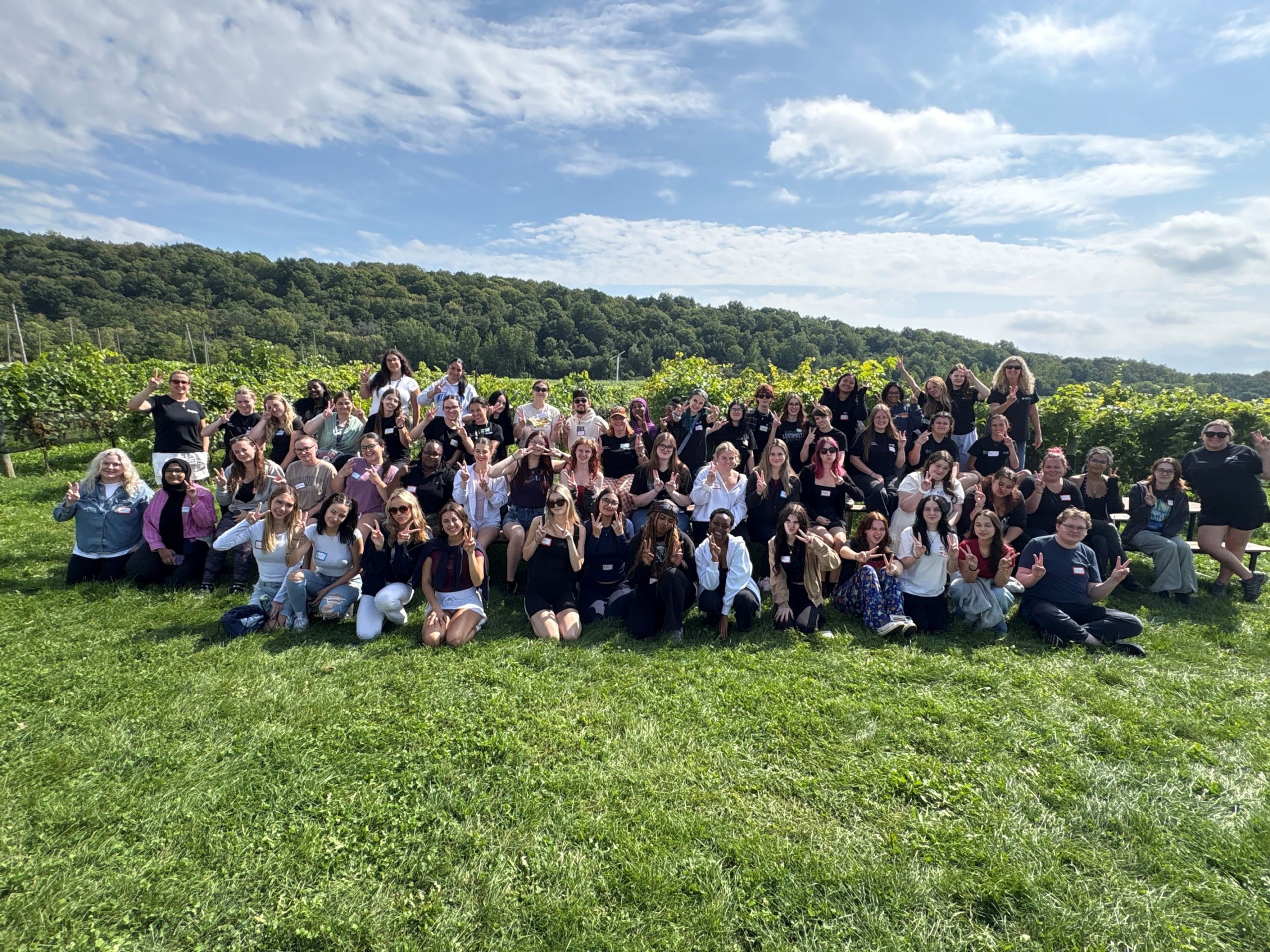
CYC faculty, staff and students gather for a group photo at the program’s Relational Retreat.
