

Strategic collaboration agreement signed as inaugural class of Defence Systems Engineering Technology students begin at College this fall.
On September 4, Niagara College took a step towards becoming a national hub for defence and public-safety technology, partnering with the Canadian Emergency Responders Robotics Association (CERRA), a national organization representing emergency responders and advancing the use and integration of robotics and emerging technologies spanning air, ground and water.
The strategic partnership signed by Niagara College and CERRA will create a Canada-wide platform connecting education, applied research, technology developers, and operational end users in the rapidly evolving defence, public-safety, robotics, and autonomous-systems sectors.
“Niagara College is pleased to partner with the Canadian Emergency Responders Robotics Association as the College strengthens its emerging role in Canada’s defence and public-safety ecosystem,” said Niagara College President Sean Kennedy. “CERRA’s network of emergency responders brings valuable real-world experience with drone technology, creating meaningful opportunities to connect operational expertise with education, applied research and workforce development to help drive innovation.”
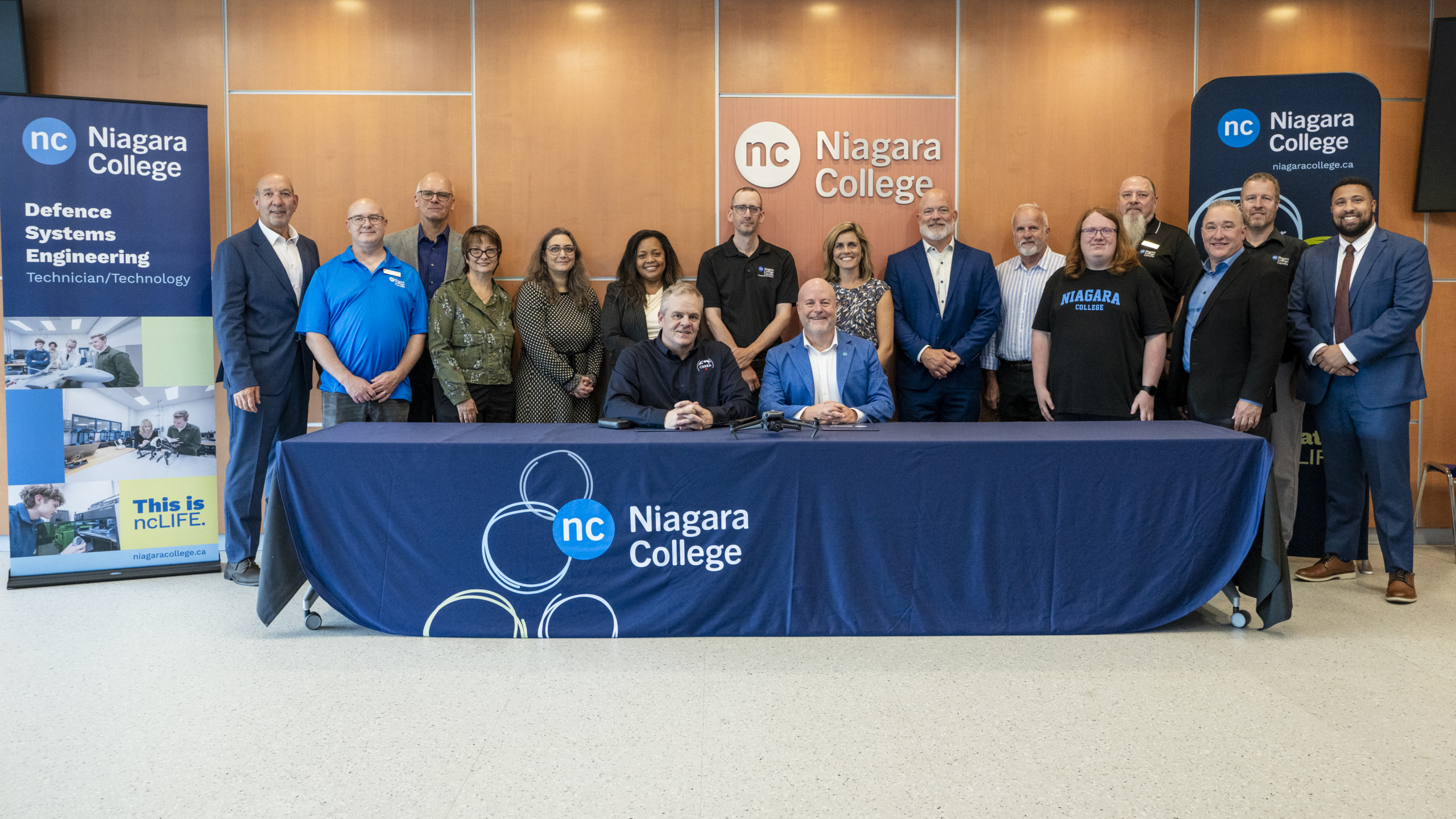
The signing of a Strategic Collaboration Agreement between NC and CERRA comes ahead of the launch of the College’s new Defence Systems Engineering Technology programs this fall, when they welcome the inaugural class. More than 40 students will train to become drone developers, reflecting strong demand for the program that is a direct response to government priorities and labour market needs.
CERRA represents over 700 members from Canada’s emergency response community, advancing the safe, effective and coordinated integration of robotics, autonomous systems, sensors and other emerging technologies across air, ground and water operations. Working across government, defence, industry, academia and research, CERRA connects these groups with emergency response end users to identify capability gaps, evaluate emerging technologies, and develop the training, standards and operational practices needed to bring new capabilities into the field.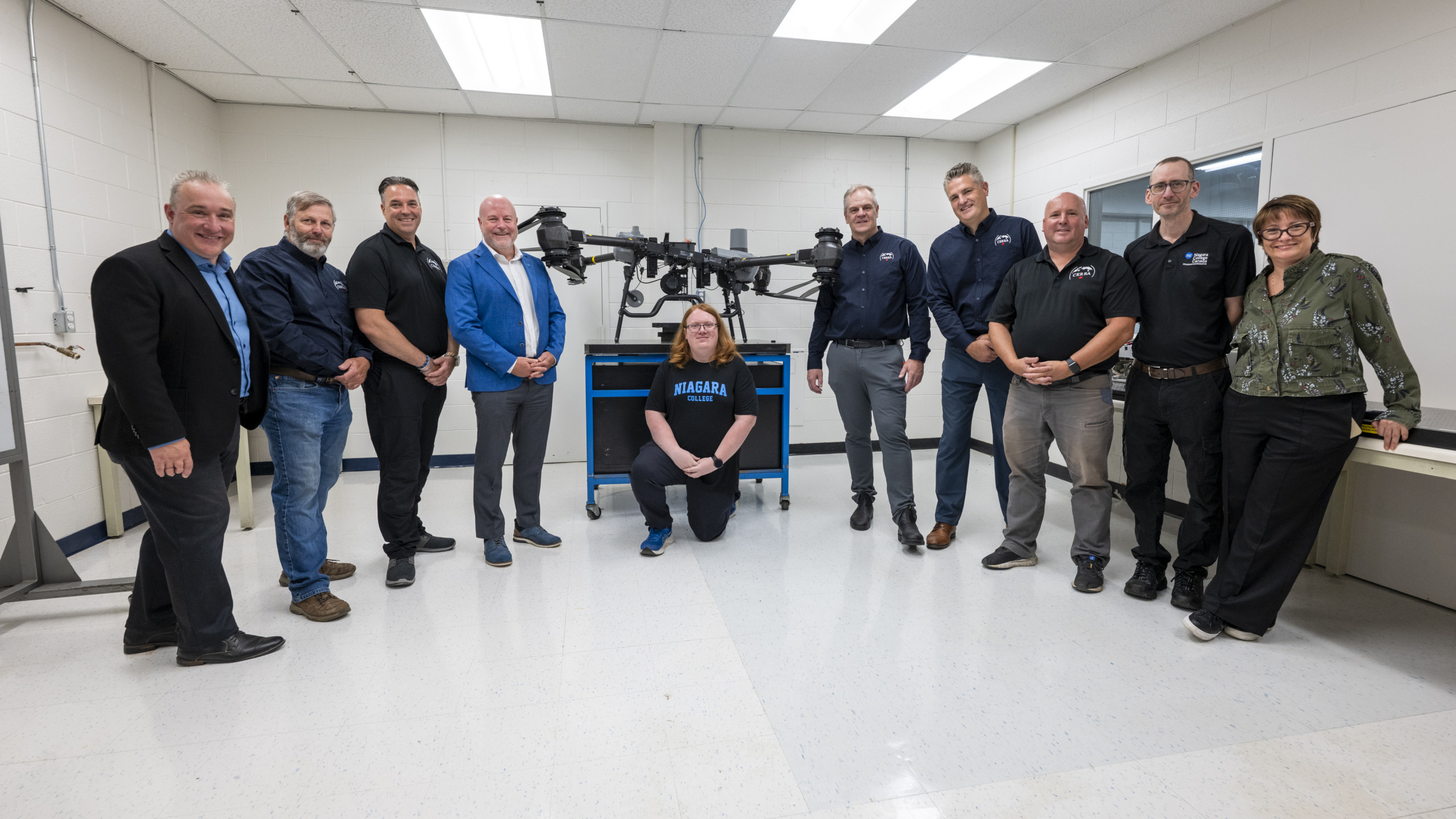
At the signing, CERRA Co-Chairs Andy Olesen and Erik Blouin were joined by CERRA Directors Jeffrey Inch, Dave Beatty, and Colin Giles, as well as Member of Parliament for Niagara South Fred Davies.
“Technology and operational capabilities are evolving rapidly across air, ground and water robotics,” said Andy Olesen, Co-Chair, CERRA. “It is important that we have the ability to keep pace with that momentum, understand where these technologies can provide real value in emergency response operations, and help Canadian technology developers move promising capabilities toward real-world applications. This partnership with Niagara College gives us an opportunity to bring emergency response end users together with researchers, educators, technology developers and government. By creating that connection, we can identify emerging technology pathways, evaluate new capabilities against real operational requirements, and help Canadian-developed technologies move from concept and research into meaningful operational capability.”



About Niagara College’s Defence Systems Engineering Technology programs
The Defence Systems Engineering Technology (three-year) and Defence Systems Engineering Technician (two-year) programs offer experiential learning in mechatronic and photonic (optic/laser) systems for the development of real-world aerial, terrestrial and marine drones. As Canada strengthens its defence readiness and technological innovation, the programs will give students experience building drones, instrument payloads, and autonomous systems, preparing them for sought-after careers in defence, public safety, aerospace, and emerging technologies.
About the Canadian Emergency Responders Robotics Association (CERRA)
The Canadian Emergency Responders Robotics Association (CERRA) is a national organization representing approximately 700 members from the emergency response community across Canada. CERRA advances the operational integration of robotics, autonomous systems and emerging technologies to support emergency response operations.
Working across air, ground and water domains, CERRA brings emergency response end users together with government, defence, industry, academia, research organizations and technology developers to identify operational capability gaps, explore emerging technology pathways, and evaluate and validate new systems.
Through applied research, technology trials, training, standards development and operational exercises, CERRA helps bridge the gap between emerging technology and real-world emergency response capability. This work provides Canadian technology developers with access to operational knowledge and end-user perspectives while helping emergency responders identify, evaluate and integrate technologies that can improve their capabilities.
