
Niagara College students gained a global perspective on sustainable tourism over the fall and winter terms through hands-on learning experiences that connected the classroom with industry expertise from across the Atlantic.
School of Hospitality and Tourism students engaged with Oda W. Andreasen, founder and owner of GoLocal – a Faroe Islands-based tourism company dedicated to preserving the environment, respecting wildlife, and supporting the local communities – who shared her commitment to regenerative tourism.
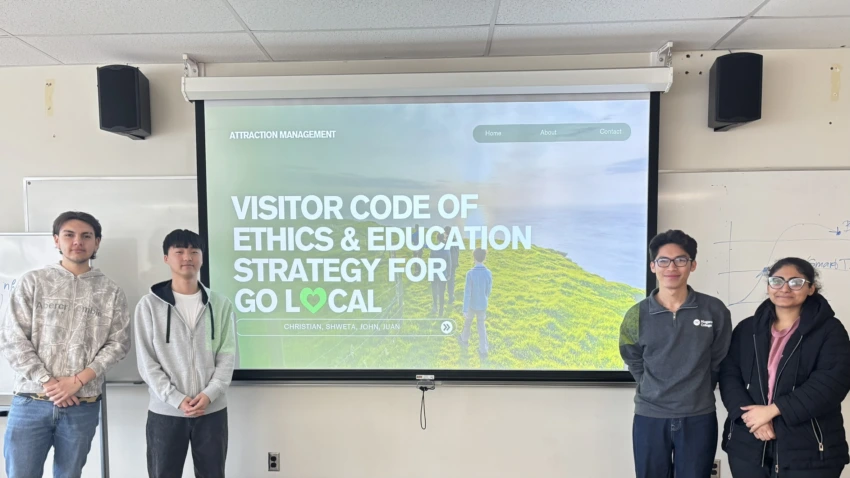
As part of the project, Tourism Management – Business Development Diploma students developed a Code of Conduct for GoLocal clients, along with a visitor education strategy. Meanwhile, Honours Bachelor of Business Administration (Hospitality) students aligned United Nations Sustainable Development Goals with GoLocal’s success stories, enabling Andreasen to incorporate this material into her marketing strategies.
“This collaboration with GoLocal provided students with opportunities to create solutions for a real-world business,” said School of Hospitality and Tourism Professor Agnes Nowaczek, who led the initiative. “Whenever possible, I aim to offer experiential learning and industry networking experiences to our students, as I am deeply convinced this type of learning lasts and transforms them on a deeper level.”
The global classroom learning experience was made possible through the Fare Green Project — an international collaboration between NC’s Be World Ready (BWR) program and partners dedicated to niche tourism and hospitality in Norway, Iceland and the Faroe Islands.
“One of BWR’s pillars is providing students with global learning experiences in the classroom through collaboration with international guest speakers, students and organizations,” said Maxine Semple, Director, Cultural and Global Engagement. “These opportunities allow students to work with global partners on real world scenarios, supporting the development of their cultural humility. Particularly, recognizing the realities of the world and striving to make it better, through engagement and collaboration.”
Lessons in responsible tourism
During a virtual guest lecture on November 28, Andreasen shared her passion for regenerative tourism and emphasized her thoughtful and responsible approach to the field, which she has been dedicated to for more than 16 years across the Faroe Islands and the broader Nordic region.
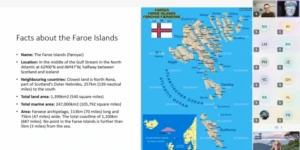
During a virtual guest lecture, entrepreneur Oda Andreasen shared her insights and passion for regenerative tourism in the Faroe Islands.
With in-depth knowledge of the island’s history, geology and local legends, Andreasen provides rich and educational experiences as a local guide on Mykines, a small, remote island in the Faroe Islands known for its dramatic landscapes and unique natural environment. She offers small-group tours of no more than eight guests.
“My message to students was to always think about animal life and nature first, as they cannot speak for themselves,” said Andreasen. “It is also crucial to involve local communities and ensure they benefit both financially and culturally from tourism by supporting local food, guides and artisans, and engaging more deeply with local culture. I have worked in tourism on Mykines since before it became a well-known destination, and my goal is to make sure it never loses what makes it special.”
Reflecting on her first online experience engaging with students, Andreasen said that reaching them across the Atlantic carried meaning beyond the classroom.
“Personally, I am happy to have shared my story with the next generation and hope it has made a difference and inspired them to think in a regenerative way in the future,” said Andreasen. “I am very impressed with the NC students’ work and their thoughtful advice on how to promote my regenerative focus and sustainability. It really made me feel that my efforts were worth it.”
Student experience
For the students, the experience was a unique opportunity to apply classroom learning in a real-world setting.
“Working on the GoLocal project allowed me to put the concepts we have studied into practice, which helped me better understand the challenges and strategies involved in global tourism,” said Juan Pena. “Learning about how waste is managed in remote locations, how to interact with local people, and how to educate tourists so they do not cause any environmental damage, was very helpful.”
Their reflections also highlighted the personal and professional growth they gained.
“At the beginning of the project, it felt quite challenging, especially knowing that our work would be presented to an external audience and could potentially contribute to Go Local,” said Christian Sun.
“As the project progressed, I was able to shift that initial pressure into motivation, pushing myself to grow. Andreasen’s strong vision for sustainability and her dedication to integrating it into her business were truly inspiring.”
The complexity of the tourism industry also emerged as a key insight from students’ reflections.
“I gained insight into what professionals in the tourism industry prioritize and how they make decisions,” said Tzu-Le Chiang. “The real world is more complex than we initially thought, with many factors to consider and rules to follow. I really admire Andreasen’s passion and dedication in building GoLocal and working toward her goals.”
The success of this initiative reflects NC’s commitment to enabling students to experience culturally diverse learning environments, gain global perspectives, and develop practical skills, preparing world-ready and work-ready graduates.
If you are a faculty member interested in working on establishing a global classroom learning opportunity for your students, reach out to Maxine Semple, Director, Cultural and Global Engagement, at [email protected]
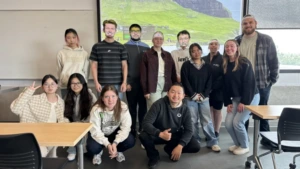
Honours Bachelor of Business Administration (Hospitality) students supported the incorporation of UN SDGs into the partner’s marketing strategies.
