
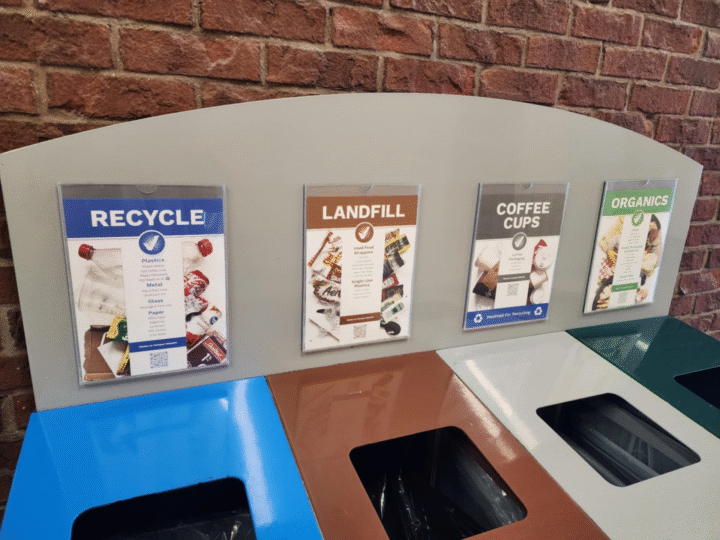
Small choices at the bin add up to big results for waste diversion.
Niagara College has rolled out new signage on four-stream waste bins across both campuses. The signs reflect updated waste processes that allow more materials to be diverted from landfill through the recycling and organics steams.
The changes, which include the recycling of coffee cups, are supported by NC’s waste hauler, Waste Management, which has installed new equipment at its recycling facility that allows coffee cups to be recycled. For organic waste, NC is working with Davidson Environmental in St. Catherines, a waste-to-energy facility that can accept, process and ultimately recover more materials that end up in the wrong bin.
“Waste diversion keeps valuable materials out of landfill, but it depends on the choices we make at the bin,” explains Taryn Wilkinson, Manager of Sustainability.
Through annual waste audits, Wilkinson says that sorting accuracy has increased by five per cent since June 2025 – but there is room for improvement.
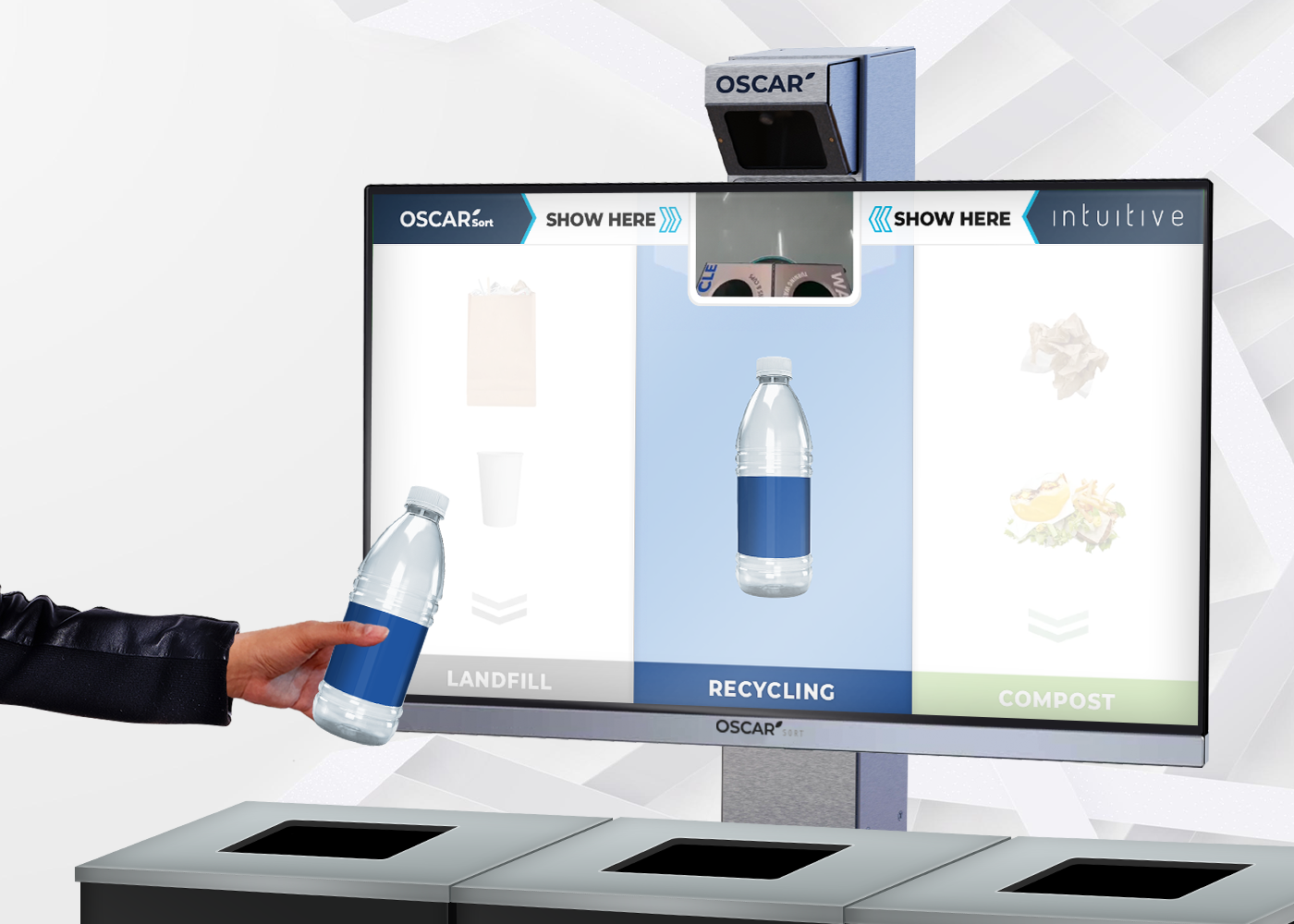
Oscar Sort.
“By checking the signage or using the AI-powered prompts on Oscar Sort bins, NC students and employees can make sure waste goes into the right stream and stays in circulation instead of being buried,” said Wilkinson.
These refinements to the College’s waste management system combine education and intervention to advance NC’s goals in the Sustainability Plan.
Through waste audits, it’s clear that organic materials are the largest by weight found in both landfill and recycling bins. Coffee cups and plastic packaging (chip bags, candy wrappers, and more) are also common contaminants found in the wrong stream.
Unlike some residential systems, Davidson Environmental uses advanced processing to remove and redirect packaging contaminants, helping maximize recovery in the organic streams. One example is a sophisticated de-packaging system for select food and beverages still in the wrapper, like a coffee pod, unfinished granola bar – even an expired can of soup.
“It is important to note that the system we use here on campus are different than the residential systems in Niagara,” cautioned Wilkinson. “What we can put in the recycling and organics here on campus might be different than what you do at home, which is why we have tried to make these new signs simple to follow.”
Organics collected by Davidson Environmental are processed in an anaerobic digester that produces biogas. The biogas can be used as renewable natural gas or, to generate electricity for Ontario’s powder grid, essentially turning organic waste into renewable energy.
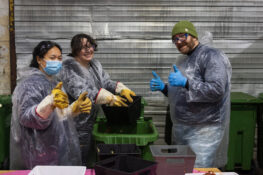

Recently, NC students in the School of Environment and Horticulture took part in a waste audit at Davidson Environmental, where they had the opportunity to observe the facility’s cutting-edge energy capture capabilities.
Learn more about NC’s waste strategy and keep an eye out for the new signs.
