Ecosystem Restoration students don’t mind getting their boots dirty in the name of conservation.
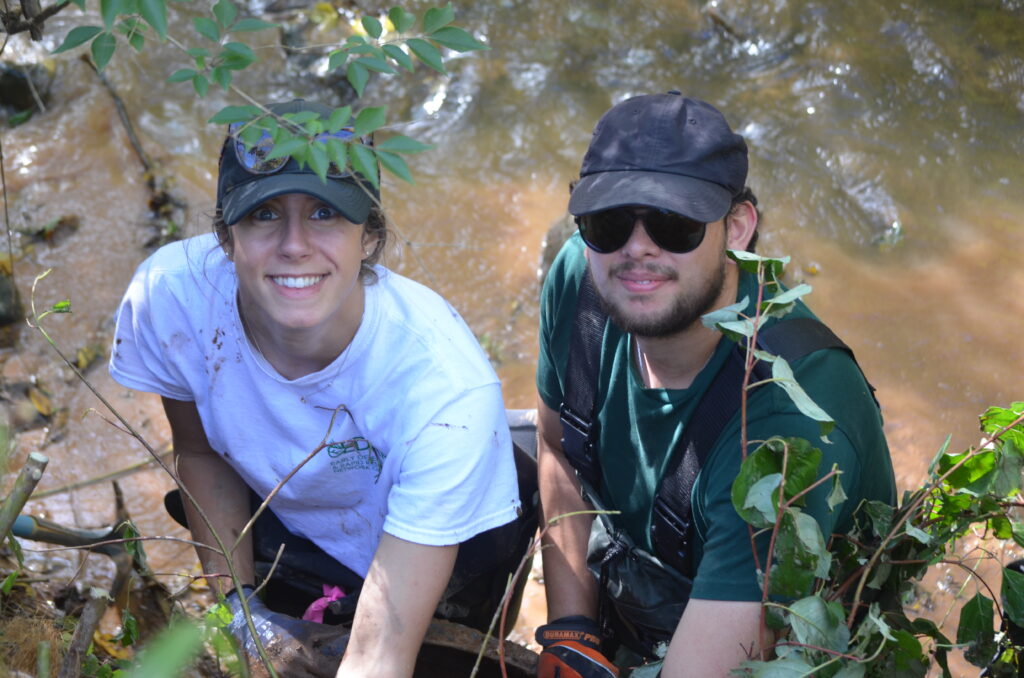
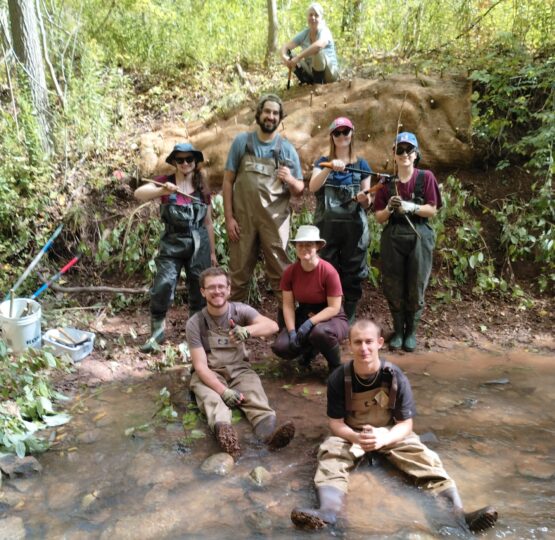
On October 1, they waded into bioengineering to stem the flow of stream bank erosion during a recent field project in Burlington. Nineteen students travelled to Hidden Valley Park that day on a mission to stabilize a section of Grindstone Creek, part of a vital, ecologically rich watershed.
Professor Andrea Sinclair, from the School of Environment and Horticulture, organized the activity for her Plant Materials Management course after a previous class identified problematic areas of erosion. She noted that excessive erosion is a major environmental issue which increases sediment in the water, causes banks to slump, and impacts aquatic life and local infrastructure.
“It is always important in a hands-on program to be doing hands-on work,” said Sinclair. “Soil bioengineering is an application of vegetative reproduction – something that you learn in theory becomes alive”
Evan DiValentino, Dean of Business and Environment noted that the project was a shining example of what experiential learning at NC is all about.
“Our students didn’t just learn about erosion control in the classroom. They teamed up with a community partner (City of Burlington) and got their hands dirty in a real-world setting,” said DiValentino. “t’s exciting to see education and community collaboration come together to protect and restore such an important natural space.”
Plants as powerful tools
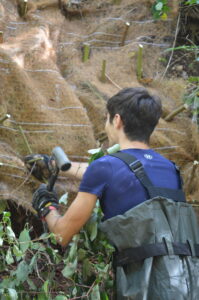
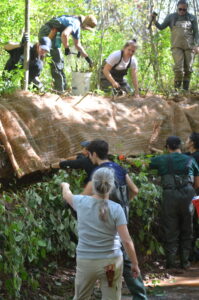
Students used soft bioengineering techniques – primarily live stakes, brush layers, and geotextile – to effectively reinforce the vulnerable stream bank. The process leverages the natural ability of plants, particularly native species like willow and dogwood, to regenerate roots from stem tissue when it contacts soil. This phenomenon, known as vegetative reproduction, makes them nature’s best tool for stabilization.
Sinclair highlighted the advantage of using natural materials.
“Plants bend and can regrow if damaged. They cool the stream and provide habitat,” she said. “Concrete does not do this,”
Working on a carefully selected site, students cut woody stems, placed them horizontally in a shelf dug along the bank, and then tamped down the soil to create a brush layer. They further secured the bank with live stakes hammered into geotextile, which was also seeded with a cover crop.
“Next summer, there should be a line of dogwoods holding that bank together,” said Sinclair.
Student Astreo Foglia, appreciated the insight gained during the experience.
“I gained a practical understanding of the theory we’d been taught in class, and it really put into perspective how labour-intensive the whole process is,” said Foglia. “It was very rewarding to know we contributed something to the health of the watershed.”
Impact takes root
The student project made a significant environmental splash in the community. Erin Mallon, Field Services Technician for the City of Burlington’s Park Operations, was on site to offer support and praised the NC team.
“The City of Burlington is incredibly grateful for the meaningful contributions made by the Ecosystem Restoration students at Hidden Valley Park,” said Mallon. “Their use of bioengineering techniques to stabilize a vulnerable section of Grindstone Creek not only helps prevent erosion but also supports the health of the entire watershed, including critical salmon spawning areas downstream.”
In addition to bank stabilization, students planted 100 native trees in the riparian zone, helping restore biodiversity and strengthen the city’s efforts to manage invasive shrubs.
“This kind of hands-on collaboration is vital to protecting our natural spaces and building a more resilient ecosystem for future generations,” said Mallon.
Cultivating skills
Real-world, hands-on learning experiences – such as the field project at Grindstone Creek – are the bedrock NC’s Ecosystem Restoration program.
They’re what drew students like Foglia, who is originally from Ottawa, to enrol in the graduate certificate program.
“I felt that my undergraduate years hadn’t prepared me to work in the field, so I was looking for additional, specialized training in how to restore the environment,” recalled Foglia. “I certainly found it at Niagara College!”
NC’s one-year Ecosystem Restoration graduate certificate program is centred on “hands-on, boots-on” learning opportunities via community-based ecological restoration projects. This approach ensures graduates are equipped with in-demand skills and restoration-oriented certifications, giving them a competitive advantage in the environmental labour market.
-
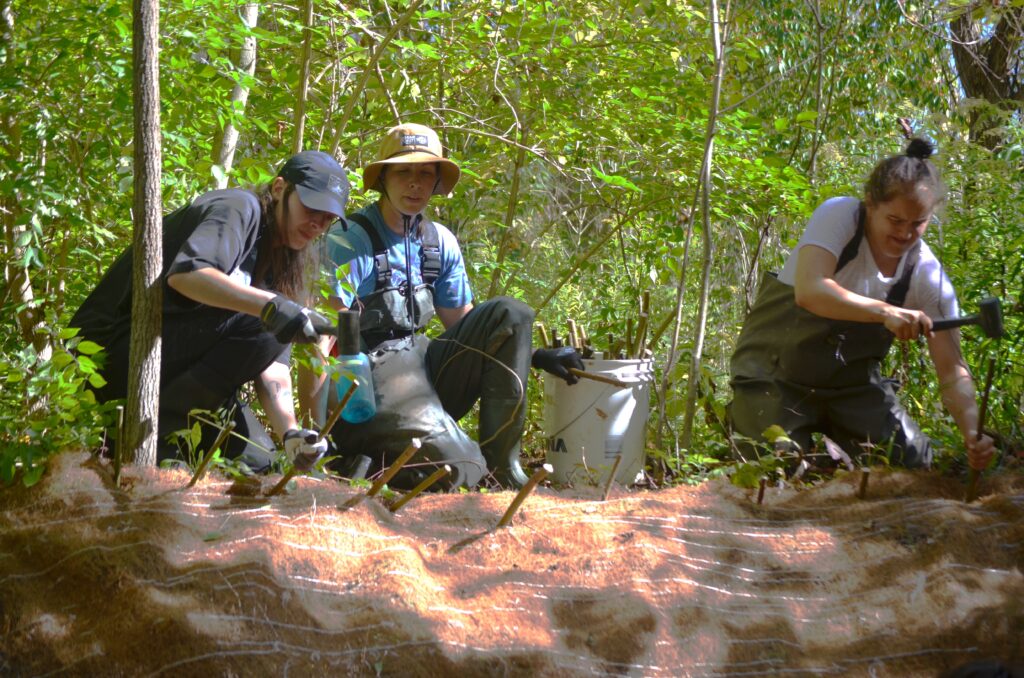
- Students work on stream bank stabilization with the City of Burlington for their Plant Materials Management class (supplied photos).