

Niagara College Dental Hygiene students took to the stage on July 28 and August 11 at the Welland Campus to present final term projects that went beyond oral care and into the world of health policy advocacy. The presentations offered students the unique opportunity to share their work in front of local MPP Jennie Stevens, who has avidly attended these presentations in the past, supporting student advocacy in oral health.
“This is my third or fourth year attending this class, and I’ve listened closely to the ideas you’ve presented,” said Stevens. “One that stands out is the dental bus that serves seniors and migrant workers, which has since been taken up by the provincial government.”
“I’m very proud of each and every one of you for becoming the kind of leaders our communities need,” she added.
As part of their Seniors Health Policy and Advocacy course, the students showcased weeks of research and critical thinking through advocacy proposals that addressed gaps in Canada’s oral healthcare system. From policy barriers to education limitations, their topics reflected real-world issues they hope to help change as future healthcare professionals.
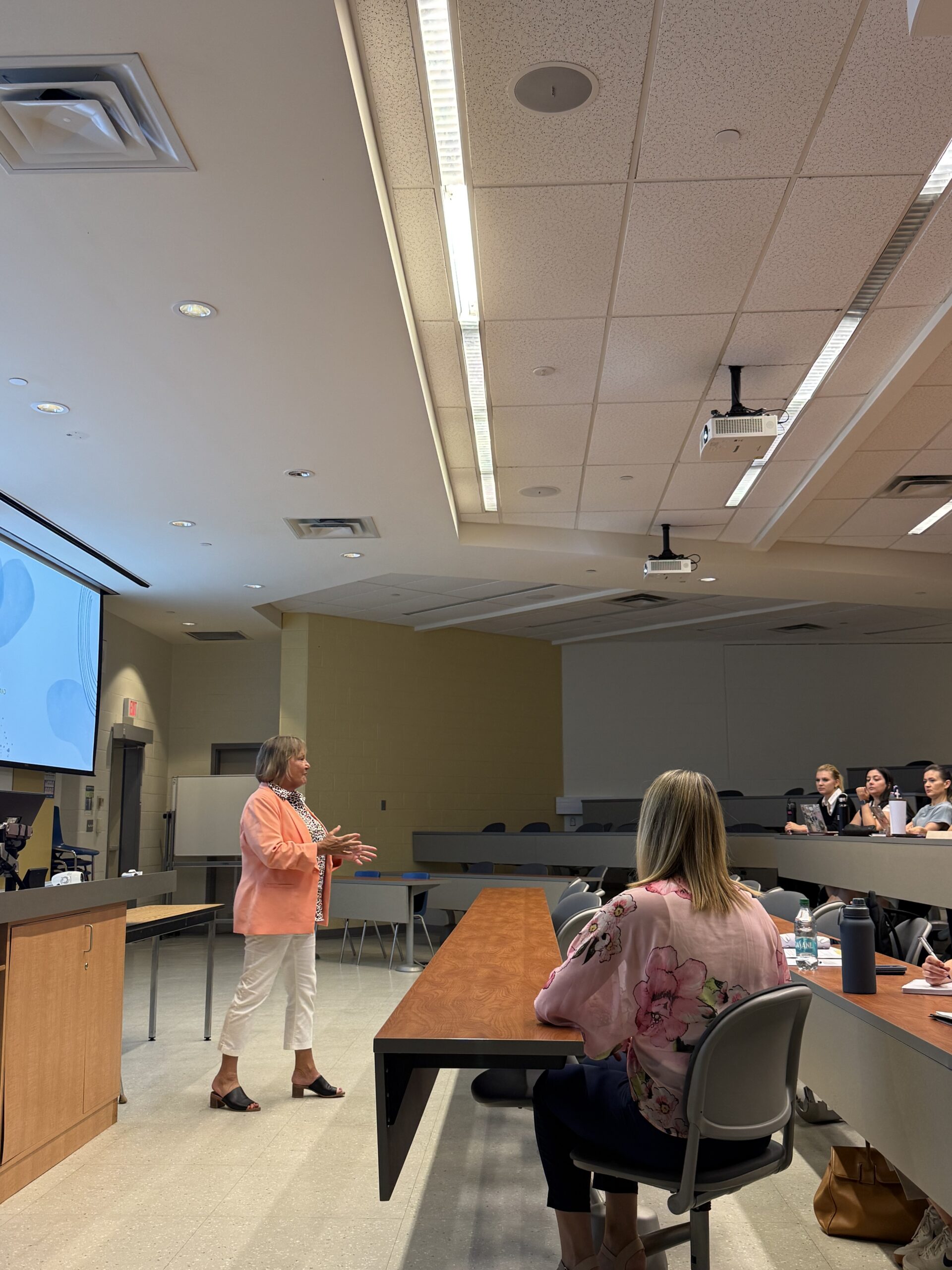
Local MPP Jennie Stevens praised the Dental Hygiene students advocacy projects and encouraged them to continue driving positive change in oral health.
“You’ve done a pretty significant amount of work to get to this day,” said Professor Leeza Dougherty, who leads the course. “The level of work you’ve produced so far is pretty amazing, and you should be proud of yourselves.”
The presentations welcomed several guests, including Dr. Sinéad McElhone, Dean of Health Sciences, who shared her pride in the students’ work.
“We’re so excited and proud of this group always, you always do fantastic work for these presentations,” she said. “They are always wonderful to dive into individual topics of Dental Hygiene and ascertain what’s going on in the dental world.”
Taylor Jones, Constituent Manager to MPP Jennie Stevens, attended the July 28 presentations on behalf of Stevens and her cabinet. Stevens herself attended the presentations on August 11.
Jones noted the role advocacy can play in policy change, sharing that she looked forward to bringing some of the students’ ideas back to Queen’s Park.
“It’s my job to take what’s happening in the community and elevate those issues,” she said. I’m excited to hear about the topics you’ve tapped into because they really can make a difference at the provincial level.”
Also in attendance was Dental Programs Manager Emily McLean, who joined to support the students and hear their presentations.
“I’m excited to see this because I know firsthand the impact this can have on people and the change that can happen in communities at a systems level,” said McLean, who has previously worked in an advocacy role herself.
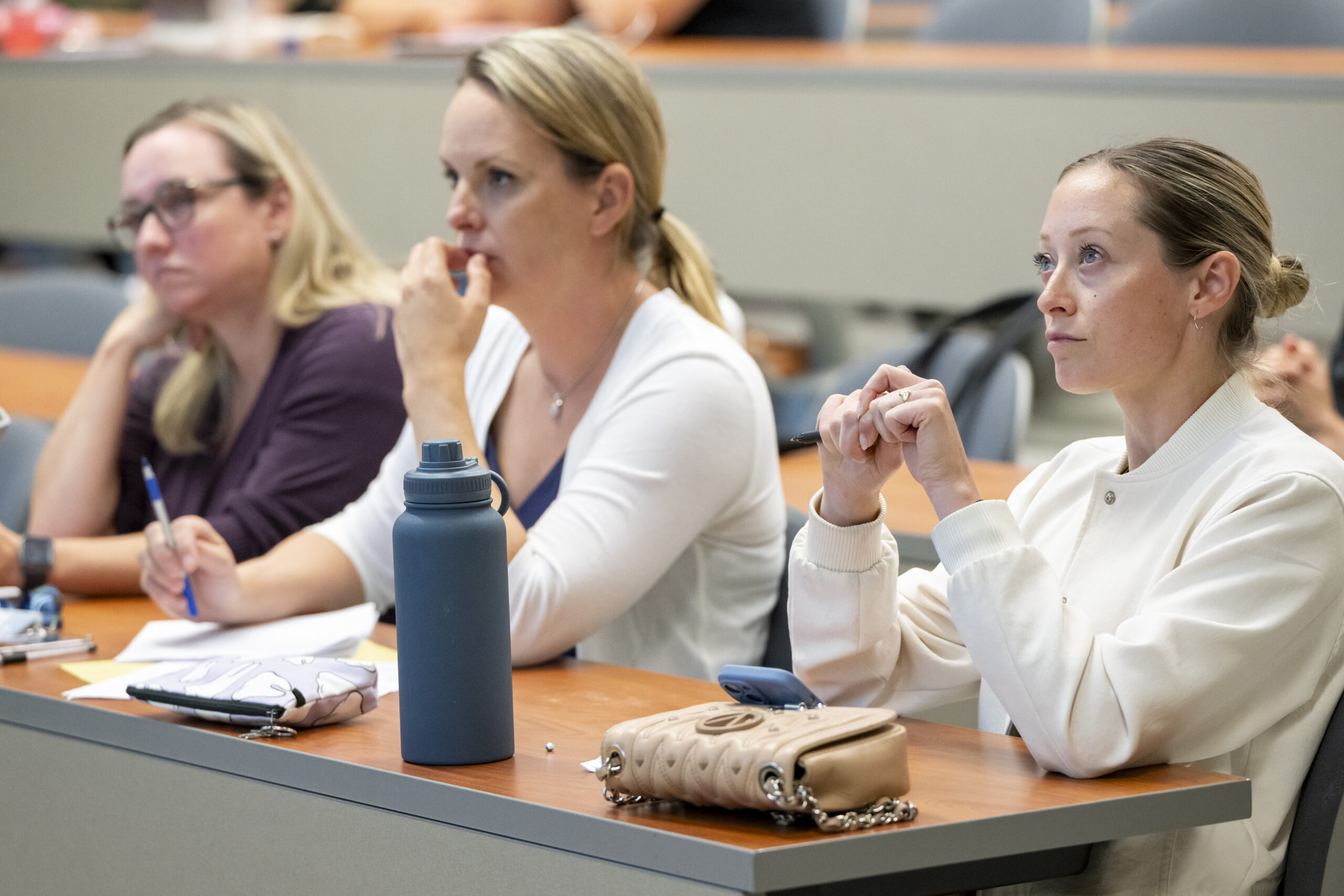
Other guests included Taylor Jones, Constituent Manager to MPP Jennie Stevens, Dental Programs Manager Emily McLean, and Dean of Health Sciences Dr. Sinéad McElhone, who joined to support Dental Hygiene students during their final-term advocacy presentations.
Students explored a wide range of advocacy topics, including early oral health education for expecting parents, the removal of tax filing barriers under the Canadian Dental Care Plan (CDCP), and more.
Denta Hygiene Student Marvin George and his group advocated for Orofacial Myofunctional Therapy (OMT) to be included in Ontario’s dental hygiene curriculum and in public health policies. Their research found that OMT, a therapy using simple exercises for the tongue, lips, and face, can treat issues such as sleep apnea, mouth breathing, speech problems, and more.
“Our group chose this topic because we realized how many people suffer from problems that OMT could help, yet it’s not taught in our program or covered by public health plans,” said George. “We want future hygienists to be prepared to help these patients.”
“We were surprised that OMT, which uses simple exercises for the tongue, lips, and face, can help fix these issues without surgery or medicine,” he added. “It really impacted us to see how many people could avoid health problems if OMT were taught to dental hygienists and included in public health plans. Yet hardly anyone knows about it, which is why we believe advocating for OMT is so important.”
George said it was an honour to share his work in front of someone affiliated with parliament.
“We’re proud of our project and hope it makes an impact,” he said. “Advocacy lets us speak up for changes that will help people stay healthy. It also shows that dental hygienists can be leaders, not just clinicians.”
Fellow Dental Hygiene student Olivia Herod and her group addressed the need for improved access to dental care for people experiencing homelessness.
“We chose this topic because, as future dental hygienists, we recognize the deep inequality in access to oral health care services, especially among the unhoused population,” said Herod. “We were inspired by the belief that oral health is a human right, not a privilege. The current system in Canada isn’t designed with marginalized populations in mind, and my group felt connected to advocate for structural change that promotes dignity, health equity, and accessible care for all.”
Herod said the project helped her develop stronger advocacy and communication skills and made her more confident to confront systemic health issues with compassion and professionalism.

“I learned how to view oral health through both a public health and social justice lens, which I believe is essential for effectively serving diverse populations as a dental hygienist,” she said. “This broader perspective will help me better understand and address the unique challenges faced by vulnerable communities and ensure that my approach to care is both inclusive and equitable.”
Herod believes her future role in oral health care goes far beyond cleanings and checkups.
“It’s crucial because we’re not just training to clean teeth and educate people on their oral health, we’re training to be health care providers who see the whole person,” said Herod. “Advocacy helps us think critically about the systems our clients are navigating and pushes us to take action beyond the clinic. Engaging in advocacy as students helps us build a strong foundation of empathy, leadership, and awareness which I think is so important and we’ll carry into our practice for years to come.”
