
As the world celebrates International Women’s Day, Niagara College is proud to highlight the contributions of four remarkable women who are making strides in gender equality and enhancing opportunities for girls and women. This year’s theme, Accelerate Action, calls for urgent and effective progress toward a more equitable future.
From education and athletics to student support and advocacy, these women are leading change within the College community and beyond. Their work demonstrates the power of action, both big and small, to break down barriers, foster inclusivity, and create meaningful opportunities for the next generation.

Theresa Anzovino – Professor, Sociology and Equity Studies
Theresa Anzovino has dedicated her career to equity, diversity, inclusion, and accessibility (EDIA) education. Before joining Niagara College in 2006, she worked in refugee protection, advocating for women and children at risk of gender-based violence. At NC, she has been a leading force in advancing EDIA initiatives and fostering a culture of belonging through her teaching and participation in the Diversity and Inclusion Taskforce. Theresa is also currently serving as President of Casa El Norte, Canada’s oldest refugee shelter providing shelter to women and unaccompanied minor children in need of protection.
Can you highlight the work you’re most proud of in enhancing EDI education and opportunities at the College?
There is an origin story about “gathering at the table” for those who work in EDI and Accessibility. My journey began at the kitchen table, where I learned about gender equity from my feminist family–lessons that still guide me today, especially as I reflect on this year’s International Women’s Day theme, “accelerate action.”
Before joining Niagara College in 2006, I worked in refugee protection, advocating for women and children at risk of gender violence. I brought these experiences to the “classroom table” at NC, where I teach EDI and Accessibility. Over time, NC’s EDI initiatives have accelerated change, positioning all of us as catalysts for social justice.
As part of the Diversity and Inclusion Taskforce, I’ve had the privilege of sitting at the “college table” to help shape a shared vision for equity, drawing from student, employee, and Indigenous perspectives. Two initiatives I’m particularly proud of are the “It’s An IDEA” Virtual Reality Reflection Tool and the Campus Accessibility Audit project. The former empowers students to engage with the lived experiences of disabled students, while the latter allows students to evaluate campus accessibility and present their findings to leadership.
This year’s International Women’s Day theme is Accelerate Action, emphasizing the urgency of making faster, more effective strides toward gender equality. How do you interpret this theme, and why do you think it’s important for us to focus on it now?
This year’s International Women’s Day theme, “Accelerate Action,” highlights the urgency of making faster, more effective strides toward gender equity. At this critical moment in history, we face attacks on the values that have shaped modern societies, with DEI being targeted and the term “woke” weaponized to discredit social movements. “Wokeness” is simply an awakening to injustice and a commitment to dismantling systemic oppression. The theme calls on us to work harder to protect justice, fairness, and dignity in creating equitable communities. Feminism, once misrepresented, is now embraced by 57% of Canadian women and 40% of men, and 90% of Canadians believe we should do more towards advancing gender equity.
In your role, how do you accelerate action to support gender equality and empowerment for girls and women at NC?
I’m currently on professional development leave exploring equity-focused service-learning models within the not-for-profit sector, where NC students can engage in experiential learning that supports gender equity and empowerment in the broader community. As an EDI and Accessibility educator, I believe learning must go beyond the classroom, connecting to lived experiences, the campus, and the community to promote authentic inclusion. This approach empowers future generations to be catalysts for change in a world where gender identity and expression no longer lead to exclusion.
One of my most memorable teaching moments involved a pregnant student facing gendered poverty. She shared her struggles in class, which sparked an outpouring of support from her classmates. They created a plan to help her, which included providing her with a nursery, food, and support during her final term. When she graduated, the class gave her a standing ovation, reaffirming that the struggle for equity requires collective action.
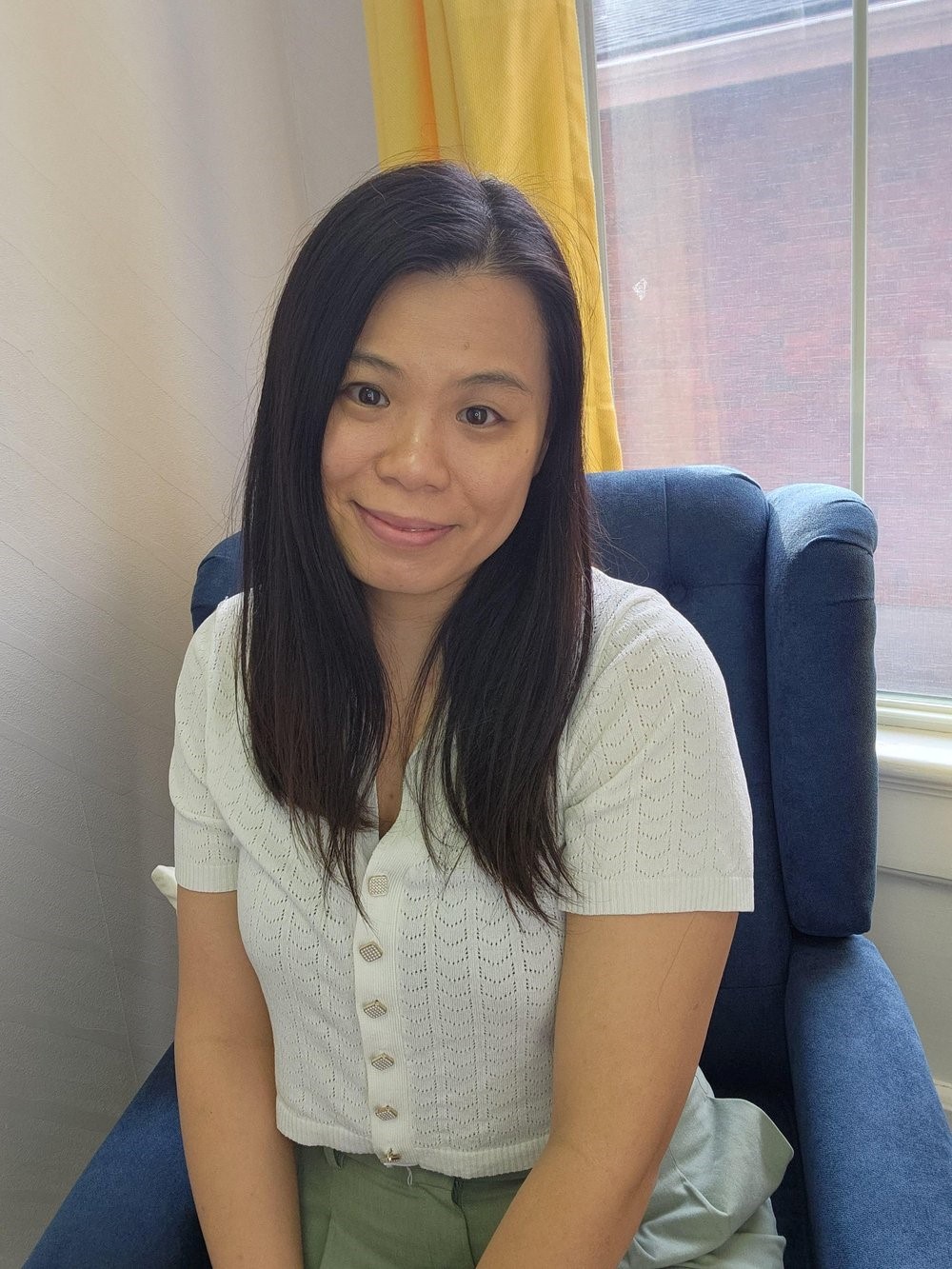
Yiching Chua – Racialized Counsellor, Health Wellness and Accessibility
Yiching Chua has played a pivotal role in fostering inclusivity and supporting racialized students at Niagara College. Since joining NC in 2023, she has spearheaded initiatives such as focus groups, student-led programs, and Kopi with Yiching, helping to build a supportive and welcoming campus environment. Her work as a counsellor and EDI Catalyst merges individual support with broader systemic change.
Can you highlight the work you’re most proud of in supporting racialized students as a College Counsellor and your role as an EDI Catalyst?
In the fall of 2023, with support from various departments, I launched focus groups for racialized students to better understand their needs. These findings have informed initiatives like Wellbeing Month in February 2024, which focused on mental, emotional, financial, and social health. Additionally, Kopi with Yiching at the Daniel J. Patterson Campus provides a safe space for racialized students to build community and connection. My daily role as a counsellor goes hand-in-hand with being an EDI Catalyst as I aim to merge individual and community work to drive systemic change.
This year’s International Women’s Day theme is Accelerate Action, emphasizing the urgency of making faster, more effective strides toward gender equality. How do you interpret this theme, and why do you think it’s important for us to focus on it now?
In these uncertain times, it can be difficult knowing what is to come. And at the same time, the urgency of making faster and more effective strides towards gender equity is never more pressing than now. When we focus on gender equity, it doesn’t just help women, it helps everyone. As women we make up a significant portion of the workforce and when we are supported creatively, financially, and/or domestically, our families and communities will be positively impacted. Positive impacts help support our wellbeing through mental, emotional, and financial outcomes.
At Niagara College, we can make intentional efforts in accelerating action through our various policies such as family care days, hybrid/remote work, education and professional development, and mentorship of women for advance leadership. Many of these policies and opportunities have been available and we can continue to engage in meaningful conversations and action with women through individual and/or organization efforts in supporting women.
In your role, how do you accelerate action to support gender equality and empowerment for girls and women at NC?
The role of a Counsellor is about advocating for and promoting equity, especially for equity-seeking communities. At Health Wellness & Accessibility (HWAS), every team member plays a part in supporting gender equity by creating a safe space where women (students, staff, or visitors) feel heard and supported. We check in with one another, whether balancing family and work or navigating life’s challenges, as a way to empower each other. When we feel supported, we perform better for the NC community.
We also recognize the multiple barriers faced by women (students, mothers, caregivers, and workers). As a team, we support these women not only through advocacy and counseling but by connecting them with community resources, such as food security, healthcare, and social support. Accelerating action isn’t something I can do alone; I’m fortunate to have a dedicated team at HWAS, all working together to support women in our NC community.

Sandra Mandamin Indigenous Education & Transition Coordinator
As the Indigenous Education & Transition Coordinator at Niagara College, Sandra Mandamin helps Indigenous students foster a sense of belonging in the NC community. She is dedicated to empowering learners, particularly Indigenous women, by addressing the unique challenges they face and helping them navigate their educational journey. Sandra takes great pride in the work she does with the Indigenous Education team, guiding students to see education as a pathway to self-determination and success.
Can you highlight the work you’re most proud working with the IE team and in the community supporting recruitment of Indigenous students?
As the Indigenous Education and Transition Coordinator, I’m proud to work with the Indigenous Education team at Niagara College to create a welcoming environment for Indigenous learners. One of the most rewarding aspects of my role is connecting with students and guiding them through their educational journey, empowering them to pursue their goals knowing they have support behind them. I see my work as planting seeds of inspiration and encouragement, helping students nurture their potential and transform their lives through education.
Many Indigenous female students face unique challenges, including balancing family responsibilities, systemic barriers, and reclaiming cultural identity. I offer mentorship, advocate for culturally relevant support, and share my own experiences as an Ojibway woman. My own educational journey was difficult, as I had to leave my community to attend high school and overcome personal hardships. Education became my path to a better future, and it’s the message I continue to share with others: education is the key to empowerment and self-determination.
This year’s International Women’s Day theme is “Accelerate Action,” emphasizing the urgency of making faster, more effective strides toward gender equality. How do you interpret this theme, and why do you think it’s important for us to focus on it now?
To me, “Accelerate Action” is a call to not only recognize the gaps in gender equality but to take tangible, immediate steps to close them. For Indigenous women, this is especially true. We continue to face higher rates of poverty, violence and systemic discrimination, all of which impact access to education and career advancement.
Accelerating action means creating stronger pathways for Indigenous women to thrive ensuring they have equitable access to education, leadership opportunities and safe spaces to share their voices. It also means fostering connections to culture and community because when Indigenous women are connected to their identities, they stand stronger in the world.
In your role, how do you accelerate action to support gender equality and empowerment for girls/women at NC?
At Niagara College, I work to ensure Indigenous women feel seen, heard and supported in their post-secondary journey.
I actively:
- Advocate for Indigenous female students by addressing barriers they may face whether financial, educational, cultural or social.
- Foster mentorship and networking opportunities to help Indigenous female students connect with local support systems (community organizations, programs and funder groups)
- Provide culturally safe spaces where Indigenous women can express themselves, share experiences, feel a sense of belonging and provide opportunities to connect/reconnect with their culture/people.
By taking these actions, I hope to contribute to a future where Indigenous women are not just present in post-secondary education but thriving and leading. At the heart of it, it’s about giving our women the opportunity to dream and the support to take those first steps toward that dream.
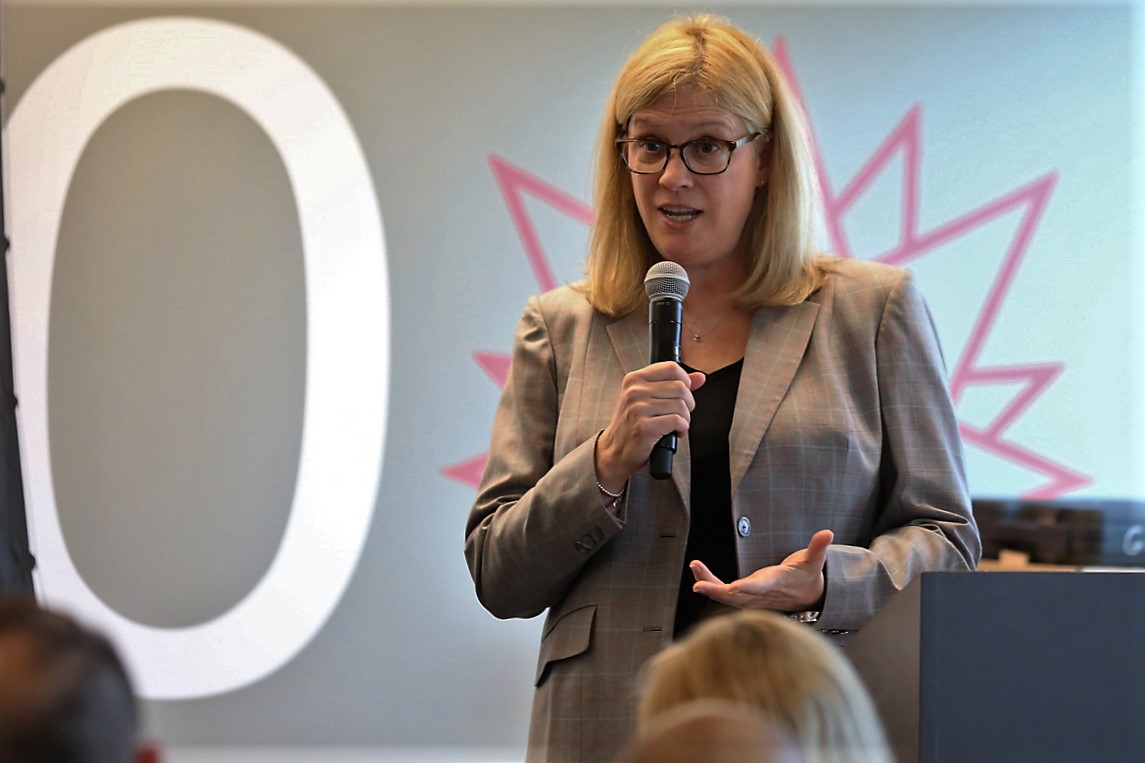
Michele O’Keefe – Director, Athletics and Student Engagement
Michele O’Keefe is a leader in advancing women’s sports and student engagement at Niagara College. She has played a pivotal role in gender equity initiatives, including Welland Girls Sports Day, which introduces young girls to the joy of sports and fosters leadership opportunities for NC students and faculty. This past November, Michele was also awarded the Lifetime Achievement Award at the Greater Niagara Chamber of Commerce (GNCC) 2024 Women in Business Awards, presented to women who have excelled in their business and community over the course of their career.
Can you highlight the work you’re most proud of in enhancing women in sports and gender equality in athletics at NC?
The most integrative program we have is Welland Girls Sports Day. Our who and our why is simple – demonstrate for the young girls of Welland how much fun being active in sports can be. The added bonus is that we’ve built an amazing partnership with the City of Welland in the delivery of this event. On top of that, we’ve pulled in so many areas of NC to support.
We have our coaches and athletes leading the sport stations, we have our hairstyling students on hand to show the girls how to best do their hair when playing sports, we have Niagara College Student Administrative Council (NCSAC) come out to do a BBQ for lunch, we have our Recreation Therapy students run the Parent Hub, sharing their knowledge with parents, and we have many students and staff volunteer their time for the event.
This June 7th will mark our fourth Welland Girls Sports Day, and it’s truly a highlight of the year. The smiles on the girls’ faces make all the effort worthwhile.
This year’s International Women’s Day theme is Accelerate Action, emphasizing the urgency of making faster, more effective strides toward gender equality. How do you interpret this theme, and why do you think it’s important for us to focus on it now?
The World Economic Forum says that at the current rate of progress, it will take until 2158 (five generations) to reach full gender parity. 133 years? It’s astounding how much progress we’ve made in such a short period of time, and yet the pace to bridge the gap is that slow.
In your role, how do you accelerate action to support gender equality and empowerment for girls and women at NC?
In my opinion, we have amazing tools and opportunities in post-secondary education, especially at Niagara College. If we are strategic and creative, I believe we can accelerate this action and speed this up. Five generations is a long time. We don’t want the progress made to date slowing down so we need more people pulling in the same direction. We cannot ignore this.
