
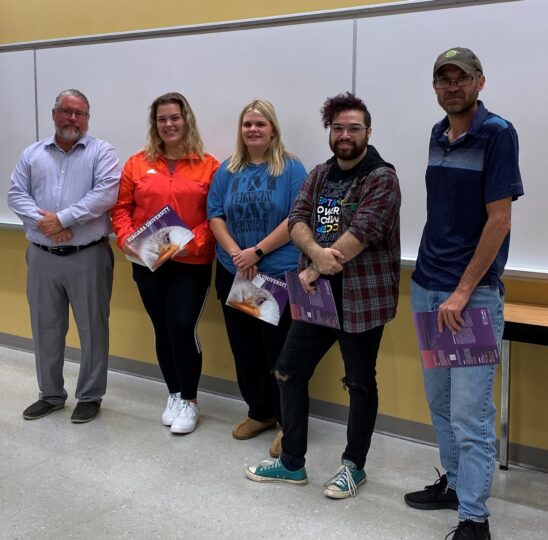
A new dual admission agreement between Niagara College (NC) and Niagara University (NU) will put future graduates of NC’s Early Childhood Education (ECE) and Educational Assistance & Adult Supports (EA&AS) Programs who want to pursue a teaching degree at NU on a direct pathway to do it.
The agreement grants anyone graduating from either the College’s two-year ECE or EA&AS diploma program preferred admission to the university’s Bachelor of Arts in Teacher Education program (Grades kindergarten through 6).
The two years they spend at Niagara College will also be counted toward their years at NU, reducing the time it takes to earn their degree from four years to two.
“This year was the first year that we had some students that said this was one of the reasons they chose our program,” said EA&AS Program Coordinator Barbara Morris. “They’ve got their eye to the future and they’re thinking about doing this post-grad work.”
She said representatives from Niagara University will visit Niagara College in the coming months to provide more information about the pathway and how to access it. When they do, she expects even more students will decide to take advantage of the opportunity.
Jaclyn Frail, Associate Dean, School of Community Services, said the agreement started gaining traction in the fall of 2022 when she and Carol Phillips, Dean, Community Services, visited the Lewiston, NY-based university in the hopes of reestablishing a preexisting pathway for NC’s Social Service Worker program that went inactive during the COVID-19 pandemic.
“We had valuable discussions with NU’s School of Education about creating new articulation opportunities for students in our Educational Assistant & Adult Supports and Early Childhood Education programs,” Frail said. “NU recognized the high quality of these programs and, in response, collaborated with us to develop a two-plus-two dual admission pathway. This partnership now offers students one of the quickest routes to becoming an Ontario Certified Teacher.”
The dual admission pathway unlocks more career opportunities for students currently enrolled at NC, Frail pointed out.
“By earning a Bachelor of Education on top of their specialized background – as either an EA or an ECE – students are uniquely positioned to succeed in elementary teaching roles,” she said. “Their deep understanding of childhood development and specialized education equips them to bring valuable insights to the classroom, ultimately enhancing the learning experience for future elementary students.
“This pathway not only accelerates their journey toward a teaching career, it also ensures they enter the field with a well-rounded skill set, making them stand out in the education sector.”
Early Childhood Education Program Coordinator Angela Hayes said aside from enhancing students’ theoretical knowledge, attending NU will give ECE graduates a valuable international experience.
“We underestimate the cultural differences between us in Canada and our neighbours in the States, especially in the field of education,” Hayes said.
The foundation ECE students get at Niagara College through applied learning provides them with the building blocks they need to further their education at NU, she added.
Morris agreed, noting EA&AS students who move on to Niagara University after graduating from NC will do so with a “really solid foundation” in disability studies. They also start the university program having already done field placements in the elementary and secondary school systems, as well as in the adult sector.
“I think it gives them a broader outlook and view of the experience of the person with the disability and prepares them really well for work in the school system,” she said. “We have full inclusion in our Ontario school systems, which means that every classroom has students with disabilities in it. So, when you start off learning about the Educational Assistance program and then move into a teacher perspective, you’re really well grounded.”
She added the agreement is the only one of its kind in Ontario, which benefits NC because it enlarges the college’s scope of enrolment, while providing an option for anyone who’s considering ultimately pursuing a teaching degree.
“(They) don’t have to start from scratch; that’s an important part of it,” Morris said. “When they agreed that our programs could stand alongside the first two years of the NU program, that’s significant. It speaks to the strength of our programs.”
