
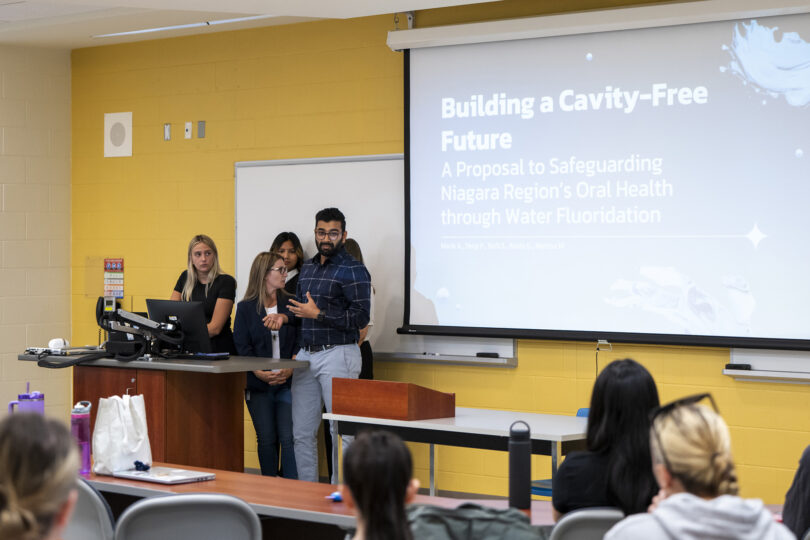
Dental Hygiene students had the unique opportunity to present their advocacy reports to a notable guest, local MPP Jennie Stevens, on August 7. This event marked their final term project in the Seniors Health Policy and Advocacy course, where students had researched and developed proposals on various oral healthcare topics, highlighting areas needing increased education and support.
Jennie Stevens, MPP for St. Catharines with the NDP party, has avidly attended these presentations in the past, continuing her support for student advocacy in oral health. Her participation provided students with a significant platform to advocate for improvements in oral health programs and policies.
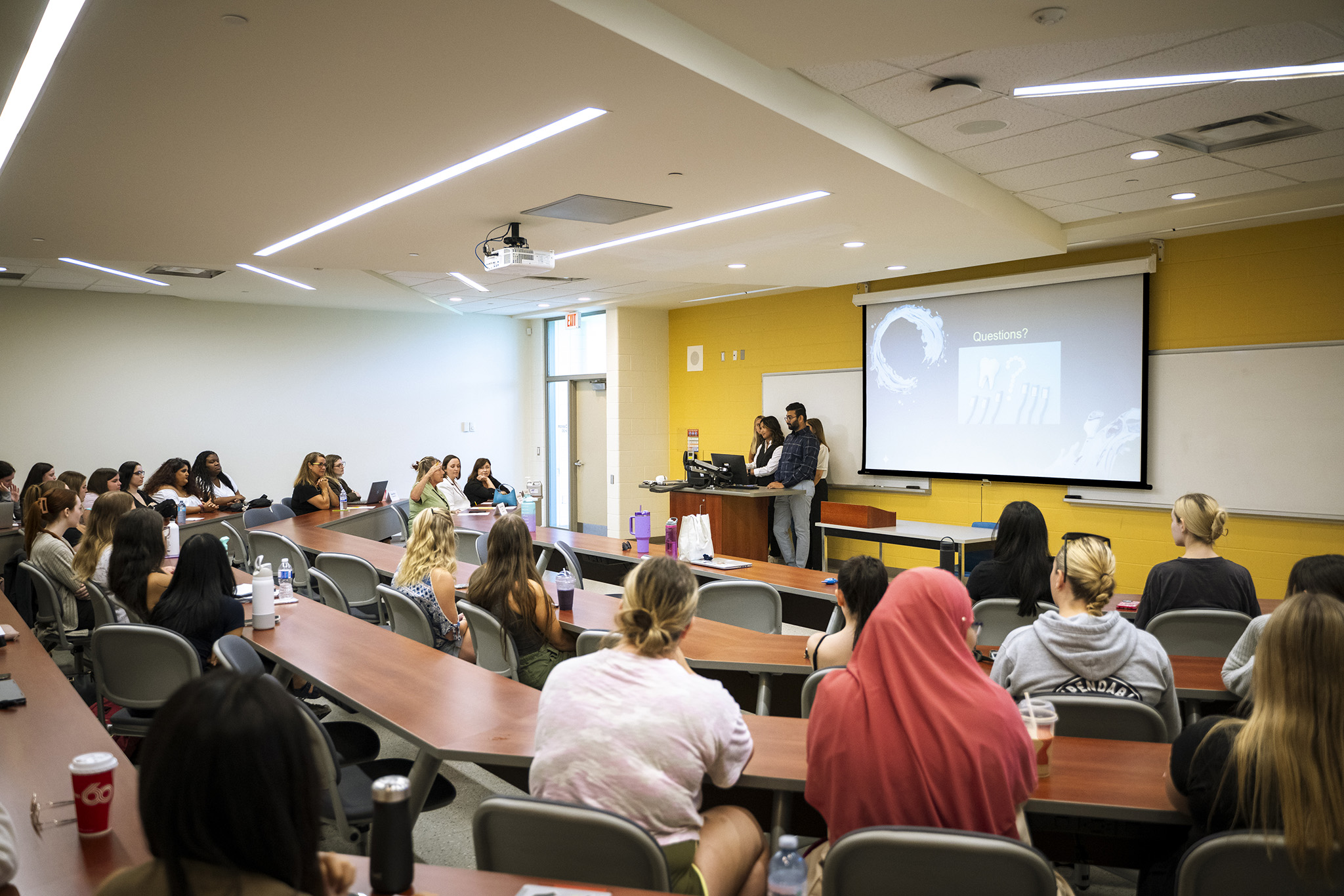
Students presented a range of oral health topics to MPP Stevens, advocating around topics such as water fluoridation, incentives for oral health promotion for low-income families, and the authorization for dental hygienists to administer local anesthetics.
NC’s Vice-President, Academic, Fiona Allan, and Sinead McElhone, Dean of Health Sciences also attended the presentations, engaging with students and providing insightful questions and constructive feedback.
The presentations offered MPP Stevens valuable insights into community needs regarding oral health care, allowing her to advocate effectively on behalf of her constituents. For students, it was a valuable experiential learning opportunity, demonstrating how their advocacy can shape real-world policies and practices, preparing them to be impactful healthcare professionals.
“It gives me great honour to come to Niagara College and see the end of your journey,” said Stevens. “I look forward to hearing your proposals and will be advocating for you as students at the provincial level.”
Professor Jeanette Kulik was visibly moved as she expressed her pride in the students’ dedication and efforts, not just throughout the project, but throughout the entire course.
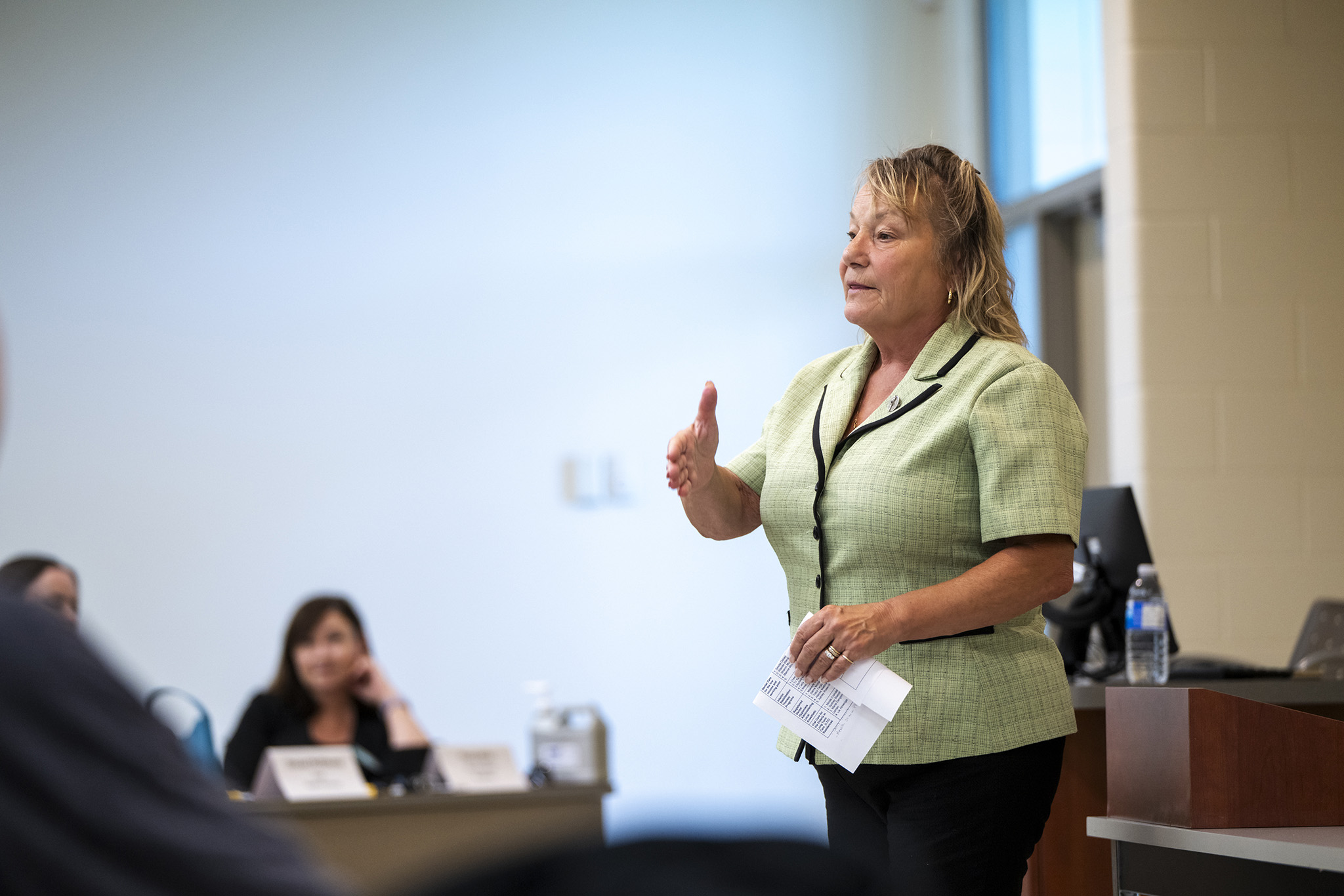
MPP Stevens addressed the class of Dental Hygiene students before they presented their advocacy report project proposals.
“This project highlights the culmination of your hard work and commitment to enhancing community health,” she said addressing students before the presentations began.
Five student groups presented proposals on various topics, including safeguarding Niagara’s oral health through water fluoridation, an oral health promotion incentive for low-income families, and the role of dental hygienists in administering local anesthetic. The project was designed to prepare students for their future careers by providing a comprehensive understanding of the impact of health policies and enabling them to discuss and evaluate policy alternatives.
Students also detailed the strategic rollout and financial costs of their proposals. One group, advocating for community water fluoridation, asked MPP Stevens about her estimated cost, concluding that it would only be approximately $5 per citizen per year–more cost-effective than current measures.
Third-year Dental Hygiene student TJ Kaur’s group focused on Interim Stabilization Therapy (IST), a method designed to provide temporary relief for clients with fractured or damaged restorations or tooth trauma. She described the project as an eye-opener in revealing significant deficits in our healthcare system.
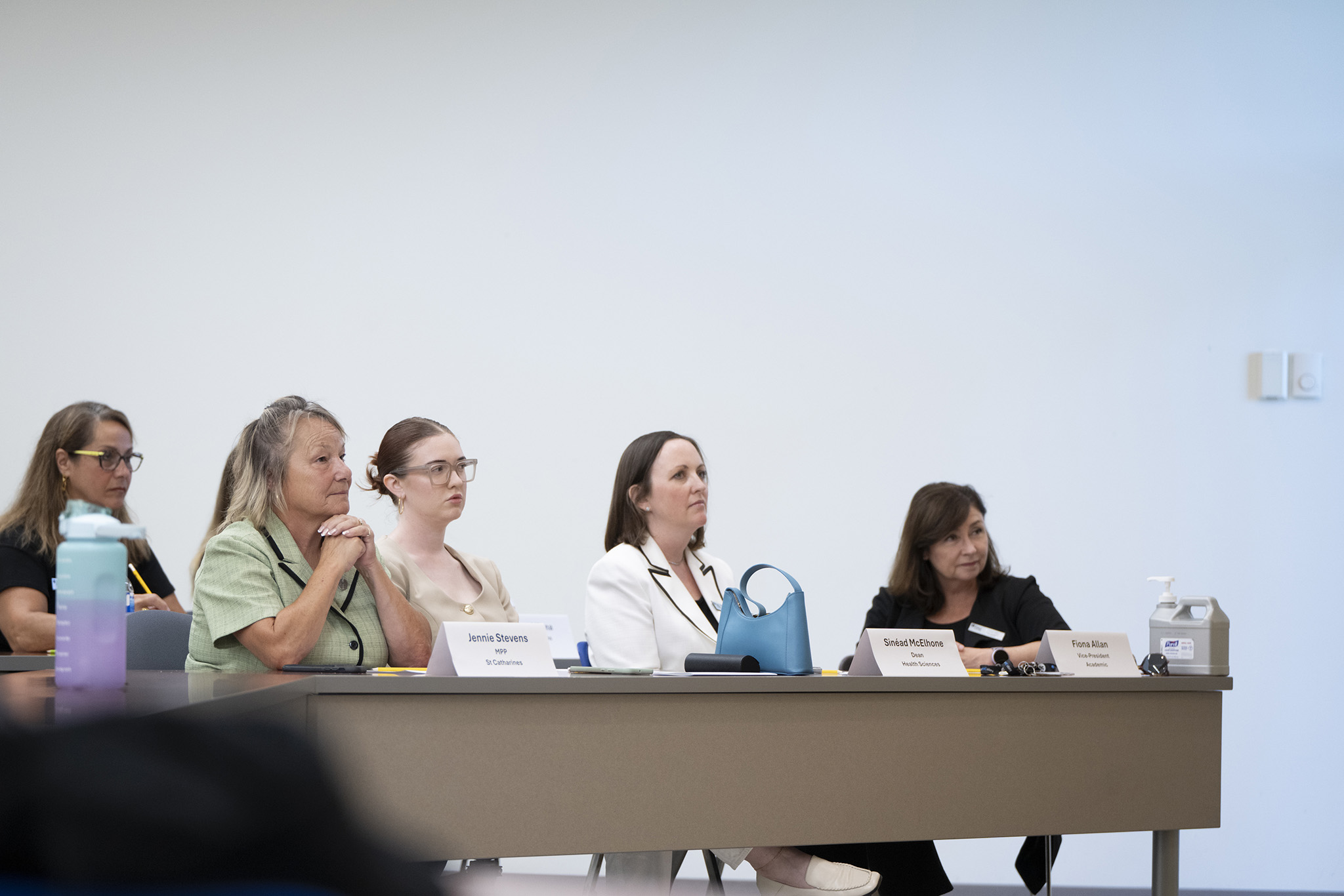
Along with MPP Stevens, NC’s Vice-President, Academic, Fiona Allan, and Sinead McElhone, Dean of Health Sciences also attended the presentations and provided students with insightful feedback.
“This project has shown us how we can work towards filling gaps in our system so that everyone has access to the same care and services.”
Makayla Mignano, third-year Dental Hygiene student, highlighted the advantages of her group’s proposal, which advocates for granting dental hygienists the authority to administer local anesthetic.
“This can improve dental hygiene appointments by reducing bleeding and providing relief from sensitivity and pain,” she explained. “In many other Canadian provinces, the use of local anesthetic by dental hygienists is also permitted so we believe it is beneficial to have the same regulations in Ontario.”
Mignano, who previously studied in the Dental Assisting program, emphasized the project’s real-life impact and its potential to enhance the community’s oral health care and the future of dental hygiene.
“Getting to present in front of MPP Stevens felt as though our proposal topics would be taken into greater consideration and we weren’t just presenting for the purpose of a grade,” she said. “I believe this will only strengthen our knowledge and advocacy abilities allowing us to be a part of something greater than just completing care on clients when working in the dental hygiene field. “
