

As a local leader in sustainability, Niagara College is taking a proactive role to combat an invasive plant species that is wreaking havoc on ecological systems and infrastructure across the province and on campus.
This summer, the College will begin a three-year process to remove Phragmites – an invasive reed – from its campuses in Welland and Niagara-on-the-Lake, a project which they hope will inspire collective action.
“No one organization could hope to tackle this challenge alone,” said Pam Skinner, Senior Vice-President, College Operations. “Environmental sustainability is a key strategic priority for Niagara College, and in this way, we are taking proactive measures to safeguard campus biodiversity and infrastructure, which we hope will inspire others to follow suit.”
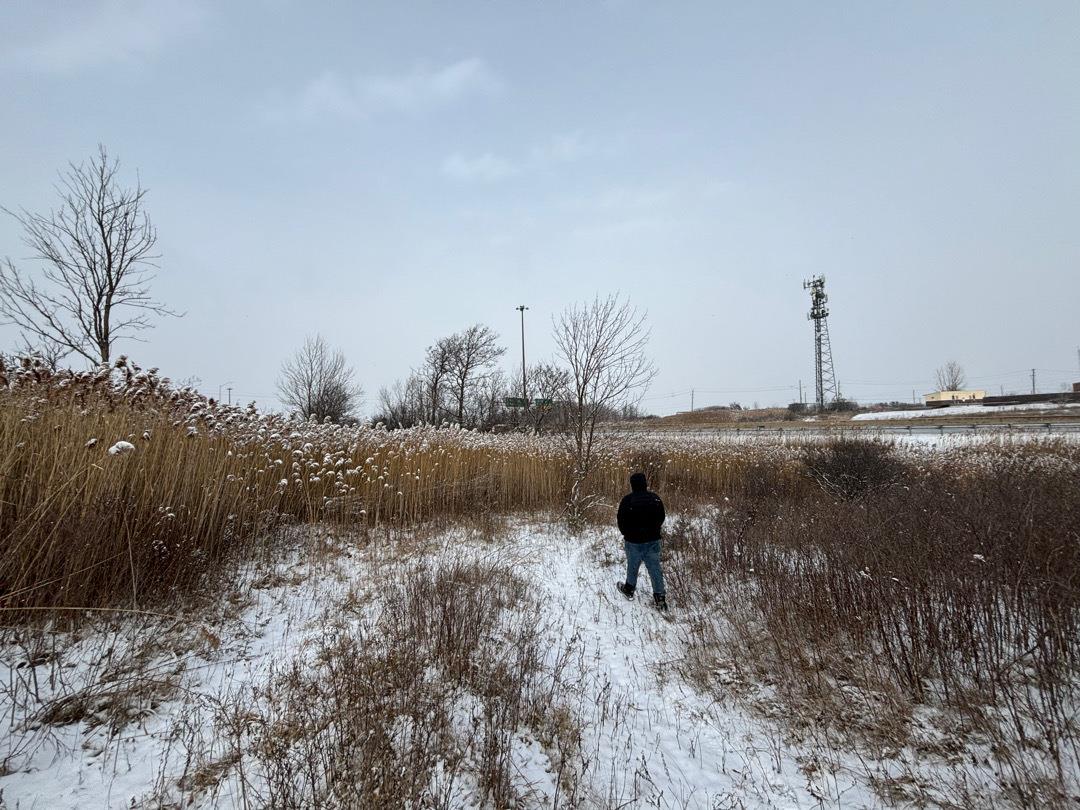
Phragmites australis (or common reed) is a perennial grass commonly found at the side of roadways, in ditches, abandoned fields and wetlands. It has spread to cover more than seven acres of NC’s Daniel J. Patterson Campus in Niagara-on-the-Lake, and has established itself in a few small strands on the Welland Campus.
“There were a few isolated patches at the Niagara-on-the-Lake Campus in the early 2000’s, but now, Phragmites covers three and a half hectares of our open fields, stormwater ponds, lagoons, and the base of the Niagara Escarpment,” explained Martin Smith, program coordinator of the College’s Ecosystem Restoration program.
Phragmites threatens biodiversity by reproducing aggressively, crowding out native species, depleting plant nutrients, releasing toxins, and, ultimately, destroying habitats. The invasive weed wreaks havoc on infrastructure, causing issues with drainage, flooding, and stormwater retention. At the Welland Campus, work is already underway to clear out drainage ditches along the north parking lot to prevent flooding and damage to the infrastructure.
“These ever-expanding Phragmites patches are displacing native plant and animal populations on campus at an alarming rate,” said Smith, who also says the weeds are impeding access to the lagoon by various species of turtles and wetland birds.
Smith’s students in the Ecosystem Restoration (ER) graduate certificate program are trained to identify, monitor and manage invasive species like Phragmites. In 2022-23, students presented proposals to college grounds management, prompting the College to engage Invasive Phragmites Control Centre (IPCC), a non-profit who will safely implement an eradication plan at both NC campuses this summer.
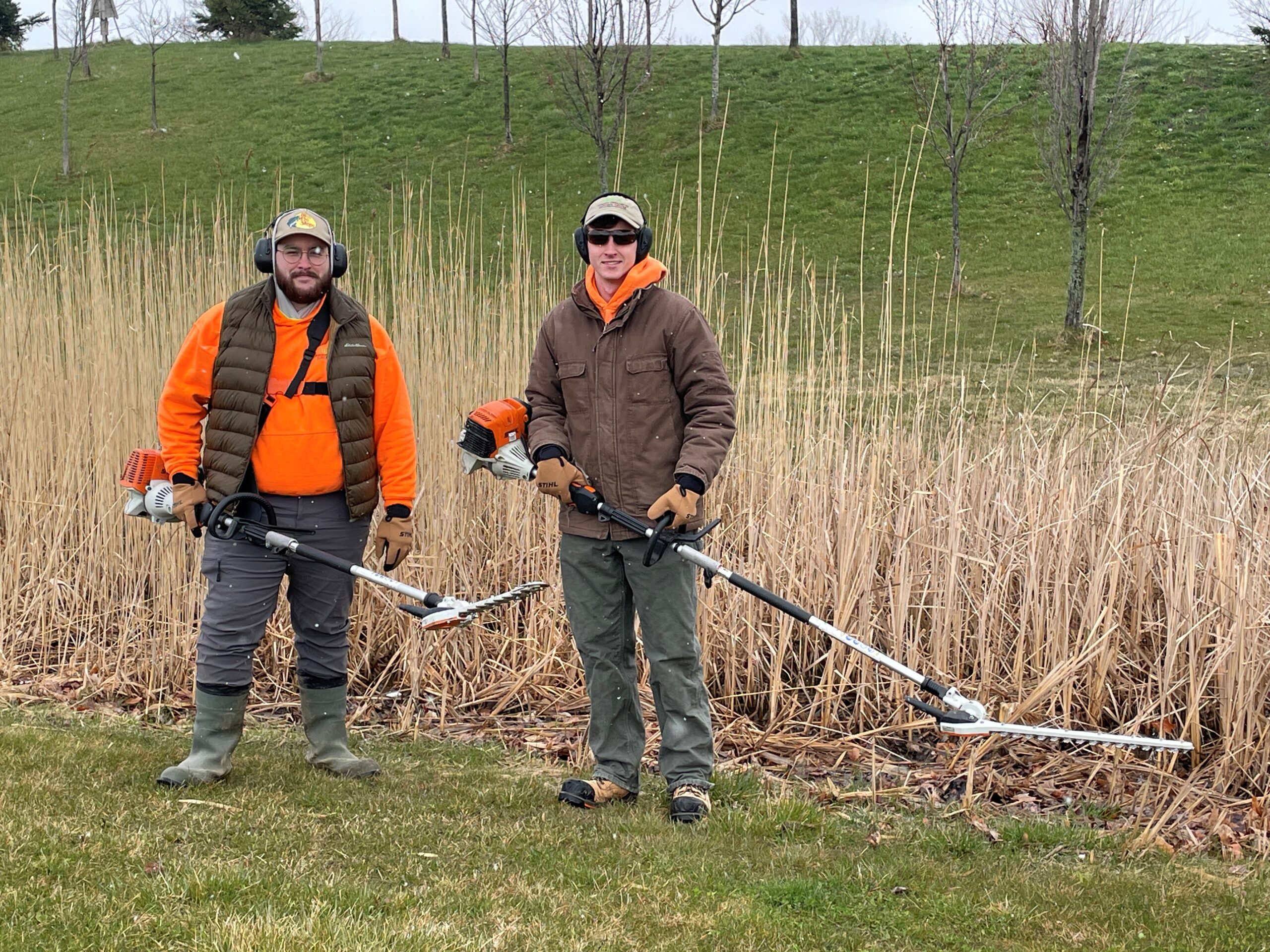
Leveraging her background in biology, NC’s Gillian Shriner, Administrative Coordinator in Planning, Sustainability & Capital sought to unify small-scale efforts across the College to control the spread and regrowth of Phragmites.
“With Sustainability being an integral part of PSCP, we had a clear line of sight on the challenges involved in coordinating a long-term effort that would successfully address the problem,” explained Shriner. “To harness the experience of past efforts, we have a brilliant Phragmites Control Committee made up of members from faculty, campus grounds and management, finance and sustainability, who generously provide their knowledge and guidance.”
The process involves two steps – the spraying of herbicide followed by the removal of plant materials – and must be repeated over three years to ensure the weeds are completely eradicated.
Smith explains that while herbicide is an effective method to eradicate Phragmites, ER students are exploring “more ecologically-based methods” to prevent Phragmites in the long term and reduce costs associated with chemical treatment which may be a barrier to action.
Students are experimenting with natural methods that are showing promise in research trials, including using native species of willow to out-compete Phragmites. Alongside post-doctoral researchers Dr. Michael McTavish and Dr. Ian Jones at the University of Toronto, NC students are conducting on-campus trials, introducing the eggs and larvae of Eurasian moths on test plots of the weed.
“Their practical knowledge will significantly enhance their employability following graduation,” said Smith. “It will also provide perfect opportunities for the conservation authority, municipalities and the Region of Niagara to take collective action to deal with Phragmites across the region.”

NC will notify the campus community when work will occur. The herbicide presents no risk to the public or pets if they stay out of the treated area for about an hour after application or until it dries. As a precaution, signage will be posted prior to and following application.
For questions related to the Phragmites removal project, please contact Gillian Shriner in PSCP.
