
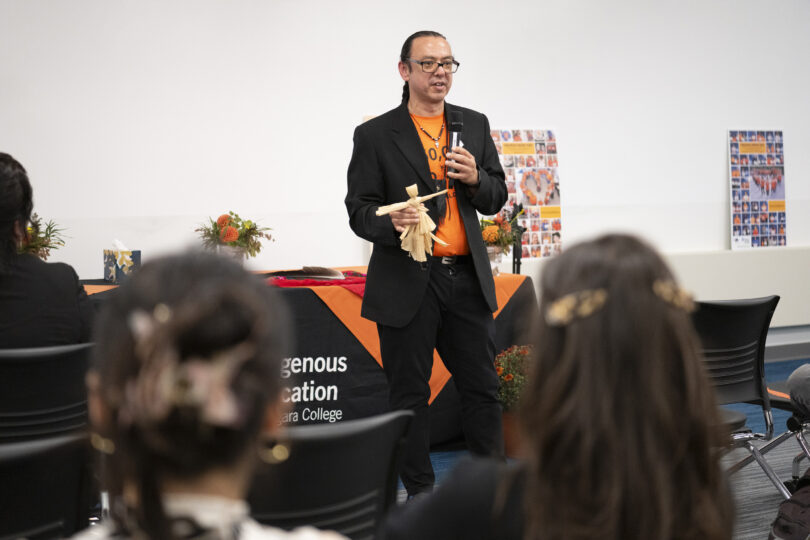
On September 27, ahead of the National Day for Truth and Reconciliation (Sept. 30), members of the Niagara College community gathered at the Daniel J. Patterson Campus and virtually to hear the story of an eight-year-old Indigenous girl from Oneida of the Thames Settlement.
It was the late 1920’s and the young girl was pulled from her family and taken to the nearby Mount Elgin Residential School in Muncey, Ont., close to London.
Though she wasn’t allowed to take any personal belongings with her, she managed to sneak in one of her most prized possessions – a modest doll hand-made from the dried leaves or “husk” of a corn cob.
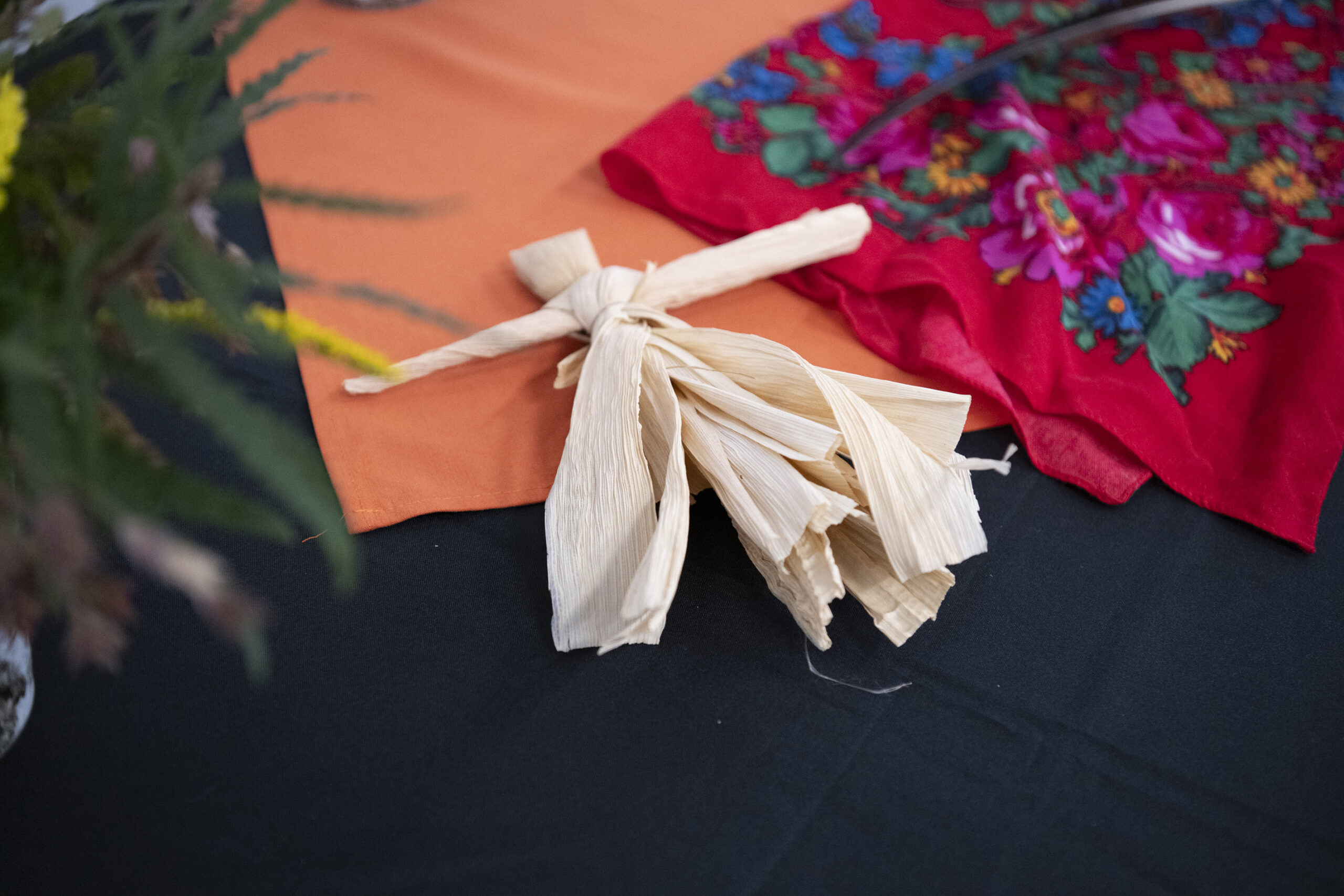
A corn husk doll
Shortly after arriving at the school, the girl was brought out to a fire where she watched her corn husk doll burn. Many of the other children also watched their belongings disappear in the fire – rattles filled with dried corn, ribbon skirts and other cultural items that reminded them of “home,” and represented the traditions of their Indigenous ancestors – traditions burning up in a blaze of smoke.
That girl was Myrtle Dockstader, née White – Karl Dockstader’s grandmother. Myrtle stayed at Mount Elgin until she was 16 years old.
During NC Indigenous Education’s Sept. 27 speaker event – “Returning the Corn Husk Doll” – Dockstader, who is the College’s Indigenous Education Cultural Consultant, shared more on his grandmother, connecting her story to the teachings of the spirit of the corn husk doll.
He also expressed some of the lasting effects of his grandmother’s experiences, intergenerational trauma that is shared by many other residential school survivors and their families.
“My grandmother wouldn’t teach me and my sister her knowledge. She would say, ‘I can’t hurt you by giving you Indigenous knowledge,'” said Dockstader, who told listeners that his grandmother was afraid that her knowledge would be weaponized against her loved ones.
In her later years before she passed away, Myrtle did share some of her knowledge with her grandchildren and great grandchildren.
“I share this story with you today to honour my grandmother in a good way,” said Dockstader.
“We need to talk about the ugly parts of our history, but we also need to look forward to a bright future.”

Dockstader said that his grandmother would be proud to see the progress that has been made to raise awareness about the harm caused by Canada’s residential school system.
To contribute to the ongoing reconciliation process, he asked students and employees in the audience to seek truth, and to learn about Indigenous peoples and their ways of knowing.
Work to actively respond to and support the Truth and Reconciliation Commission’s Calls to Action is a shared commitment at Niagara College.
President Sean Kennedy, who attended the speaker event, noted that while the College’s commitment is woven into its Strategic Plan and EDI Blueprint, there is still much work to do on the journey towards reconciliation.
“It’s about acknowledging, learning and moving forward together,” said Kennedy. “As we look ahead, we look forward to continuing to walk this path towards reconciliation with our Indigenous colleagues.”
Opportunity to make a corn husk doll
To honour Karl’s story, Indigenous Education will be offering an opportunity for students and employees to make corn husk dolls later this fall. Please stay tuned for details.
Related article: College initiatives honour the National Day for Truth and Reconciliation
