
It’s becoming an age-old debate: organic versus conventional.
And it’s one that Ethan Belton-Dalpee is happy to wade into when it comes to cannabis.
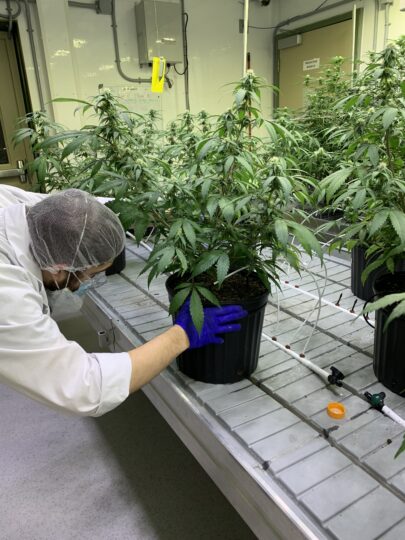
Belton-Dalpee and his classmates in the second term of the Commercial Cannabis Production program are doing side-by-side growing trials of cannabis plants grown using organic and conventional soil and inputs.
The goal is to see how the plants respond to the different conditions and whether qualities emerge by the end of the trial that point to one growing method being superior to the other.
“The organic space is good to get into if you’re interested but is it worth the extra THC (tetrahedrocannabinol) you might get?” Belton-Dalpee asked. “What are you getting from it? Is conventional with added microbes producing a good product?”
To answer those questions, students are testing four treatments, including using salt-based fertilizers, microbial mass and/or chitosol in organic and conventional soils planted with the same cannabis cultivar.
Students are responsible for feeding the plants and applying all inputs, then documenting what they see.

All the products are what students could use in a commercial growing setting, explained Laurie Zuber, Horticulture Technologist with the cannabis program.
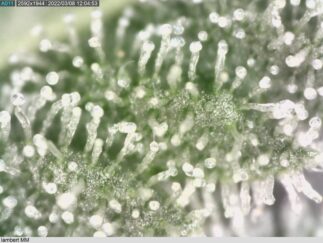
Throughout the study, which was prompted by the cohort’s interest in organic production, students will compare root zones, plant development, and plant and flower weights and yields. They’ll write their findings in a final report and be that much more prepared to embark on their careers after graduation, whichever growing sector they choose.
While conventional cannabis production still dominates in Canada, Zuber explained, there is a growing movement toward organic in part because of the premium price the products fetch.
“We have a lot of students planning to go into the industry for themselves and it’s good to give them this insight,” Zuber said. “This gives them a knowledge base of growing methods. Is it worth the cost? What will production results be?”
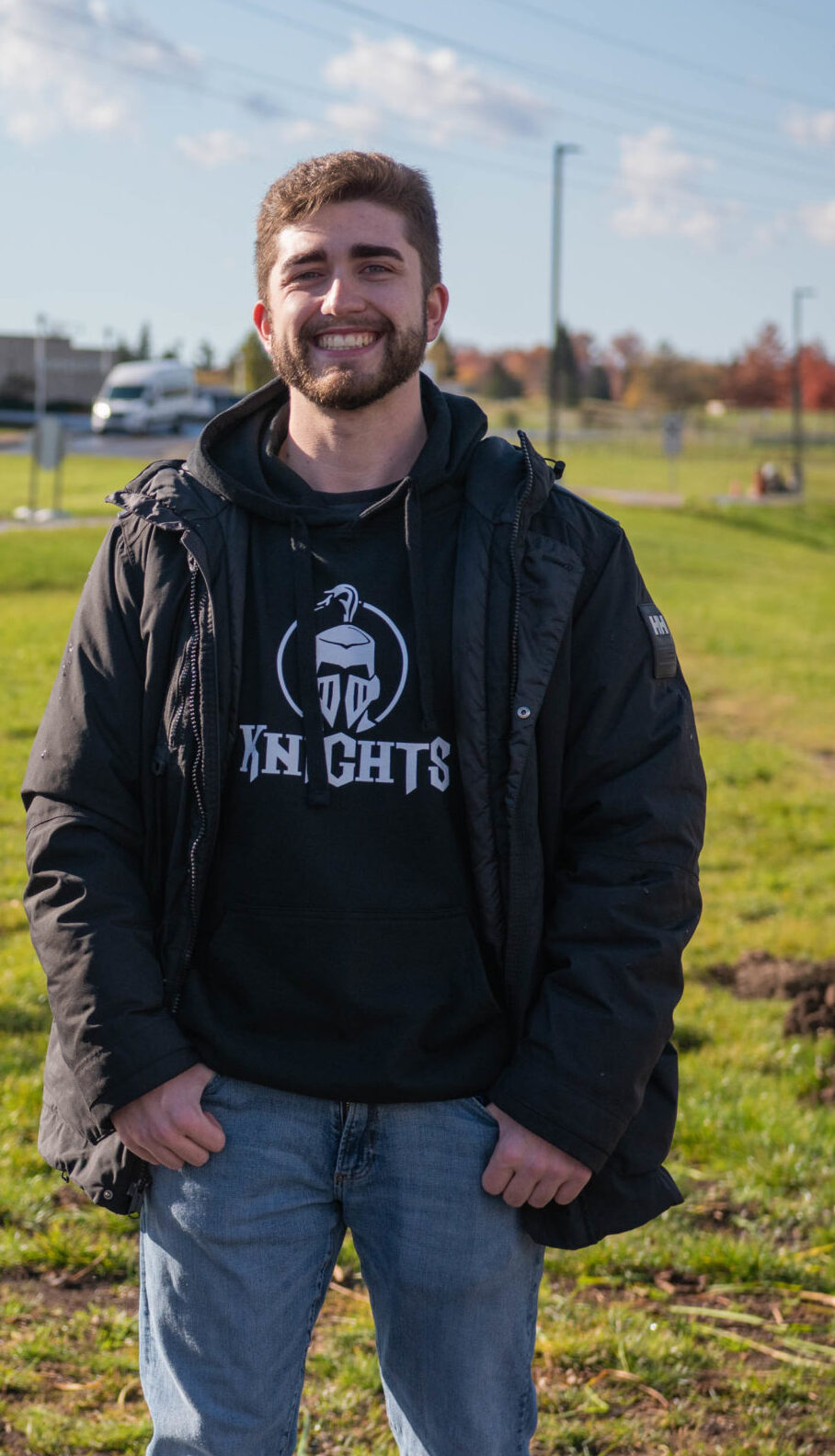
Ethan Belton-Dalpee.
“We always use products students would find in facilities and use in production,” she added. “We wouldn’t want to lead students in a study with products you would never find in a commercial facility.”
Belton-Dalpee is one of those students with an entrepreneurial streak. He wants to start his own cannabis company and both the program and research opportunities like this one will prepare him, he explained, especially as consumer interest in small-batch, high-quality cannabis production grows.
A few weeks into the study, salt-based fertilizers with microbial mass seemed to be the winning combination. But students won’t know for sure until the plants develop buds and they’re analyzed for THC content.
“It gives us more of an idea of what you can push out of the plants or what more you can get out of them using microbes,” he said. “It’s four different ways of growing in soil. I didn’t know much about soil coming into the program … but now it all makes sense in this course.”
