
February 22 is National Human Trafficking Awareness Day, a time to bring awareness to the extent to which individuals are exploited through labour trafficking and sex trafficking in Canada. Recognizing Human Trafficking Awareness Day at Niagara College is a step towards combatting this form of modern-day slavery, helping to advocate on behalf of survivors, and supporting actions to ending the abuse.
Human trafficking – especially sex trafficking – is a pervasive threat to public safety involving the recruitment, transportation, harbouring and/or exercising control, direction or influence over the movements of a person, for the purpose of exploitation.
Sex trafficking is the most common in Ontario, and while men, women and children are impacted, it is a gender-based crime that predominantly impacts Canadian women and girls. Certain groups are disproportionally vulnerable, including Indigenous women and girls, migrants and new immigrants, LGBTQ2 persons, persons living with disabilities, children in the child welfare system, at-risk youth, and those who are socially or economically disadvantaged.
For more information on local efforts against Human Trafficking, visit the Niagara Regional Police Service website. The Canadian Human Trafficking Hotline offers resources if you or someone you know is impacted by human trafficking.
Programming this month
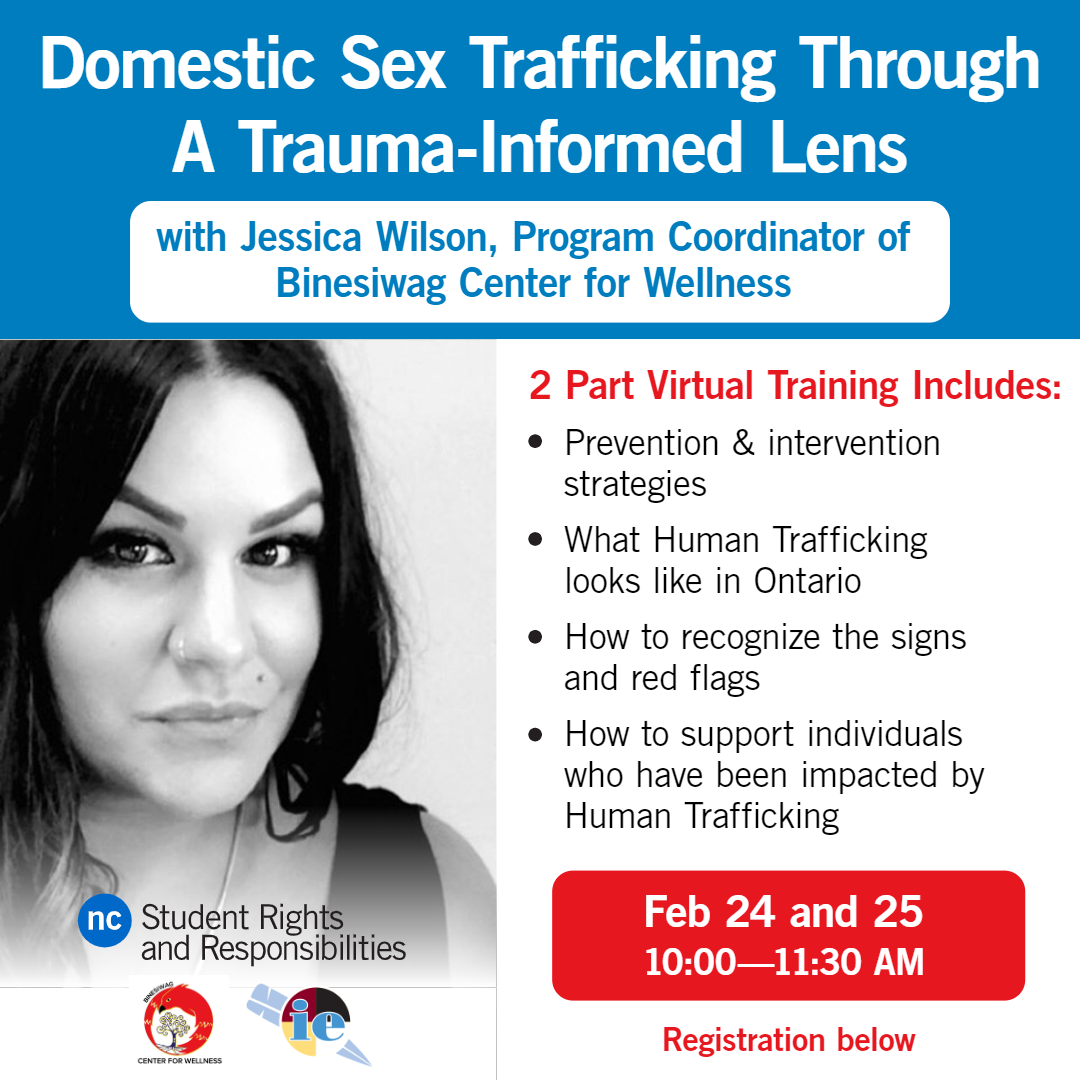
The Student Rights and Responsibilities Office and Indigenous Education has partnered to offer a training session with Jessica Wilson entitled Domestic Sex Trafficking through a trauma-informed lens on Feb. 24 and 25. Wilson is the program coordinator for the Binesiwag Center for Wellness.
This training will include what human trafficking looks like in Ontario, recognizing the signs and red flags, supporting and connecting individuals, and prevention and intervention strategies. Through Wilson’s lived experience, she provides crucial insight of what one experiences when in the lifestyle of trafficking and exploitation.
Upon completion of the training, participants will be able to better identify the stages of domestic sex trafficking and commercial sexual exploitation, identify risk and vulnerability factors as well as warning signs, and have the tools to engage at-risk youth and young adults.
All are welcome to register. Learn more about the interactive Zoom sessions here.
Support at NC
Niagara College is committed to supporting those who have been impacted by sexual and gender-based violence. NC has a dedicated Sexual Violence Prevention & Response coordinator, Katlyn Smith, who employs a trauma informed and survivor centered approach to supporting students impacted by sexual violence. Kaytee is also responsible for awareness programming and initiatives aimed at fostering a culture of zero tolerance toward sexual violence.
For more information about sexual violence, consent, support, and resources visit: niagaracollege.ca/consentiskey/resources/ or reach out to [email protected].
