
Getting a job in child and youth care seems a given for somebody graduating with their diploma in the discipline.
But when Amber Vanwyck finished her studies at Niagara College in June 2019 with all the qualifications to pursue a career caring for young people, she was at loose ends.
“I was at a low point in life and didn’t know what I wanted to do, per se,” Vanwyck recalled. “For a couple of months, I didn’t really know where I saw myself or where I fit in.”
A visit to a local employment solutions office pointed her back in the direction of Niagara College for Journey to Success, a program funded by the Office of Literacy and Essential Skills (OLES) and administered by NPAAMB Indigenous Youth Employment and Training. Journey to Success prepares Indigenous students for employment and helps them enter the job market with confidence.
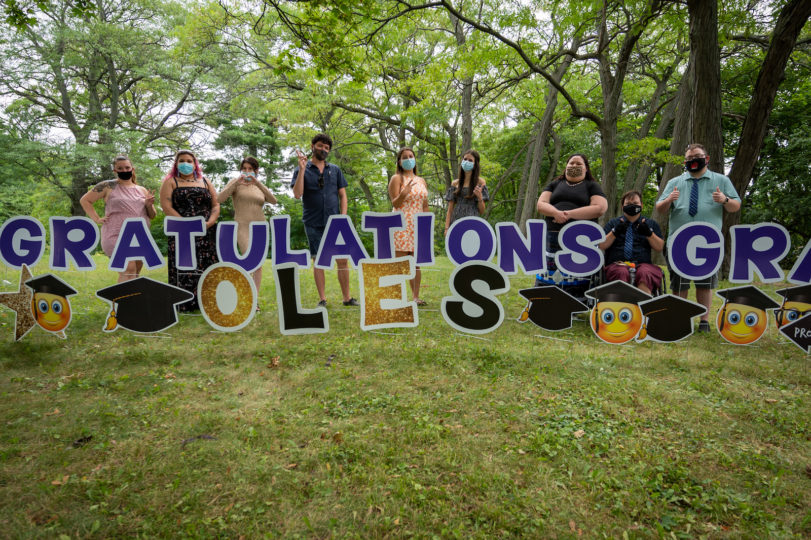
Vanwyck, who is Métis, officially graduated from the program last month checking both those boxes. She was in one of three final cohorts, hers studying health care in Fall 2020, whose achievements were celebrated at a ceremony at Willowbank in Queenston. The different classes, from fall 2020 and winter and spring 2021, graduated together after the pandemic prevented the occasion until now.
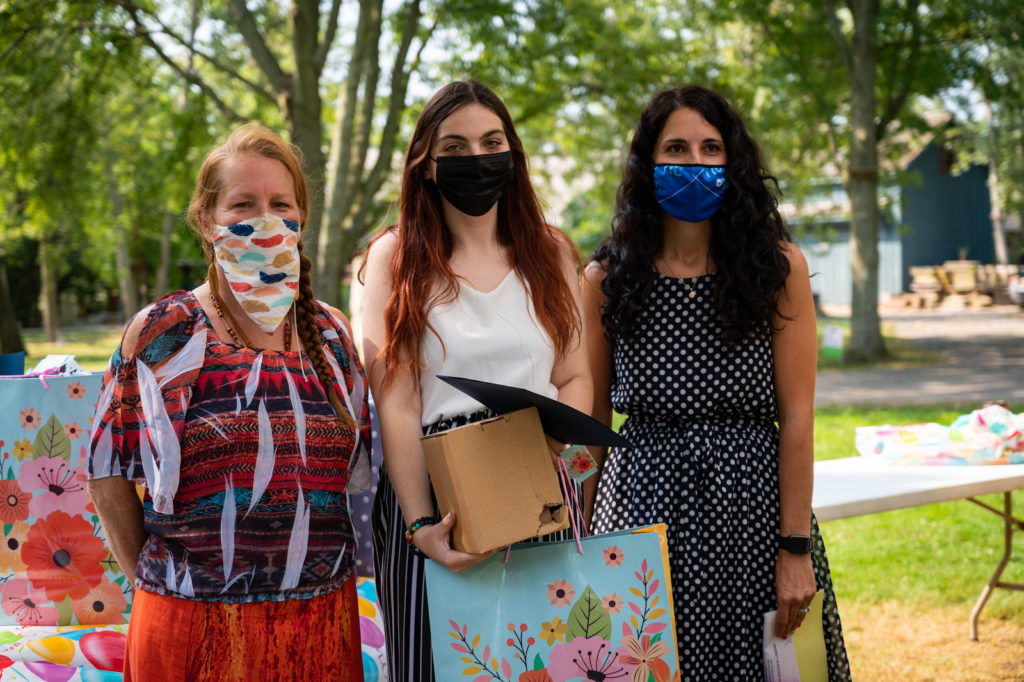
Amber Vanwyck, centre, stands with Marie Bowering (left), coach-mentor with NPAAMB Indigenous Youth Employment and Training, and Rebecca Nicholls, Niagara College’s Manager of Employment Services, at the recent Journey to Success graduation ceremony.
“For me, it was almost life-changing,” Vanwyck said about her experience with Journey to Success. “When I first started the program, I was sheltered and shy. But midway though the program a light switch turned on for me. I reached out to my peers, I offered them assistance because I could see they were struggling. I came out of my comfort zone. I started to love everything we were learning and the teachings. It wasn’t just work. It was a lot of support and guidance that moved me forward.”
Stories like Amber’s are the point of the program, explained Shanyn Porter, community projects manager for the College, who also taught a self-development course in Journey to Success.
“Anybody could come into the program who showed a genuine interest in life improvement,” Porter said. “They wanted their journey to look different than it had been moving forward.”
Nine cohorts went through the Journey to Success program, which launched in 2018. Each group learned about health care or hospitality and tourism, with classes taught by NC faculty.
Another class, Walking in Two Worlds, facilitated by NPAAMB, focused on culture.
Students were paid a stipend for attending, framing the experience much like a job. Small classes ensured students were supported when it came to nutrition, travel expenses, and breaking down other potential barriers to success, such as child care.
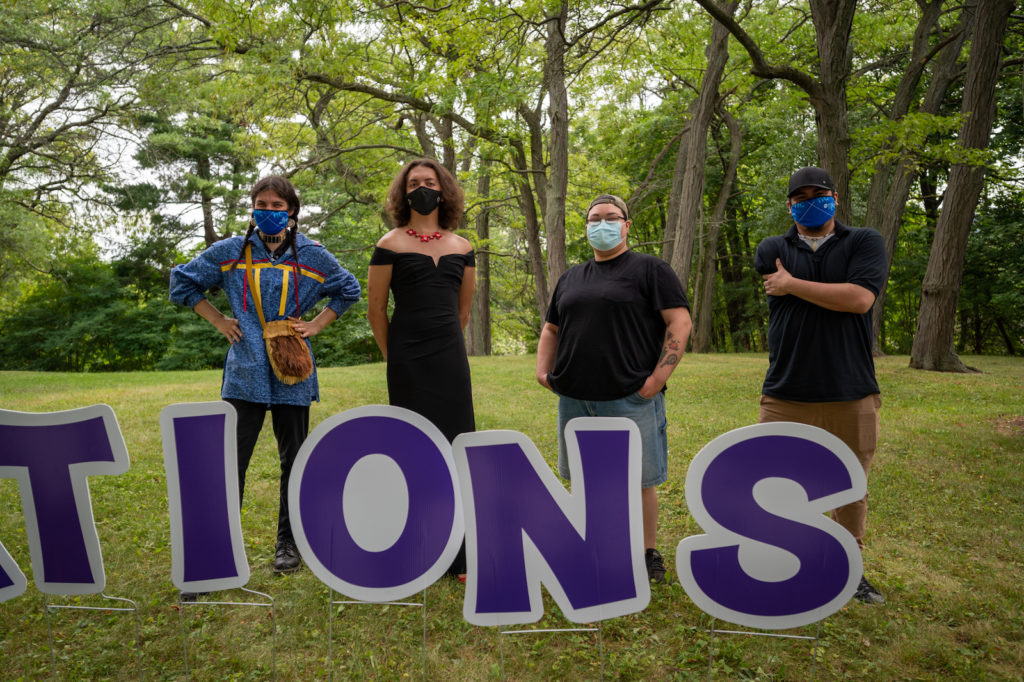
The Indigenous Tourism and Health class from the Journey to Success Winter 2021 cohort at the recent graduation ceremony that celebrated the achievements of the program’s last three cohorts.
Deane McGean of the Mohawk Nation was a new mom when she enrolled in Journey to Success cohort last spring. She had her bachelor’s degree in English literature from Brock and had become more interested in midwifery since the birth of son, Jace, earlier this year.
Journey to Success let her try on the idea of returning to school and becoming a midwife on the Six Nations of the Grand River reserve. It also helped her secure child care she was comfortable with while studying online: her mom, who was paid a daily wage for her services.
McGean determined from the experience that she wants to return to school at Niagara College for Pre-Health Sciences and eventually become a midwife — just not right now. First, she wants to make the most of her time with Jace, especially while her partner works long hours.
“The content was interesting but it wasn’t always easy to complete,” McGean said. “It was a bit of a wake-up call. I could do the assignments but I couldn’t always find the time.”
But perhaps the greatest lessons were the cultural ones included in the program. Students had the chance to engage in Indigenous practices, such as sitting in circle and learning from elders.
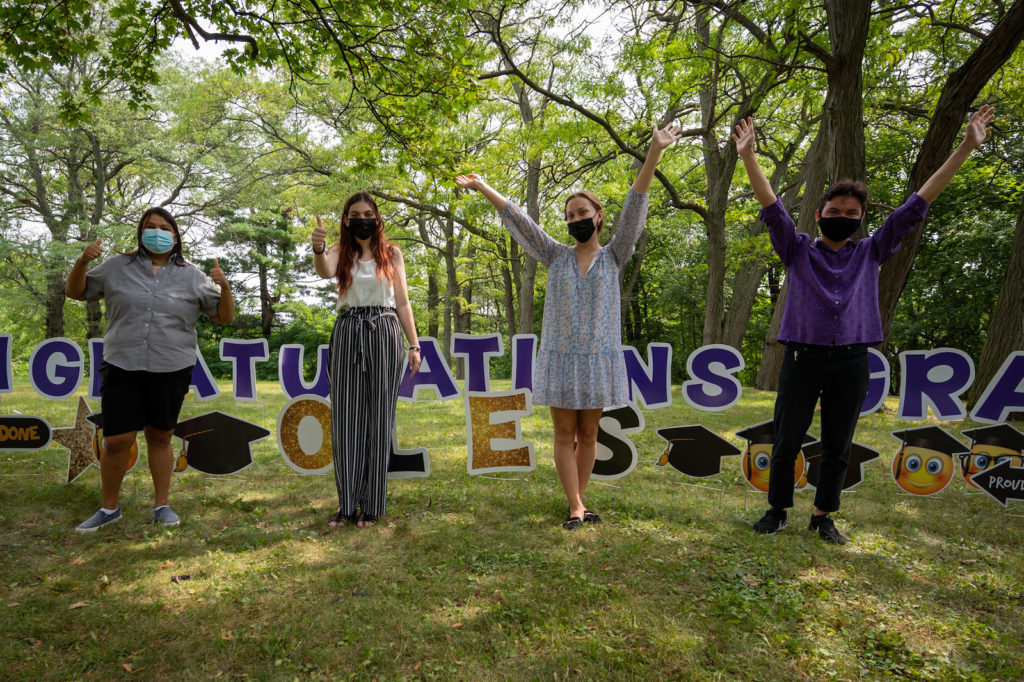
The Fall 2020 cohort from Journey to Success, pictured here, studied health care. They were part of a recent graduation ceremony celebrating the achievements of the final three cohorts in the Journey to Success program.
Those Indigenous teachings create a sense of safety within the program, engaging students and helping them succeed, explained Jason Shawana, NPAAMB executive director.
In the end, Vanwyck, who wants to work in mental health, became part of that process when NPAAMB hired her as a Journey to Success Peer Mentor after completing the program.
“That in itself is an Indigenous approach — bringing in youth who show these qualities and connecting them with other youth to show them how to be successful,” Shawana said. “When we have the opportunity to empower youth like that, we definitely want to showcase and highlight that.
“It’s not a NPAAMB thing,” he added. “It’s an Amber thing. She put in the work. She put in the effort and we’ve just been able to recognize that.”
In order to stay on as mentor, Vanwyck worked to find grants to support the role — one more opportunity to step out of her comfort zone thanks to Journey to Success.
“I think I really surprised the people I’m working with now because I was so quiet,” Vanwyck said. “But now I voice my opinion. It’s very eye-opening and rejuvenating. I was very ecstatic (to return as a mentor) but also very humbled at the same time.”

Nikki Shawana, a guest of NPAAMB at the recent Journey to Success graduation event, performed the opening and closing ceremonies.
With Journey to Success wrapped up, NPAAMB and Niagara College will launch MPOWER, My Path of Worthwhile Educational Re-Engagement. The new program teaches essential academic and applied skills for Indigenous youth looking to enrol in post-secondary education, and incorporates cultural supports and teachings.
Those participating in MPOWER will earn five college credits, or the equivalent of completing one term in a general arts and science program.
“The strength of this partnership (with Niagara College) is something we at NPAAMB have come to cherish and fully appreciate what we can do together,” Shawana said. “When it comes to decolonizing the academy and education, it’s about leaning into these partnerships a little more. With this partnership there’s been collaboration and community and a willingness to work together every step of the way. It shows the value in this program that Niagara College is now leading it and not just NPAAMB.”
