
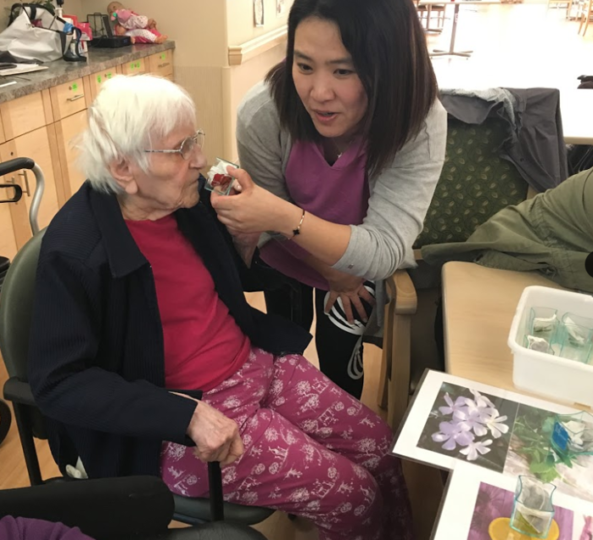
Imagine a world where those living with dementia can enjoy a life filled with meaning, purpose, joy, independence, choice and high self-esteem.
That’s what NC students are striving to create as they learn to apply Montessori methods to help seniors with dementia. About 60 first-year Recreation Therapy students recently completed training in DementiAbility Methods: the Montessori Way (DMMW), as part of their Therapeutic Approaches for an Aging Population (TAAP) course this winter term.
An innovative approach to working with older adults living with cognitive or physical impairments, DementiAbility Methods are based on the work of Italian physician and childhood educator Dr. Maria Montessori, who was best known for the educational philosophy which builds on the way children learn naturally. The Burlington-based DementiAbility workshop was founded by author, gerontologist and dementia specialist Gail Elliot. It is based on the findings of Dr. Cameron Camp – a research scientist, educator and author from Cleveland, Ohio – who discovered that Dr. Montessori’s philosophy and principles could be effectively adapted to dementia programming.
At NC, DementiAbility has been part of the Recreation Therapy program’s TAAP course since 2018. It is delivered by professor Christine Wilkinson, a trained facilitator in DMMW. At the end of their training, students obtain their DementiAbility Methods certificate and gain hands-on experience applying the methods and concepts they learned to assist seniors with dementia through a partnership with Royal Rose Place seniors’ residence in Welland.
This year, students who completed the DMMW training during winter term created more than 90 new DementiAibility activities for Royal Rose Place.
Wilkinson noted that DementiAbility training equips students with a very good understanding of dementia and how to effectively meet the needs of individuals with dementia through meaningful engagement in activities, which is sought after by employers and helpful to students seeking placements.
“As we know, our population is aging, and the largest sector of employment in therapeutic recreation is with older adults,” said Wilkinson. “This certificate is highly recognized by employers and gives students an advantage when it comes to job-seeking as they can put this on their resume and speak about the important messages from this workshop in job interviews.”
Partnership blossoms with Royal Rose Place
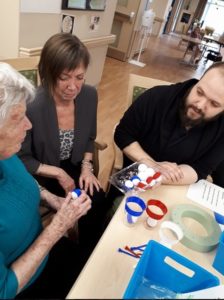
Recreation Therapy students interact with seniors at Royal Rose Place in 2018.
– Supplied photos
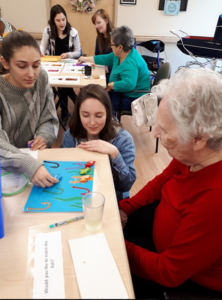
At Royal Rose Place, the partnership with NC’s Recreation Therapy program helps free up time that busy recreation therapy staff members would otherwise spend in program development.
“Working alongside Christine Wilkinson and her students has been a life-changing experience for our residents here at Royal Rose Place,” said Carina Ervine, life enrichment coordinator at Royal Rose Place. “Over the past three years, we have had the ability to implement a beautiful intergenerational program that benefits the residents’ quality of life and enhances the students’ skills in regards to working with seniors of all abilities.”
Ervine applauded the intergenerational program which involves students creating and implementing DementiAbility activities with their residents as well as developing/presenting new themed areas for the home.
She noted that since the project began, Royal Rose has been able to utilize three years worth of brand new DementiAbility activities that the NC students have created. In addition, they have been able to implement a ‘Royal Garden’ room, which gives residents a year-round gardening experience. In the upcoming year, they will also implement an interactive pathway around the building that was previouslydeveloped by NC students, called ‘A Walk Down Memory Lane.’
“This partnership has assisted us in putting Royal Rose Place on the map. We have had tours from Gail Elliot, the founder of DementiAbility Methods bringing in people from all over the world to see our home and our DementiAbility successes,” said Ervine. “We are truly grateful for this opportunity and look forward to the amazing accomplishments we will have in the future.”
Students benefit from DementiAblity experience

Recreation Therapy student Lindsey VanGoolen created two DementiAbility activities for seniors at Royal Rose Place.
Due to the COVID-19 pandemic, Wilkinson adjusted the DementiAbility workshop for winter term to enable students to complete it remotely. She recorded narrated presentations for the sessions, and weekly quizzes to test their comprehension so that students could complete their certificate. The corresponding class assignments were also adjusted so that students could create them individually or with a partner, rather than in groups. While students were originally tasked with creating a themed activity area for Royal Rose Place as well, that could not move forward in 2020.
Students valued the experience they gained through the DementiAbility training and an opportunity to create activities for seniors at Royal Rose Place.
First-year Recreation Therapy student Lindsey VanGoolen, who enrolled in the program with experience as a personal support worker, said the assignment gave students a chance to show their creative side and use their talents to create a program that would best fit the needs of individuals with different stages of dementia.

In one of the activities Lindsey VanGoolen created, seniors would match the musical instrument to the music which was played.
Using DementiAbility methods, she created two activities based on what residents would be familiar with, looking who the person is/was and take their needs, past and present interests, skills and abilities into account – called the ‘WOW model.’ She also incorporated memory cues into the activities, helping those who might be unable to place an object to the name.
One activity challenges participants to reach into a bag of different knitting and sewing items and guess the items. Another activity plays instrumental music and participants guess what type of instrument was played. The goal for both is to establish an environment where individuals with dementia will be willing to join in on programs at the residence. Helping them thrive and be comfortable, in turn, helps to achieve their overall progress and achievement in activities.
VanGoolen, who lives in Grimsby, found the DementiAbility workshop and experience she gained helped her to understand how the individual needs of individuals with dementia require different degrees of care.
“It was an amazing opportunity to learn how we can properly help individuals with dementia, to best fit their needs to further their abilities in regards to their activities of daily living,” she said. “We are given the chance to create a program that can help individuals feel an increased sense of purpose and confidence when something is remembered.”
For more information about DementiAability visit dementiability.com/
