
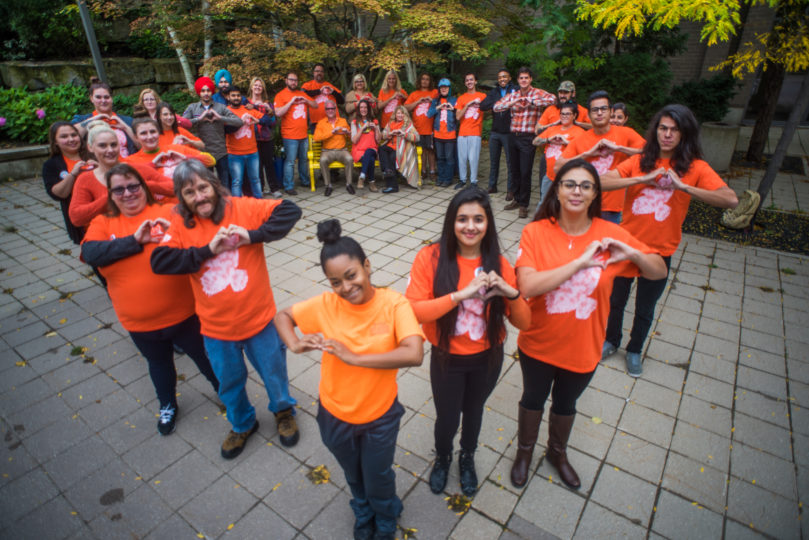
On Oct. 1, College staff, faculty and students at both campuses donned their favourite orange shirts and came together to honour the victims and survivors of Canada’s residential school system, and to bring about a better understanding of the continued effects on Canada’s Indigenous communities.
With a motto of “Every Child Matters,” the annual event recognizes the impact of the residential school system on First Nations, Métis, and Inuit children’s sense of self-esteem and well-being. Hosted by the College’s Indigenous Education department, information booths were set up at both campuses, meant to engage and encourage the NC community to learn more about Canada’s Indigenous history. The booths included books from the ncLibraries as well as the Indigenous Student Lounge.
“Both campuses had a lot of traffic flowing our way, particularly from our International students,” said Jamie Warren, counsellor, health wellness and accessibility, who organized the event alongside Indigenous student success leader Ashley Buck. “A lot of students were shocked and alarmed that Canada has a dark history that continues to impact Indigenous peoples.”
Faculty staff and students also took a group photo at each campus.
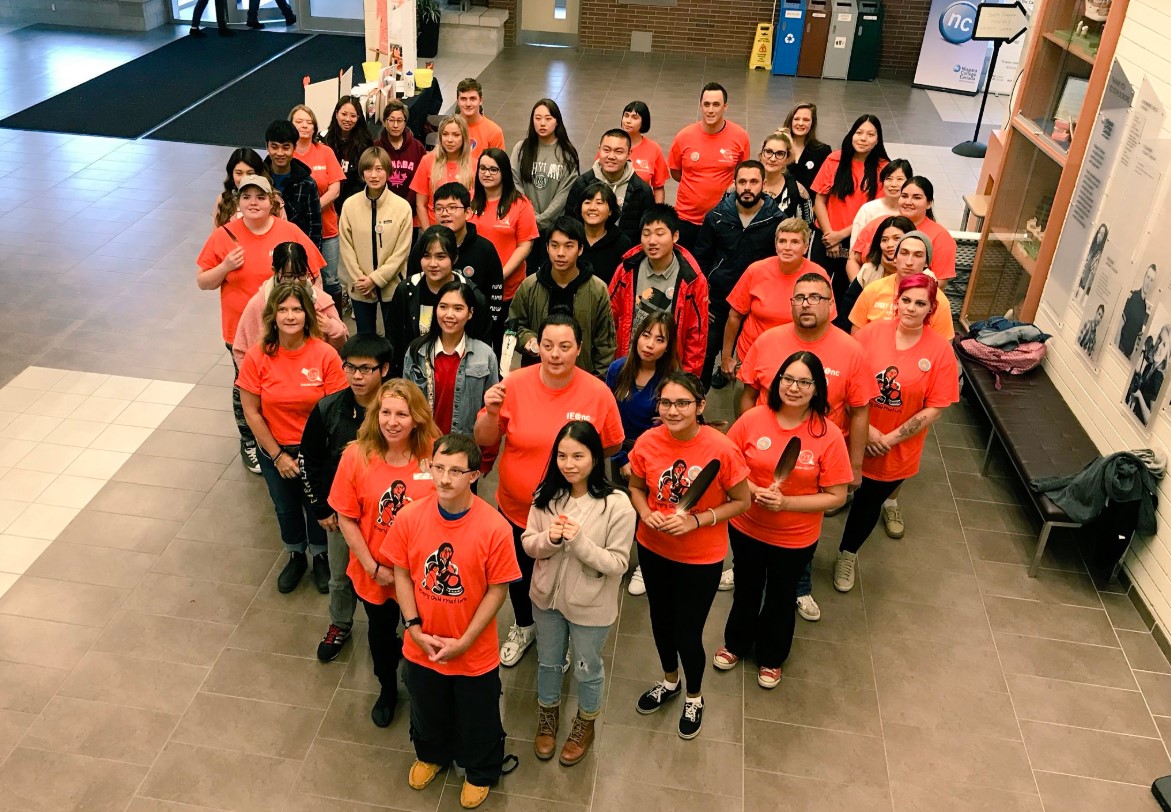
The event was also a learning experience for student volunteers, who engaged with the college community through the booths. “It was very rewarding to see them take on leadership roles and run the event alongside us,” said Warren.
Orange Shirt Day is a legacy of the St. Joseph Mission residential school commemoration event held in Williams Lake in 2013. It was inspired by Phyllis (Jack) Webstad, a survivor of the St. Joseph Mission Residential School. The federal government estimates at least 150,000 First Nation, Metis, and Inuit students attended residential schools. Orange Shirt Day is an opportunity for the College to come together in the spirit of reconciliation and hope for future generations of children.
“For the NC community, it is an opportunity for students, staff, and faculty to come together, take the time to educate themselves about the residential school legacy (among other Indigenous issues), and encourage the NC community to take an active role in the reconciliation process,” said Warren.
Had a great time volunteering at the @IndigenousEdNC Orange Shirt Day booth! It was great to have so many people out to learn more about residential schools and how they can continue learning after today. pic.twitter.com/lgXviTnEx1
— Rachel Michele (@RachelMichele95) October 1, 2018
