
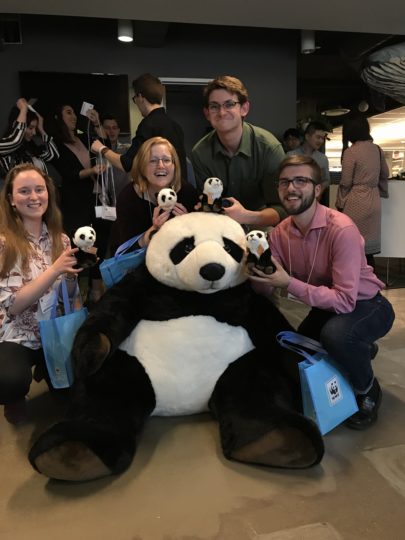
On March 16, four NC students represented the College at World Wildlife Fund’s Toronto office for the Designing Change for a Living Planet competition. Tasked with developing an idea to create a more sustainable future, 12 teams from campuses throughout Canada had one day to develop their idea and pitch to a panel of industry professionals.
Environmental Management and Assessment students Sandra Reaume, Darby Alderson, Elijah Nelson and Ecosystem Restoration student Zachary Moore were selected from a group of 10 applicants to present in the competition.
The team of NC students, who all met previously through their related programs, worked well together as they got the ball rolling on their plan.
“It reminded me that everyone comes from different backgrounds and has different levels of understanding when it comes to sustainability,” said Alderson. “These differences are what provide us opportunities for collaborative innovation, like the WWF Design Challenge.”
The team took third place in the competition as the second runners up with their proposal for a double closed looped system for the recycling of single use plastic grocery bags to create reusable grocery bags. The idea was inspired by each members’ constant contact with plastic at the grocery store. With the deposit system for other recyclable goods in mind, the team developed a plan to collect funding, convert single-use plastic bags into reusable ones, and develop a financial incentive program where customers can buy and return reusable bags for a considerable refund.
“The incorporation of different aspects of life, such as art and science, into sustainability design, may prove to be the most effective steps forward,” said Alderson. “The key to any initiative is to be able to effectively communicate it, so that everyone can understand.”
Each year, WWF invites students from all disciplines to compete in this challenge for $1,200 team prize and a one-on-one mentoring opportunity with an industry professional in a sector area of their choice. While WWF aims to get a younger generation thinking sustainably and develop ideas for a sustainable future, students participating take as much home and they leave on the presentation floor.
“This experience also taught me that everyone interprets sustainability and sustainable acts differently and that educating people on sustainability is best accomplished through relatable ideas and actions,” said Reaume.
“Events like WWF-Canada’s Designing Change for a Living Planet are so important for students, because they are able to experience first hand the positive impact they can have on the environment throughout their careers, regardless of what industry they end up in,” said Amber Schmucker, NC’s sustainability program and outreach co-ordinator.
Teams presented in front of a panel of judges that included Howard Chang, co-founder of theturnlab; Victor Xin, managing partner at Athena Capital Partners; and Sarah Winterton, director of nature-connected communities at WWF-Canada.
“Experiential learning opportunities like Designing Change allow our NC students to put into practice what they learn here in the classroom in front of over 100 of their peers, as well as executives from well known fortune 500 companies,” said Schmucker. “It truly allows them to expand their network, while having fun, and doing something positive for the environment.”
