
Indigenous Education at Niagara College is unveiling its new visual identity – a collection of images that represent the College’s Indigenous community and connection to the land.
“Indigenous Education is proud to share our new imagery with the college community,” said Leah Hogan, Director, Indigenous Education. “The new visuals and mural will signify to Indigenous students and the wider community that Indigenous Education at NC is present and accessible and that we are creating a safe space for learning and healing.”
Created by Indigenous woodland-style artist Tsista Kennedy, NC’s new imagery signals the deep spiritual connection between Indigenous Peoples and the land. Kennedy took inspiration from photos of the land surrounding Niagara College, including the wetlands and the Indigenous Gardens, and Niagara Falls.
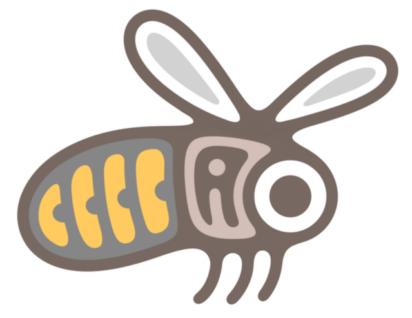
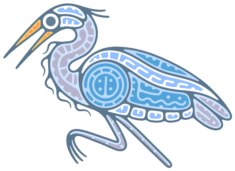
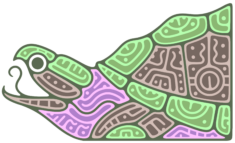
“When we began the process of creating our new visual identity, it was very important for me that the artwork and the mural represent the college,” said Hogan. “By focusing on the land that surrounds us – the lush greenness of the fields, the nutrients of the soil in the farms and the vineyards, and the power of the water – we are calling to the land to connect us all together.”
The project is comprised of several individual images created in Kennedy’s unique style featuring semi-bold black lines, intricate patterns and vibrant colours which complement NC’s refreshed brand. These images will come together to form a mural that will wrap around the Indigenous Education Centres at both the Welland Campus and the Daniel J. Patterson Campus in Niagara-on-the-Lake.
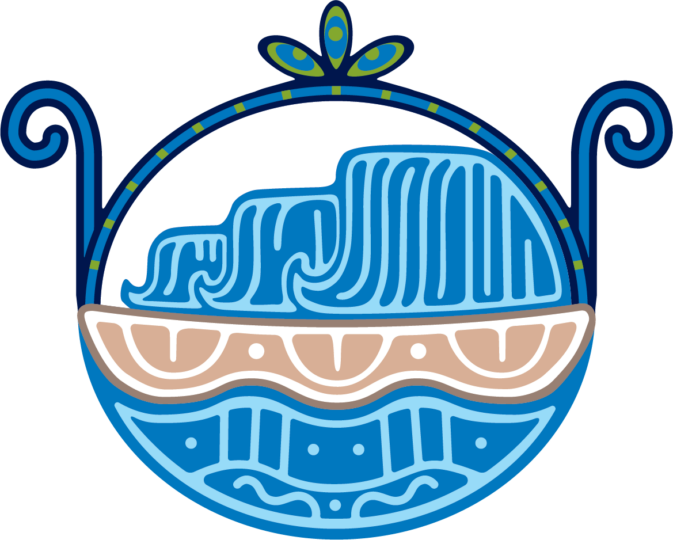
Kennedy also created a standalone emblem to help identify Indigenous Education across campus. This piece will replace the current IE logo – a circle with a feather running diagonally behind it.
The new emblem features a canoe at the base of a waterfall. A Sky Dome – a half circle resting on two parallel lines with a pair of simplified plant forms springing from the dome’s top – rests overtop and completes the image.
“For members of the Indigenous community, water is life, water is alive, and water has a spirit,” shared Hogan. “Being in Niagara, we have access to the most powerful water resource in the world (Niagara Falls) and the energy and healing associated with water connects us, which is why it was important for us to embrace her in our visual identity.”
The canoe signals a journey and, in this context, represents the journey to education, the journey through education and the journey out of education. The Sky Dome has a special significance for Indigenous Peoples as it symbolizes the connection to the sky world, and in turn, the connection to the universe.
“Our hope is that all Indigenous Peoples in our community feel represented and that others learn about us through the symbols in the artwork,” said Karl Dockstader, Indigenous Education Cultural Advisor. “IE’s new mural incorporates both Haudenosaunee and Anishinaabe perspectives and it is reflective of the diversity of our First Nations students.”
NC staff, students and faculty will begin to notice elements of IE’s new visual identity starting this term, with the mural installation taking place later this winter on both campuses. Kennedy’s artwork will also be displayed as a wrap on IE’s new recruitment vehicle this November.
According to Hogan, the new imagery is more reflective of NC’s Indigenous college community and will start the conversation around other ways that our Indigenous colleagues and students can be better represented at the college.
“Overall, we hope that our new visual identity allows all people to see themselves represented in what Indigenous Education at NC stands for,” shared Dockstader.
Areas of the college interested in learning more about IE’s new imagery or those who would like to discuss how they can support Indigenous representation in their departments, are encouraged to reach out to the Indigenous Education Centre staff.



The images shared in this article are just a few of the images included in IE’s new visual identity.
