
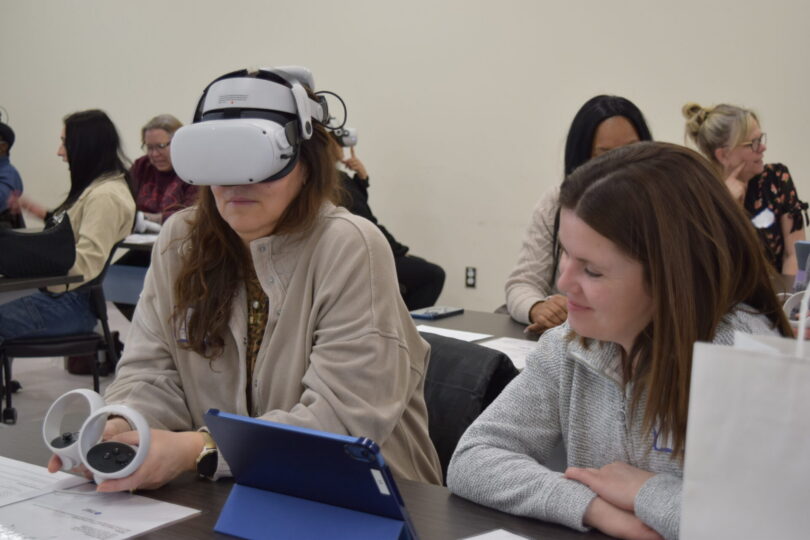
On March 4, Niagara College’s School of Community Services partnered with Bethesda to host a day-long learning conference that brought together 89 professionals from across 16 developmental services agencies for hands-on, experiential training.
Held at NC, the conference, titled Experiential Learning for Inclusive Support, created an opportunity for frontline staff and sector partners to deepen their understanding of the diverse needs of individuals they support. Participants took part in a series of interactive workshops designed to build empathy, strengthen practical skills, and enhance individualized care.
The day began with an engaging opening session led by Sandie Narsansky, Manager of Adult Services at Bethesda, who encouraged participants to reflect on the meaning of compassionate support and empathy, and the vital role these qualities play in their daily work. By grounding the conversation in shared values, the session helped set a thoughtful and purposeful tone for the workshops that followed.
Experiential learning through simulation and technology
Workshops focused on key areas relevant to the developmental services field, using simulation tools, virtual reality and neuroscience-informed strategies to help participants better understand the experiences of those they support.
The Bariatric/Geriatric session, which was led by NC professors Ann Marie Raos and Barbara Morris, used simulation suits to help participants experience mobility and sensory changes related to aging and obesity. By physically navigating these challenges, participants gained a deeper understanding of the barriers individuals may face in their daily lives.
NC’s Hearing Voices exercise simulates the experience of distressing auditory hallucinations often associated with psychosis and other mental health conditions.
Jackie Frail, Dean of Community Services, Justice and Fitness and Sandie Narsanky, led the Hearing Voices session where participants took part in an immersive simulation. The exercise simulates the experience of distressing auditory hallucinations often associated with psychosis and other mental health conditions, helping participants appreciate how someone living with cognitive distortion could experience everyday life. This session was designed to support professionals to build empathy and adopt a more person-centred approach in their work.
Technology also played a key role in the Autism VR session led by NC’s Fran Haver and Taryn Walsh, where participants used virtual reality headsets to enter a simulated environment designed to replicate sensory and social challenges some autistic individuals experience. The training highlighted how environmental stressors can influence distress and emphasized the importance of creating supportive environments that promote safety, dignity and quality of life.
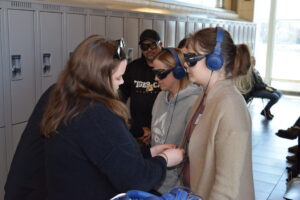
Participants prepare to enter the Dementia Training workshop which simulated challenges associated with dementia.
The Dementia Training workshop provided another immersive experience, simulating the cognitive and sensory challenges associated with dementia. The activity was led by NC’s Juliana Pennings and Fitz Morrison and helped participants better understand how dementia can affect perception, behaviour, communication and daily functioning, encouraging more compassionate and responsive care.
Participants also explored strategies to support their own wellbeing in the Staff Wellness session. Presented by Shannon Haley, Registered Psychotherapist (qualifying), Bethesda Adult Clinical Services, the interactive workshop examined how stress impacts the nervous system and taught attendees’ neuroscience-based techniques to support wellness and foster co-regulation in both their work and personal lives.
Closing the event, Leah Jeffery, Clinical Manager at Bethesda, brought the focus back to the people at the heart of the work. She emphasized the importance of elevating the voices of those being supported and reminded participants that their roles extend far beyond routine responsibilities–what they do, and how they do it, has a meaningful and lasting impact on individuals’ lives.
Sector collaboration
“Niagara College is proud to partner with Bethesda on important training opportunities for community partners that our students will one day work with,” said Kim Ann Laush, Associate Dean, School of Community Services. “Events like this allow organizations across the sector to come together to learn from one another, share best practices and strengthen the skills needed to support individuals with compassion, dignity and respect.”
” This immersive training experience brought together education and frontline practice in a meaningful way. The reflections and debriefs after each session, helped staff connect what they felt to how they support people every day– with greater empathy and a deeper understanding,” said Sandie Narsanky, Manager of Adult Services at Bethesda. “We’ve built a strong working relationship with the College over the years, and this experience is another great example of what’s possible when we collaborate. We’re always excited for opportunities to work together to bring meaningful learning experiences to staff.”
By bringing together education, community organizations and frontline professionals, the conference created a collaborative learning environment focused on improving care, fostering empathy and strengthening support for individuals across the developmental services sector.
