
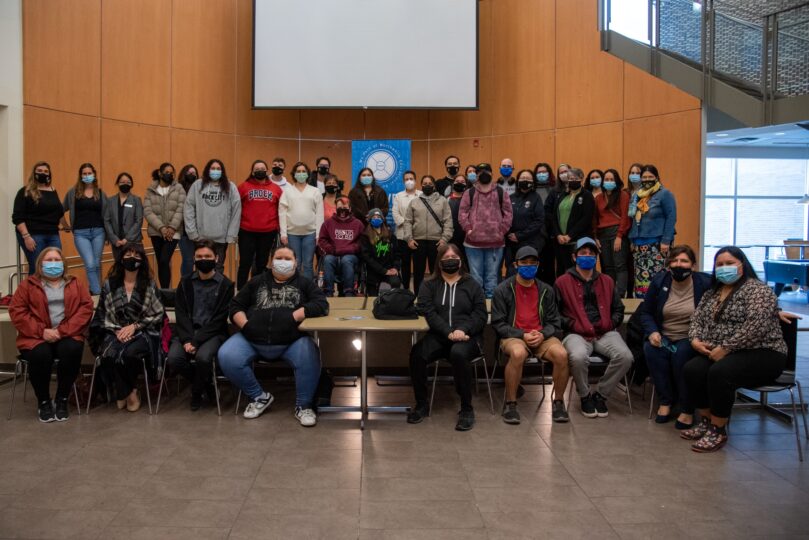
Last month, students enrolled in Niagara College’s My Path of Worthwhile Educational Re-Engagement (MPOWER) program gathered for the first time in person to kick off their on-campus learning term and to celebrate their commitment to the program so far.
The program, which launched in January 2022, is offered to Indigenous youth and young adults between the ages of 18 to 30 who are eager to transition to post-secondary education. Delivered alongside community partner NPAAMB – Indigenous Youth Employment & Training, MPOWER teaches essential academic and applied skills, while incorporating Indigenous ways of knowing and being into the curriculum.
The program’s dedicated team, including faculty and staff from NC and NPAAMB, Indigenous Elders, and community partners, is committed to providing a safe space and supportive environment for students.
“By offering support and a learning experience through an Indigenous lens, we can help students further understand the barriers that have hindered them from moving forward with their education in the past,” said Rebecca Nicholls, Associate Dean of Workforce Development and Community Partnerships.
“MPOWER builds students up, gives them hope and empowers them to realize that they can be successful and experience things that their ancestors maybe didn’t get the chance to do,” added Shanyn Porter, Community Projects Manager, Workforce Development and Community Partnerships.
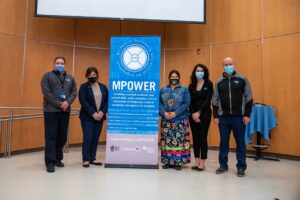
L-R: Rick Anderson, NC Vice-President, Student Affairs, NC Community Projects Manager, Workforce Development and Community partnerships Shanyn Porter, Nokomis Cindilee Ecker-Flagg, MPOWER Transition Coach, Rebecca Nicholls, NC Associate Dean, Workforce Development and Community Partnerships, and NC President Sean Kennedy attend the MPOWER ‘Welcome Day’ event on May 4 to provide a warm NC welcome to students.
Among the students enrolled in the program is William Kagesheongai, Ojibwe Anishnaabek, who was born in Sault Ste. Marie and grew up moving between small communities in the Birch Island and Sudbury areas. After spending more than eight years working long hours in highway construction in Northern Ontario, Kagesheongai, 30, moved to Niagara to pursue new opportunities for a better quality of life and was connected to MPOWER through NPAAMB.
“I joined MPOWER with the vision of finding other pathways to gaining my high school diploma and getting a head start with the four college credits the program provides,” he said. “I didn’t really know what work outside of highway construction would look like or if I could even do that, but now that I’m coming into second semester I feel a lot more sure of myself and the future, and by the end of (the program) I feel I’ll be ready to make those intrepid decisions to change my life and enter a new career path, or take up schooling in pursuit of something even greater.”
Returning to the classroom hasn’t always been easy for Kagesheongai, but he has found a network of support to keep pushing him forward.
“MPOWER offers a challenge as well as plenty of safety nets, it’s a way out of single minded thinking and settling for whatever is given to you,” he said. “The coordinators and their positivity and willingness to help is one of the cornerstones of this program in my personal opinion. We’re trying to fix real issues and help real people get real success, it’s not an exercise in futility.”
Hearing the personal stories of his classmates has also made an impression on Kagesheongai.
“I really enjoyed classes where the students could share their own experiences in life with identity and the struggles of trying to survive as a high school drop out or a parent trying to make ends meet,” he said. “I learned a lot through community discussions, and I think that’s a big part of how our people learn is through story telling and verbal interaction. Their real stories and experiences inspired me to push on and think differently, and I have faith this program could help a lot of wayward students and adults my age find exactly what they need to pursue their future, whether they find it intentionally through the course information provided, or unintentionally through the open discussions students and coordinators have.”

Student William Kagesheongai (middle) with classmate Raquel Johnson (right) and instructor Rachel Crane (left). One of Kagesheongai’s favourite classes so far, Diversity and Inclusion, was taught by Crane during the first term of the MPOWER program.
One of the teachers who is committed to the success of MPOWER students is Lisa Recker-Perera, who has been teaching at NC since 2019 after retiring from a career as a high school math teacher with the District School Board of Niagara. She first began working with the NC-NPAAMB team through the Journey to Success program, which wrapped up in 2021, and was asked to teach the math course during the first term of the MPOWER program from January to April 2022.
“Lisa is truly a gift to our specialized programs,” said Porter. “Her ability to ‘figure out’ how a student learns and then presents the material to them in a way they can grasp, ensures success every time for that student.”
Recker-Perera filled her classes with relatable math scenarios often found in daily life, encouraging students to think critically with numbers. With parents in the class, she incorporated healthcare math into the curriculum, teaching students how to read a child’s temperature in both fahrenheit and celsius. Other classes focused on budgeting for living expenses and food math, where students analyzed grocery store purchases and worked out measurement conversions for an Indigenous donut recipe.
“These students have the initiative and the drive and they just want to make an improvement,” she said. “I’m 100 percent here for a (student) who wants to do that.”
By encouraging students to look inward, MPOWER has given students like Kagesheongai an opportunity to chart a new path towards healing.
“I figure every single student has their own idea of what this program is about and what it does for them, but me personally, it’s been somewhat of a therapy and counselling program as well as an educational one,” he said. “Sometimes what holds us back from success isn’t as simple as available opportunities and the course work itself, it goes deeper into personal territory, and this program (does) really well with addressing that reality.”
MPOWER students began the first term of the program in January 2022, participating in classes virtually. The second and final term of the eight-month program began in May 2022, with students transitioning to in-person learning at the Welland Campus. While on-campus, students take part in regular on-the-land/outdoor classroom experiences that include engaging with Elders and Knowledge Keepers and working in NC’s Indigenous Garden. Students also receive the opportunity to tour the grounds of the campus to identify Indigenous medicines, while learning about their use.
Related article: NC leading new program to help ‘MPOWER’ Indigenous students transitioning to postsecondary
