About this program

  • Credential Awarded: 3 Year Advanced Diploma
  • Campus: Welland
  • Code: 0749 P0749
  • Delivery Length: 3 Years
Apply Now Connect With Us Book a Tour or Info Session

Overview

Do you want a chance to design and build robotic and autonomous systems – drones for air, land and sea? Imagine developing a real-world prototype used for search and rescue missions, public safety operations, and national monitoring – supporting communities and contributing to Canada’s security, sovereignty, and partnerships abroad.

Maybe you prefer to work on cutting-edge defence and marine robotic systems, building drones that assist emergency services, support public safety, and help protect people. Staying on the edge of technology has never been more important. Autonomous drones now operate in the air, on land, and underwater. Once science fiction, these technologies are now essential.
From aerospace, advanced manufacturing and environmental imaging to civil defence, public safety, and healthcare, the application of advanced sensing, robotics, and electro-optical technologies power systems that keep our world moving and into the future. The world needs skilled technologists like you. Start building what comes next at NC’s Drone Factory – The sky is not your limit.

Highlights
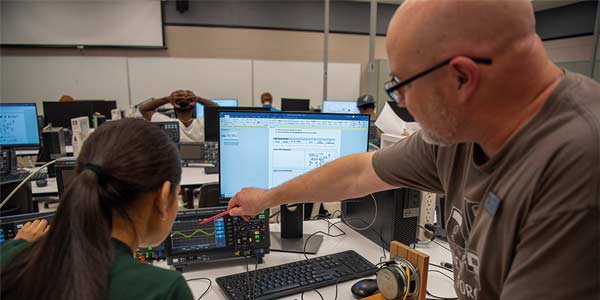
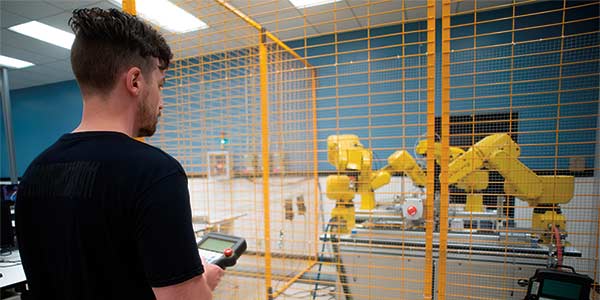
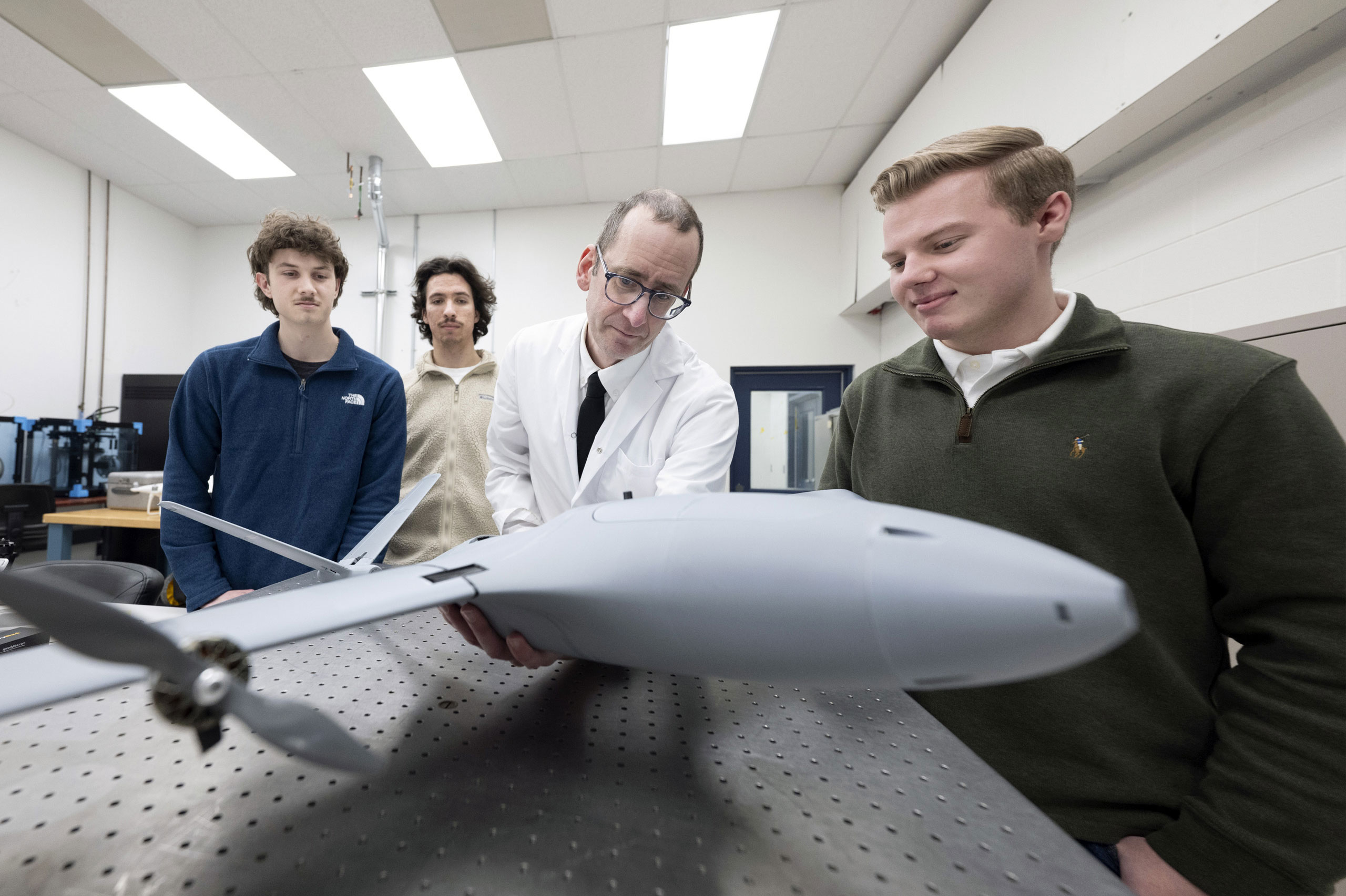
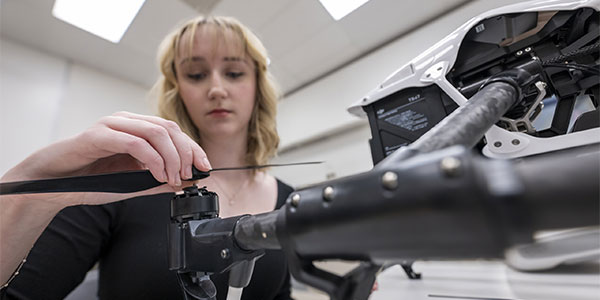
  • Hands-on experiential learning building and flying drones, terrestrial rovers, and submersible robots in cutting-edge labs.

  • Expert instruction to build payloads and flight systems including GPS, cameras, sensors and Lidar.

  • Design, model, make and build in our drone factory: 3D modelling, 3D printing, laser-cutting, soldering, and fabrication.

  • Gain advanced skills in mechanical, electronic, and photonic (optic, laser) systems, built on over 25 years of NC’s leadership in photonics education.

  • Opportunities to participate in applied industrial research.

  • Final program year includes learning about counter-drone technologies and participation in industry-ready project, providing extensive applied learning opportunities and putting graduates in high demand.

Career Opportunities
  • Aerospace manufacturing industry
  • Defence sector
  • Marine robotics sector
  • Public safety and emergency services
  • Agriculture and entertainment sectors
  • Electro-optical technologist
  • Mechatronic technologist
  • LiDAR technologist
  • Automated optical inspection and quality systems
  • Drone systems and operations

Learn more about Defence Systems Engineering Technology:

Back to Top

Courses

Term one (2026 Fall)
Code Course Name Credits
CAPT1111 Digital Literacy for Learning and Technology 5
COMM1120 Introduction to Writing and Communicating in the Workplace 3
DSET1100 Integrated Systems for Robotic Drone Technology I 6
MATH1134 Mathematics I for the School of Technology Studies 4
MECH1228 Measurement, Dimensioning and Tolerancing 3
Elective Information

Completion of additional General Education elective 1 course required

Term two (2027 Winter)
Code Course Name Credits
CAPT1214 Computer Aided Design 3
COMM1430 Technical Communications 3
DSET1200 Integrated Systems for Robotic Drone Technology II 6
MATH1231 Mathematics II for Technicians and Technologists 4
PHTN1232 Optical Systems and Laser Technology 6
Elective Information

Completion of additional General Education elective 1 course required

Term three (2027 Fall)
Code Course Name Credits
CAPT1315 Computer Aided Design and Manufacturing 3
COMM1308 Understanding Society: Communication Model 3
DSET1300 Integrated Systems for Robotic Drone Technology III 6
DSET1323 Wireless Communications Technology 5
MATH1332 Mathematics III for Technology 3
PHTN1334 Fibre Optic Applications 5
Term four (2028 Winter)
Code Course Name Credits
CYBR1401 Cybersecurity Concepts and Practices 4
DSET1400 Defence Technology Manufacturing Project 6
MATH1436 Mathematics IV for Systems Engineering Technology 3
PHTN1305 Optical Test and Measure 4
TECH1400 Professional Practices and Ethics for Defence Technology 3
TECH1401 Quality and Manufacturing Practices 5
Term five (2028 Fall)
Code Course Name Credits
DSET1500 Integrated Design Technology: Capstone Project I 6
DSET1506 Intelligence, Surveillance and Reconnaissance (ISR) Technologies 6
DSET1530 Control Systems Technology for Defence Applications 6
TECH1102 Project Management 3
TECH1539 Society and Technology: Global Challenges 3
Term six (2029 Winter)
Code Course Name Credits
CYBR1625 Mobile and Wireless Security 4
DSET1600 Integrated Design Technology: Capstone Project II 6
DSET1610 Imaging and Countermeasure Technologies 5
DSET1631 Autonomous and Unmanned Systems 5
Learning Outcomes Term: 1264
  1. Design, build, integrate and qualify mechatronic systems to enhance overall performance that meet defined requirements.

  2. Design, develop, integrate, and validate photonic subsystems to optimize overall system performance.

  3. Assemble, integrate and verify electronic subsystems and sensors into complex systems to ensure functional performance and enhance operational requirements.

  4. Design, fabricate and test mechanical components to optimize performance, ensure proper system integration, and meet engineering requirements.

  5. Follow health, safety, legal, and regulatory requirements to ensure safe operations and compliance during all technical activities.

  6. Execute fabrication and manufacturing processes to achieve required specifications, ensure process consistency, and maintain compliance with applicable standards.

  7. Develop and validate technical drawings and documentation for mechanical, electronic, and photonic subsystems to ensure design accuracy, manufacturability, and system integration.

  8. Collect, analyze, and interpret data to support decisions in the design, testing, and troubleshooting of technical solutions.

  9. Collaborate within multidisciplinary teams to achieve project objectives and meet technical deliverables.

  10. Diagnose system faults and analyze performance and quality-control data to implement corrective actions that enhance system reliability and operational effectiveness.

  11. Develop and apply strategies for ongoing professional development to enhance personal work performance and maintain currency in defence and civilian sectors.

  12. Evaluate the ethical and sustainability implications of design and manufacturing activities to guide responsible decisions that reduce environmental impact and promote social responsibility.

  13. Analyze and implement cybersecurity measures to protect digital data and communication systems in complex defence and civilian operational environments.

Back to Top

Admission Requirements

Ontario Secondary School Diploma (OSSD), or equivalent including the following required course(s):
  • English – any Grade 12 (C) or (U), or equivalent
  • Mathematics – any Grade 12 (C) or (U), or equivalent
Recommended Courses and/or Skills:

These courses and skills may help you succeed academically in this program, but they are not required for admission.

  • Physics – Grade 11 (U) or Grade 12 (C) or (U)
Selection and Ranking

Applications are evaluated based on the published admission requirements. When the applicant provides proof of meeting the requirements, an offer of admission can be issued, provided space is available in the program.

Learn more about admission decisions.

Program Requirements
Computer/Technology Requirements

Required Minimum:

  • Workstation grade laptop system running an updated 64-bit Microsoft® Windows® 11 operating system.
  • 512GB SSD storage
  • 16 GB RAM
  • 4 GB GPU and DirectX 11 compliant.
  • Wireless network adapter (Integrated or Peripheral).
  • Video camera, microphone and speaker system (Integrated or Peripheral).
  • Reliable internet connectivity with Broadband capabilities (a minimum download speed of 5 Mbps) is recommended.
  • Intel Core Ultra 5

Recommended:

  • Professional/Workstation grade laptop system running an updated 64-bit Microsoft® Windows® 11 operating system.
  • 1TB SSD storage
  • 32 GB RAM
  • 8 GB GPU and DirectX 11 compliant.
  • Display Resolution: 3840 x 2160 (4K); Preferred scaling: 100%, 125%, 150% or 200%
  • Intel Core Ultra 7

Niagara College will not be able to provide support for systems different than the above specifications. Any provided software may not operate properly. Academic software for your courses (supported under the Microsoft Windows 11 operating system) will be made available for download and remote use.

Note: There is no support for Chromebooks or Apple products for this program.
All costs associated with program requirements are the responsibility of the student.

Back to Top

Availability

Domestic Applicants Apply
International Applicants Apply
Legendfor intake status table
Open

Accepting applications

Waitlisted

Eligible applications will be placed on a waiting list

Closed

Not accepting applications

Suspended

No longer offered this term

The College reserves the right to cancel or make changes to any course or program, fee, procedure, or campus location at any time.

Back to Top

Tuition

Back to Top

Personalize your Niagara College experience in 60 seconds!

Create Your Custom Viewbook